



To the human eye, the night sky can look almost unchanged: stars appear fixed, reliable and defined mainly by their light. That impression hides a far more complex reality. In astronomy, brightness is not simply a surface trait but the visible result of processes unfolding deep inside a star, where pressure, temperature and nuclear fusion determine how much energy eventually escapes into space.
The Sun offers the familiar benchmark. It is a relatively ordinary, low-mass star and is expected to shine with broad stability for billions of years. Official educational material from NASA describes it as the central source of light and heat for the solar system, but in stellar terms it is not among the giants. The most massive stars are rarer and contain many times more material, driving faster and more extreme lives.
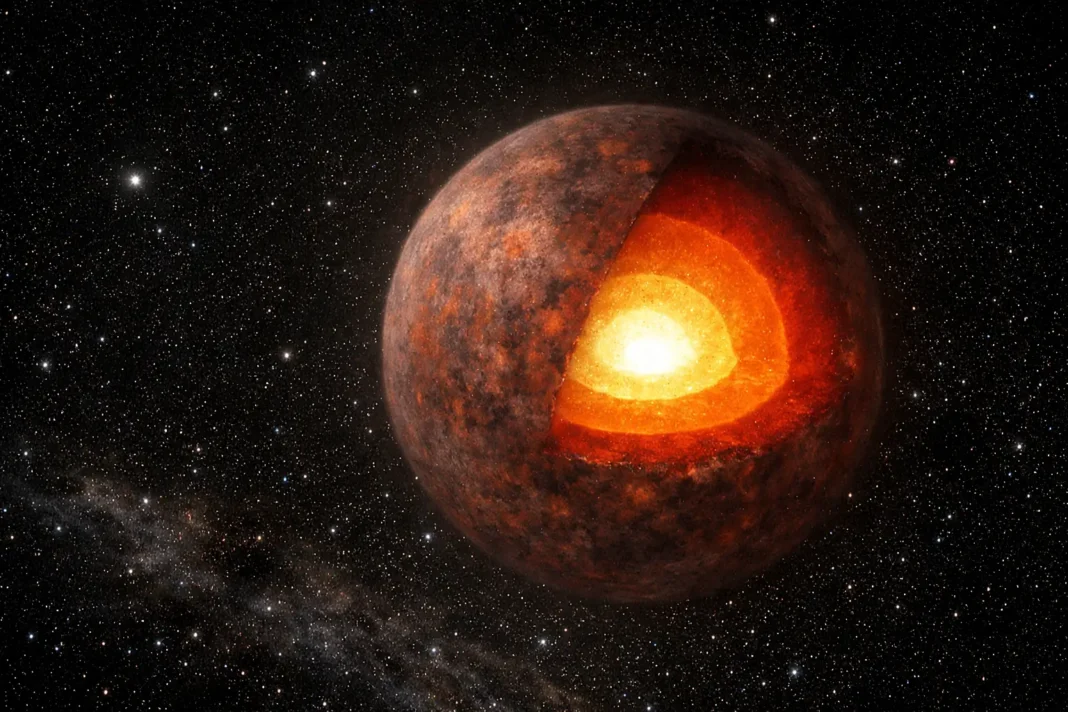
That contrast matters because the apparent steadiness of a star changes as it ages. In older low-mass stars, a temporary fall in luminosity can occur when the internal structure is being reorganized. After the long stable phase in which hydrogen burns in the core, energy production shifts into layers around the centre. As those layers interact with regions of different chemical composition inside the star, the outward flow of energy can briefly weaken before the star resumes its path toward greater brightness.
This kind of dimming is not the same as atmospheric twinkling seen from Earth, nor does it imply that the star is simply going out. It is a marker of stellar evolution, showing that the life of a star is shaped by hidden transitions rather than by a smooth, uninterrupted glow. For researchers, such changes are useful because luminosity helps place stars on evolutionary tracks and compare stellar populations across clusters and galaxies.
The phenomenon also sharpens the perspective on our own star. The Sun’s long period of relative stability makes life on Earth possible, but it remains part of the same broader physics that governs other stars. Sudden dips in aged stars therefore provide more than a technical puzzle: they reveal how much of the universe’s visible light depends on internal balances that can shift long before a star reaches the final stages of its life.
