



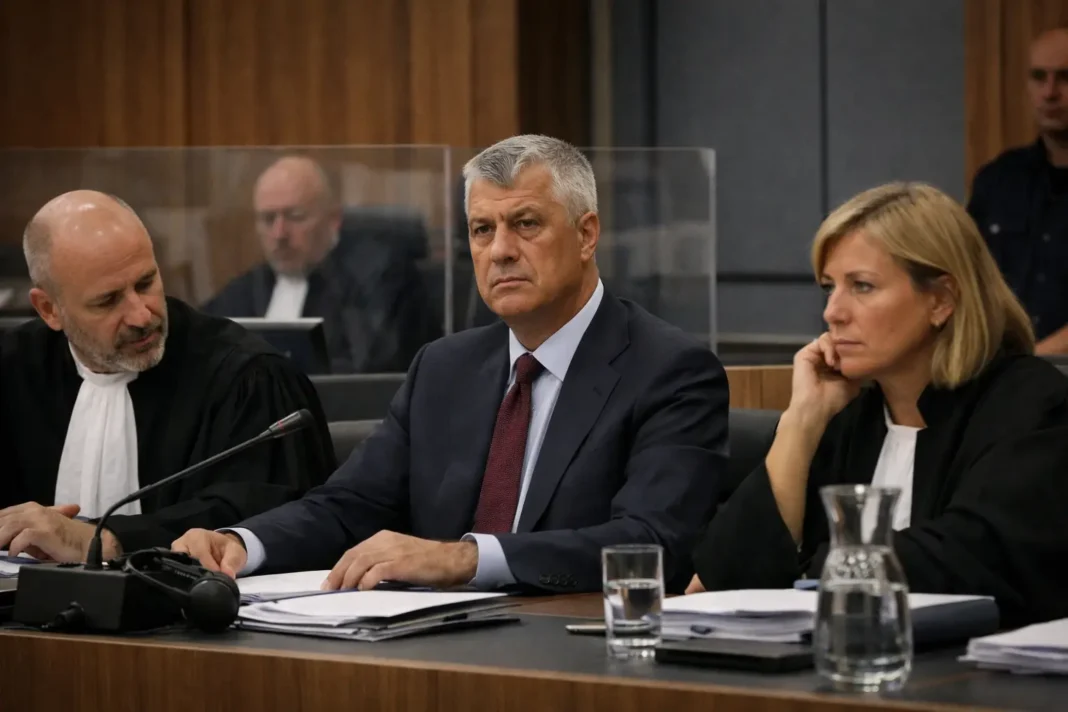
Hashim Thaçi’s conviction in The Hague for trying to influence witnesses in his war crimes trial has returned one of Kosovo’s most sensitive legal institutions to the centre of public debate. The former president, already one of the most prominent political figures to face proceedings before the court, has now received a second conviction linked to proceedings in the Netherlands-based tribunal system.
The judgment concerns conduct aimed at witnesses, a matter that goes to the core of international criminal proceedings. In cases involving alleged wartime crimes, witness testimony is often essential, and any attempt to interfere with it is treated as an attack on the integrity of the trial process. The case also reinforces the importance of witness protection, a recurring issue in proceedings connected to Kosovo’s recent past.
The court that convicted him, the Kosovo Specialist Chambers, was created under Kosovo law but operates in The Hague with international judges and staff. Its mandate is tied to allegations arising from the Kosovo conflict, and its work has long divided opinion in the country. Supporters see it as a necessary mechanism for accountability outside domestic pressure, while critics question its focus and its political impact. The new conviction has sharpened that debate without changing the underlying purpose of the institution: to try specific cases under a legal framework established for serious allegations.
For Hashim Thaçi, the conviction adds a further legal burden while his war crimes proceedings remain closely watched in Kosovo and abroad. For the wider public, it renews questions about how post-conflict societies confront allegations involving former leaders, military figures and political movements. The issue extends beyond one defendant: it concerns confidence in courts, the treatment of witnesses and the credibility of efforts to address wartime accountability through legal process rather than political contest.