



Powered by RTX
Looking to the future of EU aviation through collaboration
Ambition alone is not enough. European Union’s aerospace policy must champion clean technologies, research leadership, and international cooperation to remain at the cutting edge. Find out more.
The title is a famous phrase used by former British Prime Minister Boris Johnson when he announced the final lifting of the UK’s COVID lockdown. It was about the only thing the man ever said that I agreed with – so it came as a relief to learn that, of course, he was plagiarising.
Now it’s my turn.
The problem of soaring energy prices and the damage they are said to be causing to Europe’s industrial sector is a major issue. Energy ministers discussed the issue first on Monday, environment ministers on Tuesday, and tomorrow EU leaders – presidents, chancellors and prime ministers – will take it up.
To put it another way, competitiveness will dominate the European Council in Brussels, just as it did when the same crowd met in a Belgian chateau last month.
The difference this time around is that we are not merely hoping to compete with the US by buying their fracked gas and letting their exports into the EU for free. Because this time, Donald Trump, 79, has started another war.
The jury is still out on whether Vladimir Putin, 73, is winning or can win his bloody game in Ukraine. But a strong case could be made for saying he is the clear victor so far in the US-Israeli war on Iran.
With the Persian Gulf closed to shipping, oil and gas prices are rising – good news for US producers, of course. As Trump eases sanctions on Russian oil, the Kremlin’s war chest fills up like the cistern of a golden toilet.
Europe has seemingly grown inured to the near fifth-column antics of the EU’s more Moscow-friendly governments. Belgian Prime Minister Bart De Wever recently joined in by suggesting the time has come to normalise relations with Russia to “regain access to cheap energy.”
Not because the Kremlin has stopped striking civilian infrastructure or shown willingness to negotiate peace, but because fuel and gas prices are rising again. Energy Commissioner Dan Jørgensen has so far ruled out resuming Russian energy imports.
However the siren song of deregulation is back. A key target at Thursday’s summit is the EU’s pioneering emissions cap-and-trade scheme, which – despite its flaws and low public profile – is widely credited with accelerating the shift from coal to renewable power.
In the background, we hear a muted chorus, drowned out by the bombs and bluster. Europe needs to stop using fossil fuels it can’t produce and now can barely afford. We’ve heard this before, of course.
Back in 2022, the tune was being sung loudly inside the Berlaymont, where the European Commission said Europe needed millions of heat pumps, faster deployment of renewables – and, ahem, 10 million tonnes of green hydrogen.
Four years on, much of the REPowerEU project has yet to materialise: too few heat pumps sold and virtually no green hydrogen produced so far.
And here we are, committed to buying $750 billion worth of fossil fuels from the US, though rocketing prices mean we’ll get far less for the money today than when that lopsided trade deal was struck. Not that Europe has many alternatives anyway – apart from Russia.
So, it is time – as von der Leyen is still saying behind the scenes – to accept that “one of the most effective ways” to deal with high fossil fuel prices, and all the recurring crises that follow on, is for Europe to stop importing oil and gas, double down on renewables, and stand on its own two feet.
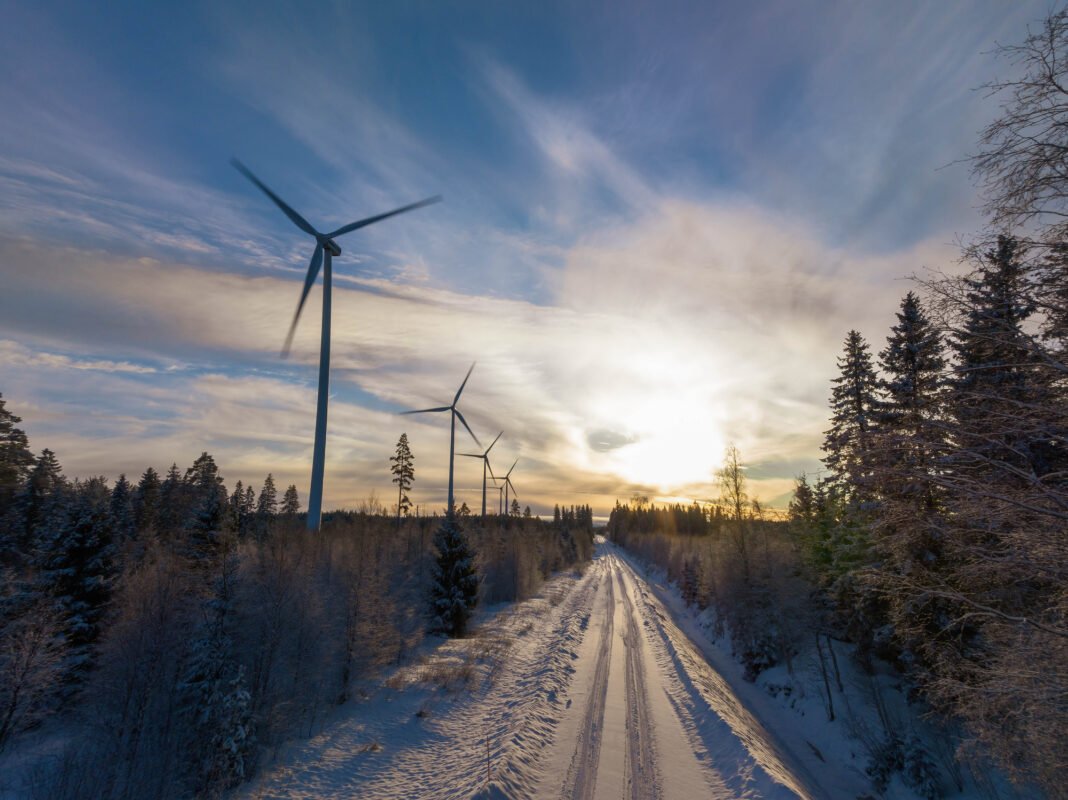
Build the damned windmills, install the blasted heat pumps and put the ruddy solar panels up (Ukraine is having a go, what’s our excuse?). Maybe even replace the gas-guzzler with a small, electric car – or demand decent public transport. Or get a bike.
Yes, a lot of this will require enormous state support, ideally targeted towards those who genuinely need it. But so did bailing out households and factory owners who couldn’t afford to pay their gas and electricity bills in 2022 – and it’s about to happen again.
There’s a war on.
If not now, when?
Roundup
EU-Australia trade deal could be sealed next week – Ursula von der Leyen will travel to Australia next week in a final push to conclude a long-negotiated EU–Australia trade deal, Brussels confirmed on Wednesday. Von der Leyen is set to meet Anthony Albanese in Canberra as talks enter the final stretch as negotiations have stalled since 2018 mainly over beef quotas. The agreement would scrap tariffs on goods and improve EU access to critical raw materials such as lithium and rare earths.
Farm lobby urges rethink of Morocco trade deal – The EU’s main farming lobby is urging Brussels to reopen its controversial agricultural trade deal with Morocco, warning it threatens European fruit and vegetable producers. In a letter seen by Euractiv, Copa-Cogeca said the revised agreement – provisionally applied since October after an EU court ruling – creates unfair competition and allows rising imports of Moroccan tomatoes and peppers.
The EU’s ‘EU Inc’ startup plan faces “now or never” moment – The EU must push its “EU Inc” plan to simplify life for startups across the finish line quickly or risk losing the opportunity altogether, Justice Commissioner Michael McGrath warned. Presenting the proposal on Wednesday, McGrath said political momentum is strong as EU leaders seek to boost competitiveness by cutting red tape. However, the plan’s legal basis could still face court challenges.
Across Europe
Cypriot president rebuts NATO’s Rutte – Cyprus President Nikos Christodoulides pushed back against NATO chief Mark Rutte on Wednesday, arguing the EU can act independently in defence matters. Speaking in Brussels, Christodoulides cited a recent response to drone strikes near British bases on the island, when Greece, France, Italy, Spain and the Netherlands deployed assets to support Cyprus. The episode, he said, showed Europe’s defence autonomy is “possible and real” and effectively tested the EU’s mutual defence clause.
Zelenskyy urges EU to unblock €90bn Ukraine loan – President Volodymyr Zelenskyy on Wednesday urged EU leaders again to unblock a €90 billion support package for Kyiv stalled by Hungary. Speaking after meeting Spanish Prime Minister Pedro Sánchez, he said the loan agreed in December must now be implemented. Budapest is withholding ratification over the damaged Druzhba pipeline.
Orbán urges Europe to rebuild ties with Russia after war – Hungarian Prime Minister Viktor Orbán said Europe should integrate Russia into its trade, security and energy systems once the war in Ukraine ends, outlining a vision of restoring “old harmony” with Moscow. Speaking to GB News, the Hungarian prime minister said Europe should pursue such cooperation even without EU consensus. His remarks come as Budapest blocks a €90 billion EU aid package to Ukraine amid tensions over the Druzhba pipeline supplying Russian oil to Hungary.
(cs, jp)
Source:
www.euractiv.com