



Powered by RTX
Looking to the future of EU aviation through collaboration
Ambition alone is not enough. European Union’s aerospace policy must champion clean technologies, research leadership, and international cooperation to remain at the cutting edge. Find out more.
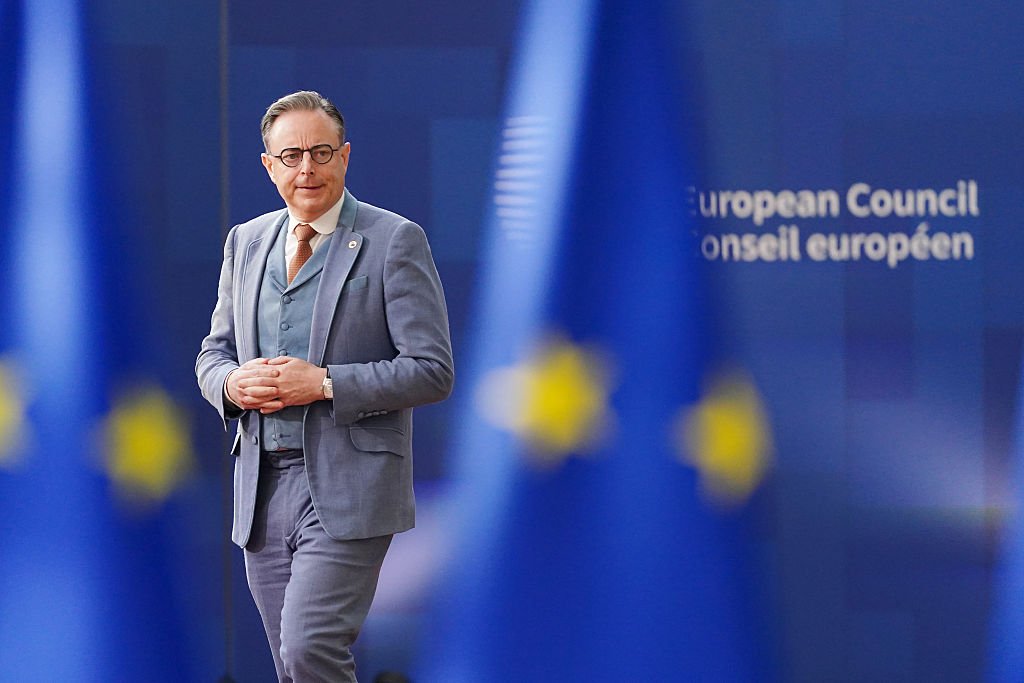
Meeting with his 26 European counterparts on Thursday, Belgium’s Prime Minister Bart De Wever couldn’t resist a dry jab: The EU, he remarked, is starting to resemble Belgium.
That was hardly meant as a compliment. The Flemish prime minister, according to three EU diplomats, said the 27-country bloc was increasingly looking like Belgium’s famously complex federal system – where agreements can take months or even years to get over the line.
That’s a sentiment that might start to sound familiar for EU leaders, trying to get Hungary’s recalcitrant Prime Minister Viktor Orbán to (again) agree on a €90 billion loan for Ukraine.
Orbán is refusing to give his consent to the loan over a pipeline dispute with Kyiv.
While Ukraine’s President Volodymyr Zelenskyy addressed leaders via video call, Orbán wandered around. In the room, frustration boiled over, with European Council President António Costa openly calling Hungary’s position “not acceptable,” insisting the pipeline spat is unrelated to the loan.
Behind the scenes, diplomats describe a potential logic taking hold – or at least a shared hope.
In a first scenario, Orbán loses his upcoming April election and the €90 billion loan flows. Another one would see him win, tensions cool, and he eventually gives the green light.
Either way, while many capitals are betting that time will solve the problem, they are not ready to hand him a political victory by forcing a clash that he could use on the campaign trail at home, two diplomats said.
So, for the time being, it looks much like leaders – and Ukraine – will have to wait.
Round up
Hopes on Hungary election – EU leaders won’t say it out loud, but they now have a clear plan to get past Viktor Orbán’s blockade on a loan for Ukraine: Hungary’s upcoming election. At a summit on Thursday, EU leaders failed to convince the Hungarian prime minister to uncouple his veto on the €90 billion disbursal from his demand that Kyiv restart Russian oil deliveries to his landlocked country. Read more.
‘Hamas or us’ – Turkey should decide whether it supports the EU-designated terrorist organisation Hamas or stands with Europe, former European Commission vice-president Margaritis Schinas told Euractiv in an exclusive interview. Read more.
Trade committee approves US deal – The Parliament’s trade committee has waived through last summer’s controversial trade agreement with the US, after months of hesitation driven by fresh tariff threats from Washington. The measure scraps tariffs on hundreds of US agricultural and industrial goods. A final plenary vote is now pencilled in for next week. Read more.
Ukrainians’ emergency status likely to get extended – The EU is exploring whether to, again, extend the temporary residency and employment rights granted to Ukrainians fleeing their war-torn homeland. Initially intended as a short-term emergency measure, it could stretch into its sixth year. Read more.
Across Europe
Shein on – Ultra-fast fashion online retailer Shein won’t be blocked in France, the Paris Court of Appeal said on Thursday, upholding an earlier court ruling on the case. The French government sought an access ban on Shein last November after child-like sex dolls were found for sale on the platform. Read more.
Greenland tensions – Denmark reportedly prepared to blow up its own runways in Greenland amid fears that the United States might attempt to seize the Arctic territory by force in January. According to Danish national broadcaster DR, Danish forces deployed to Greenland in January 2026 carried explosives intended to destroy key airstrips in Nuuk and Kangerlussuaq to deny access to any incoming US military aircraft in a worst-case scenario. Read more.
Interest in joining Bundeswehr surges – Germany recorded rising interest in its armed forces following the launch of its recruitment drive, with a 20% increase in applicants since last year, according to new figures from the defence ministry. The country wants to recruit nearly 100,000 additional active soldiers by 2035. Read more.
Meningitis risk ‘low’ after UK outbreak – A meningitis outbreak linked to a university nightclub in southeast England has left two dead and dozens infected, triggering alarm in the UK – though EU health authorities say the wider risk remains “very low”. Two people have died since the outbreak, linked to an event at a Canterbury nightclub, first came to light at the weekend. Read more.
(vib, jp)
Source:
www.euractiv.com