




Recent tensions between the EU and US have resurfaced the familiar argument that Europe should rebalance towards China to compensate for uncertainty in Washington. Some policymakers frame this shift as pragmatic hedging. Others present it as strategic autonomy.
In reality, these voices seek to cultivate a relationship that ignores the dangers of China’s industrial overcapacity, Europe’s shrinking manufacturing base, and the global balance of power.
European efforts to deepen ties with China rest on the misguided belief that Beijing would treat Europe as an equal partner. The last decade of Chinese foreign policy teaches us that there is no such thing as an equal for Beijing. Put plainly, Europe should no more align with Beijing’s effort to dismantle the existing order than it should hope for the return of the United States of 40 years ago.
Yet some policy leaders have brushed aside these concerns, noting that a partnership with China would bring economic benefits. They argue the risk is worth the new investments and export markets. We argue that any embrace of China would mean more exposure to predatory economic practices and weaponised sovereign lending. In the long term, alignment with Beijing would only lock in relative European economic decline.
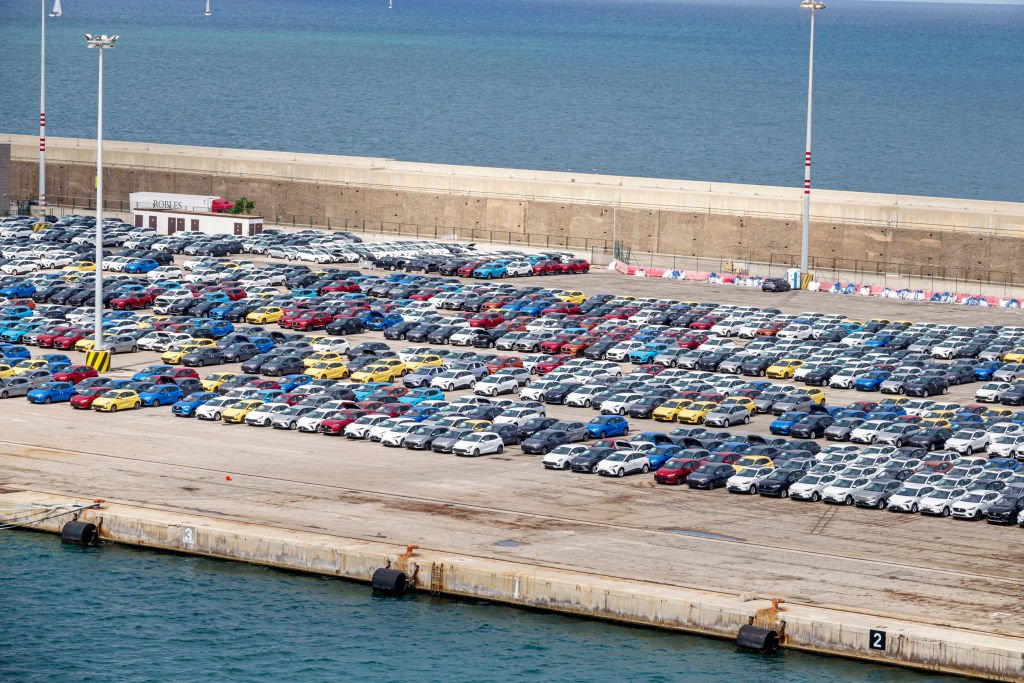
China poses an existential threat to Europe’s industrial and economic prosperity. Its use of overcapacity to flood the EV market is undermining Germany’s role as Europe’s premier auto giant, costing hundreds of thousands of jobs. This is also the case with dozens of other industries, pushing once rich regions across Germany towards the political extremes.
Some EU leaders suggest that China could help bring an end to Russia’s war against Ukraine. If Beijing intended to pressure Moscow to end the bloodshed, it would have done so already. Instead, Chairman Xi has supplied President Putin with sustained political and economic cover. By continuing to finance a conflict that poses the gravest threat to European peace and security since World War II, Beijing has clarified where Europe ranks in its strategic priorities.
Yet European capitals increasingly treat this risk as an invitation rather than a warning. The Spanish government recently awarded its tender for the public bus system to Chinese EV producer BYD, granting Beijing privileged access to all its sensitive traffic data. In Greece, the government granted China’s shipping firm COSCO a 67% ownership stake in the port of Piraeus, a strategic asset in the eastern Mediterranean. In Germany, then Chancellor Olaf Scholz approved the sale of a 24.99% stake to Cosco in the port of Hamburg, the country’s largest.
The CCP has not hesitated to use its economic ties for political leverage before. In 2025, Beijing limited access to key rare earth elements to the US in escalating trade tensions with the Trump administration. In 2010, Beijing launched an export ban of these rare earths to Japan over a dispute over the Senkaku Islands. And back when Lithuania opened a Taipei Economic and Cultural Representative Office in 2023, Beijing’s response was a near-total trade embargo.
Since then, the European Commission has sought to limit China’s reach and accelerate the build-up of a European industrial base. Following investigations into illegal price dumping on Chinese EVs, medical devices, and rare earths, the EU placed barriers – up to 35.3% for EVs, and prohibited Chinese medical devices from government tenders. The bloc’s new EU Critical Raw Materials Act mobilises funds and cuts red tape to extract up to 10% and refine some 40% of all critical minerals consumed annually in the EU by 2030.
Far too often, European debates about US-China competition fall into a false choice between subservience to Washington or Beijing. Disagreements across the Atlantic should not push Europe into the arms of the CCP. A continent with four G7 members and the world’s second-largest GDP is not too weak to be a geopolitical actor. The way forward is to create new opportunities with other aligned blocs: the EU-India and EU-Mercosur Free Trade Agreements are steps in this direction.
Europe cannot allow its critical industries and prosperity to be contingent on Beijing’s tolerance. Europe’s competitiveness will depend on strategic discipline, not on building a bridge to Beijing that cannot, and will not, hold.
Robert Benson is associate director for national security and international policy at the center for American progress. Eduardo Castellet Noguésis a Non-Resident Fellow at TRENDS Research & Advisory and the author of Critical Supply, a newsletter on EU-US-China relations and economic statecraft.
Source:
www.euractiv.com