



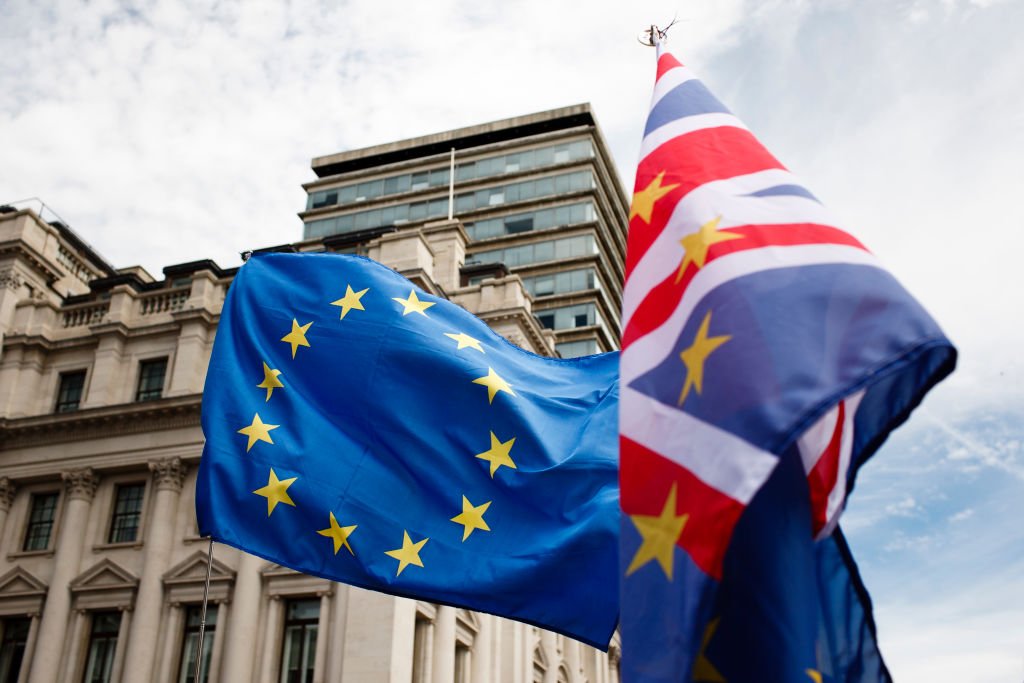
Keir Starmer was forced out of office because he was disliked by much of the UK electorate with an intensity that defies rational explanation. Fellow European leaders clearly did not share that animosity, judging by the warmth of the tributes paid to the British prime minister following his emotional resignation speech in Downing Street on Monday.
The obvious sincerity of their words is testimony to Starmer’s success in rebuilding relations between Britain and the EU that had been shredded during the trauma of the Brexit divorce. But it would be understandable if they also betray a hint of anxiety now that Britain has been dragged back into the vortex of political instability just two years after Starmer won a landslide.
That is not because Andy Burnham, who will almost certainly take over as Prime Minister in July, is any less pro-European. Until a few weeks ago, the then-Mayor of Manchester’s “friends” were telling the UK media that he would advocate for Britain to rejoin the EU if he made it to Downing Street. Besides, public opinion has shifted decisively in the decade since Brexit: 83% of Labour members would like to see Britain back in the EU, while 63% of Britons favour a closer relationship with the EU even if it means allowing freedom of movement, according to a poll for the European Council for Foreign Relations.
Nonetheless, Burnham’s enthusiasm for Rejoin did not survive contact with the voters of Makerfield, the Leave-backing constituency in the north of England from which he launched his Westminster comeback in a byelection last week. Having been put on the spot by Wes Streeting, his erstwhile leadership rival and now supporter, who declared his own support for Rejoin, Burnham swiftly retreated to avoid antagonising an electorate that just weeks earlier had voted overwhelmingly in local elections for Nigel Farage’s Reform.
What Burnham’s position will be at the next election is an open question. But for the remainder of the current parliament, he will remain bound by Starmer’s European policy, which is to seek the closest possible relationship with the EU consistent with his red lines of no return to the customs union, the Single Market, or freedom of movement.
Burnham’s problem is that Starmer has already taken the bilateral relationship as far as possible within these constraints. At a summit now postponed from July 22, the two sides were expected to agree on a food standards deal, an energy deal and a youth mobility scheme. But extending the “reset” beyond these limited goals has proved challenging. Starmer has announced that the UK is ready to dynamically align with EU regulations across a wide range of sectors in return for single market access, but such cherry-picking was swiftly rejected by Brussels.
How Burnham handles this impasse will be one of his key political challenges, if and when he enters Downing Street. He has been out of government for 16 years and only held domestic briefs. One danger is that, like much of the British political and media class, he will succumb to the sort of “cakeist” delusions that have characterised British policymaking for the last 80 years, setting the stage for inevitable frustration when unrealistic expectations are not met.
ANALYSIS: Fear not Britain, the EU doesn’t agree on you rejoining either
As Michel Barnier’s famous ticking clock chimes for the ten-year anniversary of Brexit, most of…
4 minutes
Another danger is that, under pressure from his party for a more pro-European policy, he erases Starmer’s red lines in Labour’s next manifesto to seek a mandate to rejoin the EU customs union and Single Market. That would delight many in Brussels but it would risk turning the next election into a rerun of the Brexit referendum. Labour would be advocating for Britain to pay into the EU budget, accept free movement, and follow all EU rules without having a say over them. It would be a gift to Reform and the Conservatives, whose pledge to withdraw Britain from the European Convention on Human Rights would open a new rift with the EU.
But Burnham’s challenge is Europe’s challenge, too. Responsibility for building on the progress Starmer began extends to the EU as well. It’s not enough for Brussels to declare that it is up to Britain to decide what relationship it wants with the EU. The EU also needs to think strategically about what relationship it wants with Britain, given the likelihood that Rejoin remains a distant prospect and at a time when the continent is grappling with US coercion, Chinese mercantilism and Russian aggression. If it is in the EU’s interest to keep Britain closely bound to the bloc, rather than defaulting to US vassalage, it needs to think how it can facilitate this.
An answer may lie in Ukraine. Sooner or later, that war will end, hopefully under conditions propitious to Kyiv. At that point, attention will turn from defending Ukraine to securing a peace. This will be a significant challenge. It will be in no one’s interest to have a highly militarised, economically and financially exhausted Ukraine outside any formal security structures.
But NATO membership is off the table so long as Trump remains US president; EU membership a distant prospect. New arrangements will be needed – and they will need to include Britain, which is committed to being a security provider to Ukraine as a leader of the Coalition of the Willing. They will also need to provide for Ukraine’s economic security. Could this offer a route to deeper British-European integration that sidesteps the rigidities that have stalled the reset?
The end of nearly every major European war since 1648 has led to the establishment of a new continental security system. This one is likely to do so too. Now is the time to start designing a system that can accommodate both Ukraine and Britain.
Starmer is a symptom of Britain’s deeper malaise
Sir Keir Starmer seems to have survived another day – but for how many more,…
5 minutes

Source:
www.euractiv.com


