



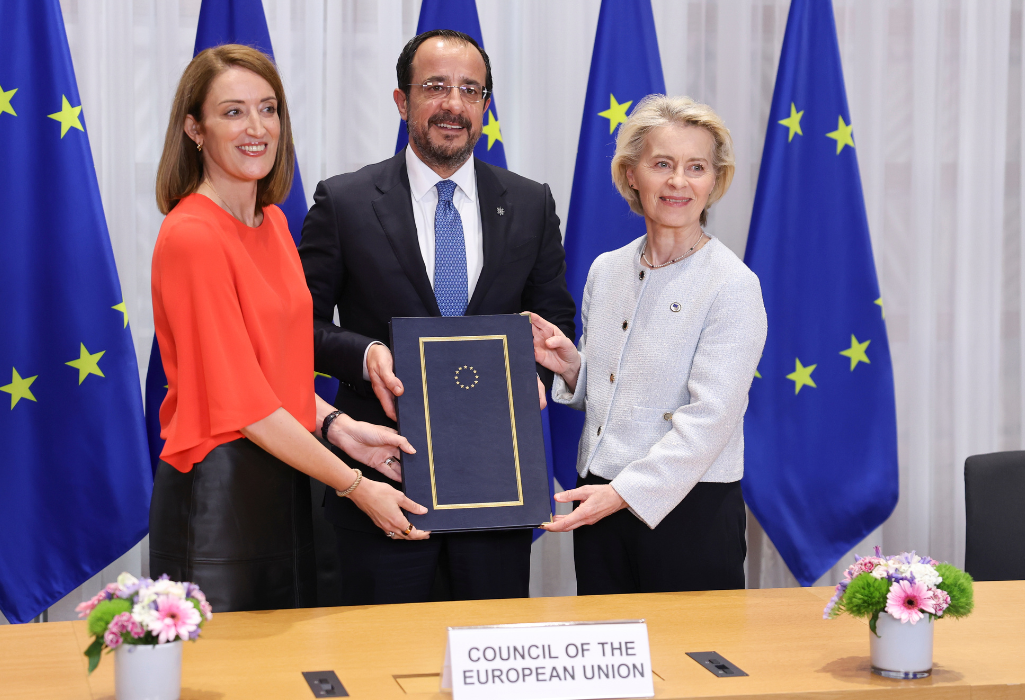
The European Commission, Parliament, and Council have signed their first joint declaration on culture, setting out what they say should guide EU cultural policy in the years ahead.
Culture has long struggled to compete for attention in Brussels, as defence, migration, energy and competitiveness have dominated the political agenda.
But the new declaration, published on Thursday, sends a strong signal to the sector. It says culture is ” a public good” and “a driving force to the socio-economic and territorial fabric of Europe” with an “intrinsic, societal, civic and economic value, and transformative potential”.
In short, it is about whether an artist can afford rent, whether a theatre can survive outside a capital city, and whether Europe still sees creativity as part of democracy rather than a luxury extra.
The declaration is not a law. It does not force governments to spend more. And it will not suddenly make life easier for an actor in Lisbon or a museum worker in Tallinn.
But politically, it says artists should be able to work without censorship or political pressure, and cultural workers should have fairer pay and better social protection.
“Our culture is at the core of our identity. As well as being a source of Europe’s economic and geopolitical strength,” Commission President Ursula von der Leyen said.
INTERVIEW: Europe lacks the ‘courage’ to tell its own story
There was a time when Europe spoke about itself with urgency and vision. Not with…
4 minutes
The document outlines 12 principles for EU cultural policy, including the connection between “culture, arts, and education” and their impact on the “impacts on the health and well-being of individuals and communities”.
A full section addresses AI, which should “support human creativity” rather than replace it, adding that Europe should look at how creators are paid when their work is used in the digital economy and protect intellectual property rights.
The declaration feeds into the Commission’s wider Culture Compass for Europe, a strategy meant to guide the EU’s long-term cultural policy, launched in late 2025.
(aw)
Source:
www.euractiv.com