



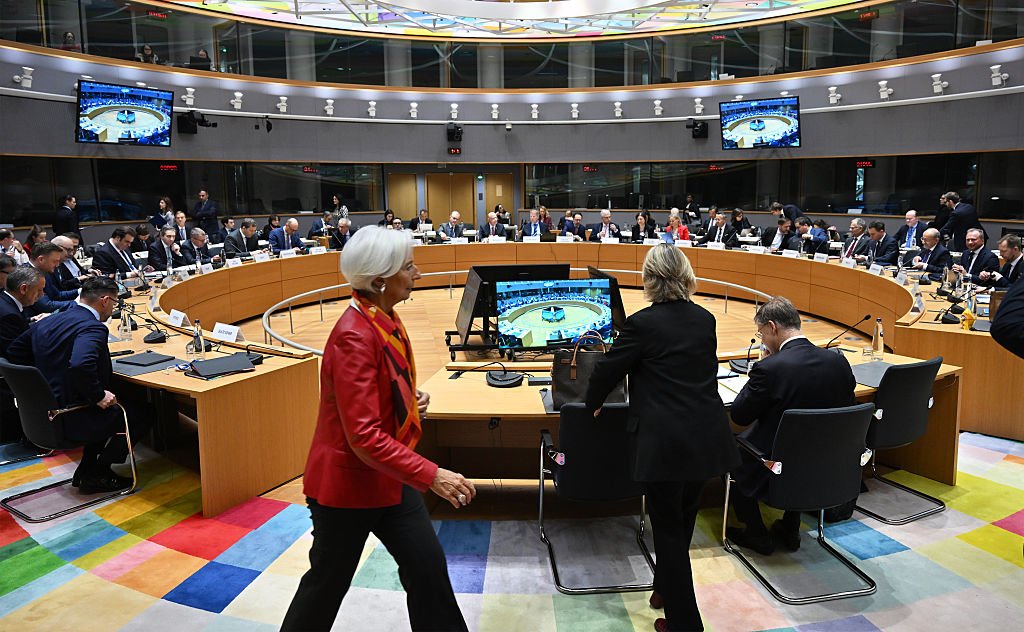
EU capitals are traditionally reluctant to relinquish powers to Brussels. But recent events suggest there’s one thing they hate even more – ceding powers to Paris.
For years, EU officials have encouraged member states to hand over supervisory competences to the European Securities and Markets Authority (ESMA), the bloc’s capital markets watchdog. Their efforts have largely failed, for a very simple reason: member states loathe the idea.
With one notable exception: France.
The EU’s second-largest economy is one of the bloc’s staunchest proponents of integrating Europe’s deeply fragmented capital markets. It has also repeatedly expressed frustration at Europe’s long-stalled push to channel trillions of euros’ worth of private savings into growth-boosting investments: the main aim of the ‘Savings and Investment Union’ (SIU).
But Paris’ endorsement of centralising supervision of key financial actors – including stock exchanges, central securities depositories, and asset managers – has also heightened other EU countries’ suspicions that something else might be going on. Is it a coincidence, they ask, that ESMA is based in the French capital?
Many believe it isn’t.
“The French wouldn’t support central supervision, or at least wouldn’t support it so fervently, if ESMA wasn’t in Paris,” says one EU diplomat. (Hint: they’re not French.)
But is this true? Are Brussels bureaucrats really colluding with les ignobles français to surreptitiously gain oversight of countries’ financial systems? And is the issue of central supervision a distraction from more important reforms, such as revamping the EU’s securitisation market or creating new savings products, as Luxembourg’s premier recently suggested?
There are good reasons to think that the answer to all of these questions is non.
For one thing, experts overwhelmingly agree that centralising supervision is a critical step towards creating the SIU – which, according to the Commission, could generate up to €470 billion in additional private investments per year, or 2.5% of the EU’s total output.
“Supervision shapes markets,” says Nicolas Véron, a senior fellow at Bruegel, a Brussels-based think tank. “If you have fragmented supervision, you have fragmented markets. If you want integrated markets, you need integrated supervision.”
Similar reasoning led former Italian premier Mario Draghi to propose turning ESMA into a European version of the Securities and Exchange Commission (SEC), America’s powerful financial watchdog, in his landmark 2024 report on the EU economy. This idea is also backed by the European Central Bank – where Draghi previously served as president and which, incidentally, is based in Frankfurt, not Paris (although it is admittedly now run by a Frenchwoman).
Moreover, the push to centralise oversight at ESMA recently gained support from the EU’s other major economies, namely Germany, Italy, Spain, Poland, and the Netherlands – which, together with France, are collectively known as the ‘E6’. If bolstering ESMA’s powers is a devious French ploy, why have Berlin, Rome, Madrid, Warsaw, and The Hague all apparently fallen for it?
The notion that centralising supervision is a French ruse “is a bit silly”, Véron argues.
“The view that ESMA is massively distorted in its decisions and behaviour by the fact that it’s in Paris is not well-supported,” he adds. “Having said that, I think it is true that the French are more constructive on this issue. They have a sense of pride and ownership that makes them more positive about the idea of policy centralisation than they would be if ESMA were in Frankfurt.”
L’enthousiasme, in other words, isn’t tantamount to le machiavélisme.
A capital proposal
Still, there are many reasons for caution – and concern.
One is the sheer complexity of what the European Commission has proposed.
Brussels’ legislative text, unveiled in December last year and formally known as the Market Integration and Supervision Package (or ‘MISP’), calls for sweeping changes to ESMA’s supervisory competences and governance structure.
In particular, MISP would shift oversight of all “significant” central securities depositories, central counterparties, and trading venues to ESMA, along with all crypto-asset service providers. It would also introduce a new independent Executive Board, composed of five members, which would be responsible for taking ESMA’s most important decisions.
Even more complicated than the proposed changes, however, is the way they are proposed. Sprawled across 500 pages, the Commission’s legislative package consists of three legislative proposals that, collectively, amend or repeal 14 EU regulations and five directives.
Karel Lannoo, CEO of the Centre for European Policy Studies, another Brussels-based think tank, argues that the package is so complicated that the Commission itself has miscalculated how many laws MISP would ultimately affect. (He counts 19, rather than 18.)
MISP’s complexity also means that the Commission’s goal of finalising the package by the end of this year is “unrealistic”, Lannoo argues.
“This is the biggest single ‘Omnibus’ package that exists at the moment,” he says, referring to the cross-cutting ‘simplificatory’ initiatives currently favoured by Brussels. “19 pieces of legislation. My God.”
Financial horseplay
Politics is, as ever, another potential stumbling block.
At a meeting in Brussels earlier this month, envoys from the E6 presented a non-paper detailing their proposal for centralising supervision to representatives from the other 21 member states. The move elicited much confusion and even anger from many smaller countries, according to several people familiar with the matter.
Arguably, they’re right to be concerned: among other things, the group’s non-paper proposed exempting German crypto trading venues from ESMA’s supervision – sparking suspicions that a deal may have been cut by the E6.
“I think there is horse-trading,” says Lannoo. “I get this, and you get that.”
But not everyone agrees – or, at least, agrees that this is a problem.
“I personally… don’t believe that this is something necessarily bad,” said one EU official from a non-E6 country. “Groups of member states create alliances in order to promote their interests. This is part of the dialogue.”
France, too, has sought to downplay allegations that it is attempting to streamroll smaller member states. “I want everyone to hear it: this [E6 statement] is a contribution to our collective work, and certainly not a take-it-or-leave-it position,” Roland Lescure, the country’s finance minister, said during yesterday’s meeting of EU finance ministers in Luxembourg.
Meanwhile Ireland, which will assume the rotating EU presidency from Cyprus in July and has traditionally been one of the staunchest opponents of centralising supervision, also appears not to have been dissuaded – at least, not yet.
Finalising a Council position on MISP “will be my primary focus over the coming months”, Simon Harris, Ireland’s finance minister, told reporters earlier this week. “If not now, when, in terms of Europe taking that decision to deepen its capital markets.”
On this, I think, nous pouvons tous être d’accord.
Economy News Roundup
ECB hikes interest rates for first time since 2023. Thursday’s decision, which was widely expected by investors and analysts, brings the ECB’s key rate from 2% to 2.25%. It marks the ECB’s first rate hike since September 2023. “The war in the Middle East is generating inflation pressures, and the decision to raise rates is robust across a range of scenarios mapping out how the shock might evolve and affect the medium-term outlook for the euro area,” Christine Lagarde, ECB president, told reporters. The ECB also lifted its inflation outlook for this year to 3%, up from the 2.6% predicted in its previous forecast in March; it also lowered its growth forecast for this year by 0.1 percentage point, to 0.8%. Read more.
EU announces oil cap freeze in latest Russia sanctions. Brussels’ proposed measures – the 21st package since Moscow’s full-scale invasion of Ukraine – would freeze the EU’s adjustable oil price cap on Russian exports until January next year. The mechanism allows EU firms to service Russian tankers provided the oil is sold below the current threshold of $44.10 a barrel. Diplomats, however, warn the proposal could run into similar obstacles to those that doomed Brussels’ plan for a full ban on maritime services in the 20th sanctions package, after some capitals insisted the US move in lockstep. Read more.
Source:
www.euractiv.com
