



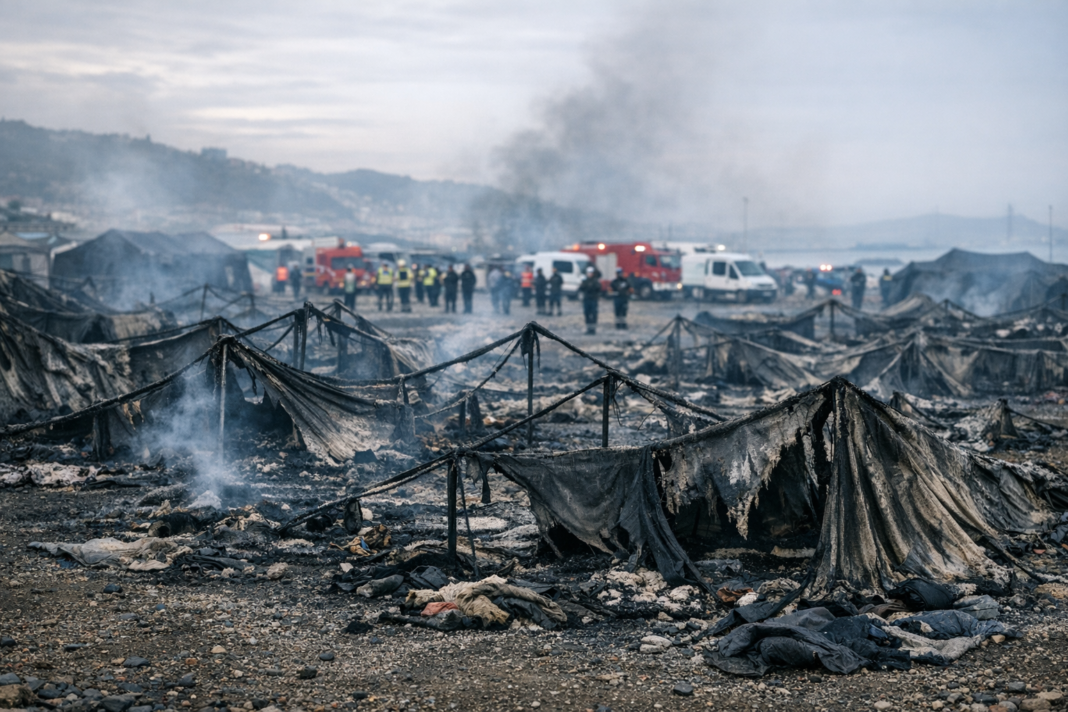
Protesters set fire to a makeshift migrant camp in Ceuta, local sources report, an incident that has intensified scrutiny of reception arrangements on the Spanish exclave following a mass arrival from Morocco one month earlier. The blaze damaged temporary shelters and prompted emergency services to secure the area; authorities and aid groups are working to identify those affected and to assess the immediate humanitarian needs.
The unrest appears linked to growing tensions between some local residents and newly arrived people housed in ad hoc facilities. Municipal officials have pointed to logistical pressures created by the sudden increase in arrivals, while civil society organisations have repeatedly warned about the difficulty of ensuring adequate living conditions in short-term camps. The episode underscores the fragility of improvised reception sites when social friction rises.
Last month’s large movement of people from Morocco into the exclave strained local capacity and reopened public debate in Spain over border management and reception policy. The situation in Ceuta is closely watched in Madrid and by international observers because it highlights the practical and political challenges of handling sudden migratory flows at external frontiers. Discussions now centre on longer-term solutions to reduce reliance on temporary camps and to better coordinate transfers and assistance.
Humanitarian agencies, local authorities and national bodies face renewed pressure to improve contingency planning and to prevent further clashes that place both residents and migrants at risk. The incident follows broader regional conversations about migration routes, bilateral cooperation, and the need for predictable reception arrangements. The Spanish government and local administrations will likely be tasked with balancing security, public order and humanitarian obligations as investigations and relief efforts continue.