



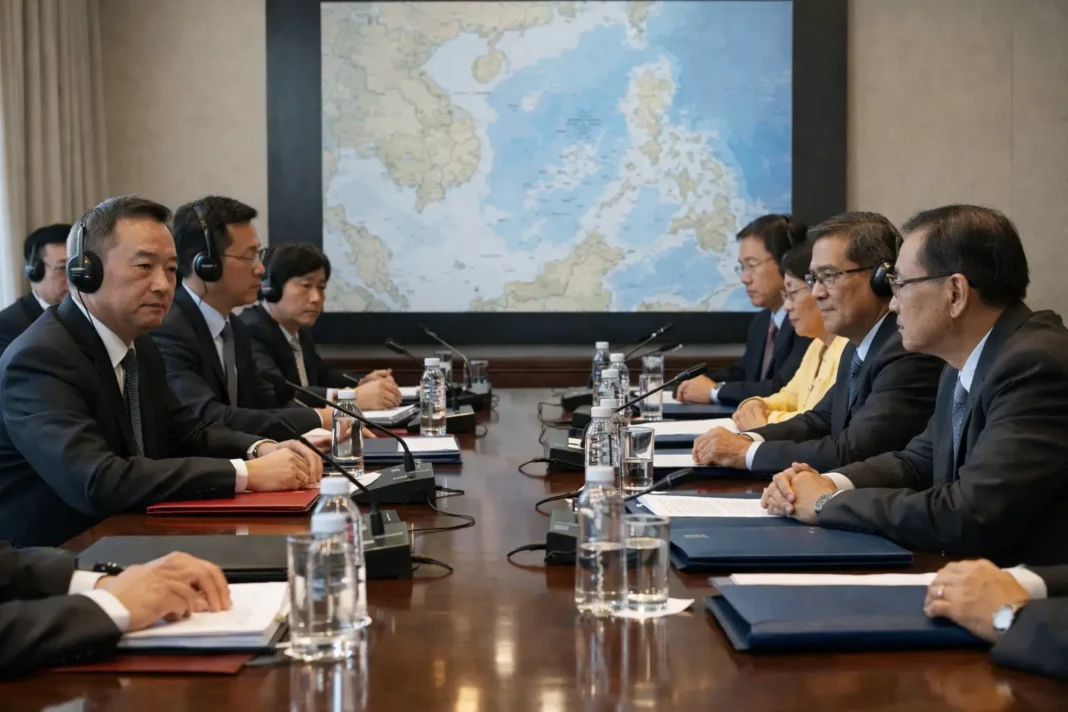
The Philippines’ push for a binding code of conduct in the South China Sea by 2026 is facing renewed difficulty as China and members of ASEAN remain divided over the terms of any agreement. Manila has argued that clearer rules are needed to reduce the risk of incidents in one of the world’s most contested maritime regions. Yet the slow pace of talks reflects the complexity of turning broad diplomatic commitments into a text acceptable to all parties.
The proposed code is intended to guide behaviour in waters where several governments maintain overlapping claims and where naval, coast guard and fishing activity frequently intersects. For the Philippines, the issue is central to maritime security and regional stability. For China, negotiations are tied to its broader position in the sea and to its relationships with Southeast Asian neighbours. Other ASEAN members have their own priorities, making consensus difficult even before Beijing’s approval is considered.
Diplomats have long presented a code of conduct as a way to manage disputes without resolving the sovereignty questions at their core. That distinction is important: a practical set of rules could help establish communication channels, clarify acceptable conduct and reduce the chance of escalation. But disagreements over scope, legal force and implementation continue to slow progress. The challenge is not only whether a document can be completed, but whether it would be strong enough to influence behaviour at sea.
The stalled momentum also highlights a wider test for ASEAN diplomacy. The bloc works by consensus, a method that can preserve unity but often limits speed and ambition on security matters. In the South China Sea, member states do not share identical exposure to maritime disputes, and their economic and political ties with China vary significantly. Those differences make it harder to settle on language that is both meaningful and acceptable to all governments involved.
A code of conduct would not, by itself, settle competing claims or remove the strategic rivalry surrounding the waterway. It could, however, provide a framework for crisis management at a time when close encounters and competing patrols keep the risk of miscalculation alive. The Philippines’ 2026 objective has given the process a political deadline, but the continuing disagreements show that any final agreement will depend on whether China and ASEAN can bridge gaps that have persisted through years of negotiation.