



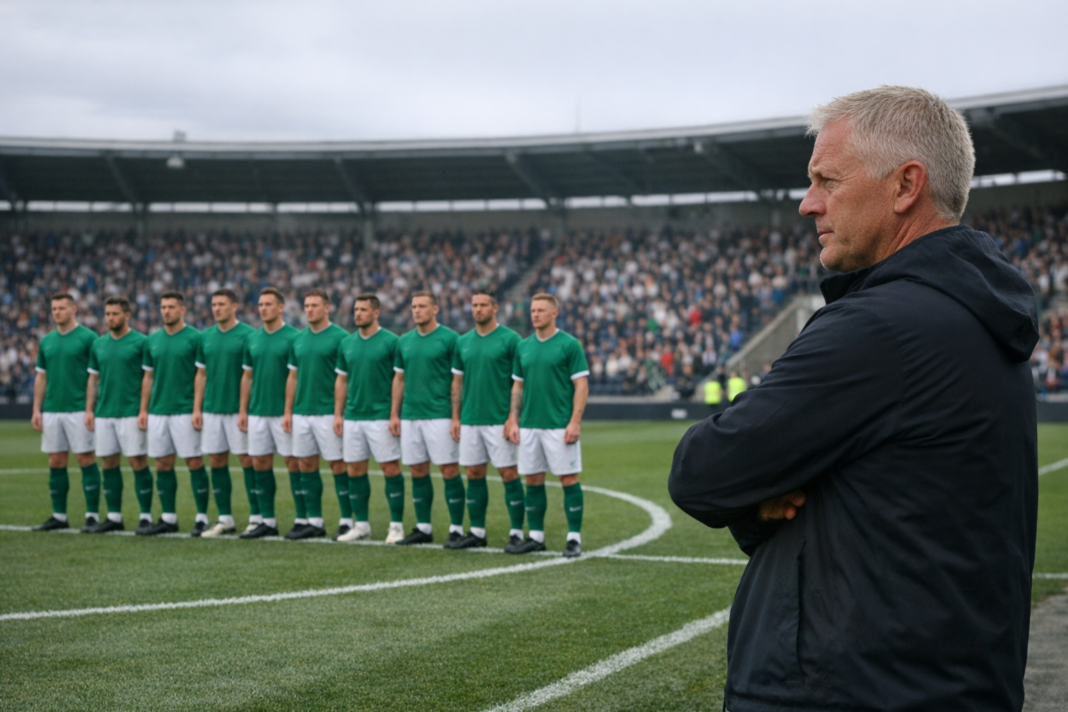
Republic of Ireland players opted not to take part in the usual pre-match formalities ahead of their fixture against Israel, a decision highlighted by head coach Heimir Hallgrimsson who said it had “raised awareness worldwide”. The choice to refrain from the customary routines drew attention beyond the stadium and placed the team’s actions at the centre of public discussion.
The coach’s remark — that the move “raised awareness worldwide” — framed the players’ behaviour as deliberate and meant to communicate a message. Hallgrimsson, named by the team as the head coach, commented on the outcome of the gesture, emphasising the breadth of attention it attracted. The players themselves have not provided a joint public statement expanding on their reasons beyond the coach’s summary.
Observers and commentators have taken up the episode as part of a wider conversation on how sporting encounters intersect with broader political and social issues. Instances in which teams or athletes make visible gestures before or during matches often prompt debate about appropriate boundaries for expressions within organised sport and how governing bodies should respond to actions that carry political connotations.
For national associations and international federations, episodes of this kind raise practical and reputational questions about protocol, player autonomy and competitive focus. While no formal sanctions or official rulings related to this specific incident have been cited in the coach’s statement, the situation underscores ongoing tensions when on-field behaviour resonates off the pitch. The matter is likely to remain part of public and institutional discussions on the role of symbolic acts in international fixtures.