



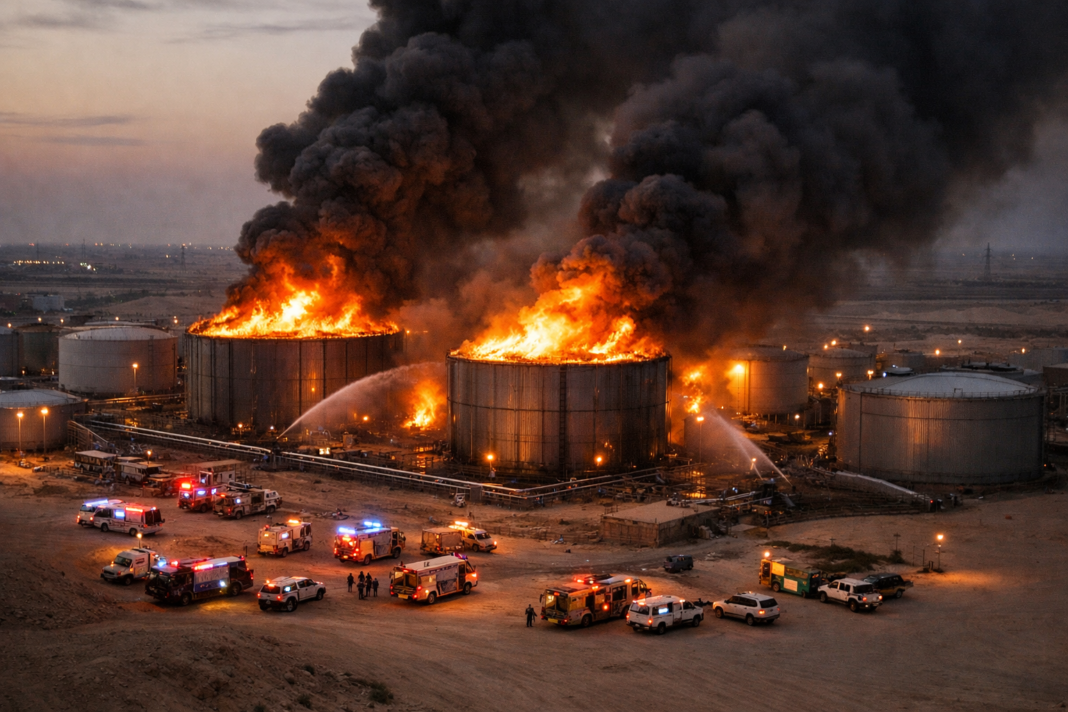
Oil prices climbed after Saudi authorities said operations at some energy facilities had been attacked by Yemen’s Iran-aligned Houthis. The statement, issued in relation to events in Saudi Arabia and Yemen, prompted traders to add a risk premium to international crude, pushing benchmarks toward the $100-per-barrel mark. Market participants noted that details on damage and the immediate effect on output remained limited, and trading reflected sensitivity to any disruption in supplies originating from the Gulf region.
Prices for oil rose amid a broader reassessment of near-term supply risks. Commodity traders and logistics operators typically adjust forward contracts, shipping and insurance assessments in response to such incidents, and those adjustments were visible in early market moves. The developments come against a backdrop of already elevated price levels, meaning even localized operational interruptions can have outsized effects on market sentiment.
UK government borrowing costs moved slightly higher alongside commodity markets: the yield on 10-year gilts increased by around two basis points to 5.19%, and 30-year gilt yields were up roughly two basis points at 5.83%. Fixed-income markets registered the repricing as investors recalibrated portfolios to account for the changed geopolitical risk profile, with sovereign bond yields reflecting both safe-haven flows and adjustments to expected fiscal funding needs.
Analysts and public authorities will monitor the situation for signs of sustained disruption, since any prolonged impact on flows could feed through to broader financial conditions and inflation measures. Market volatility is likely while details remain scarce, and trading desks said they would watch further announcements from local authorities and operators. The coming hours and days are expected to determine whether price moves consolidate or recede as more information about the incidents becomes available.