



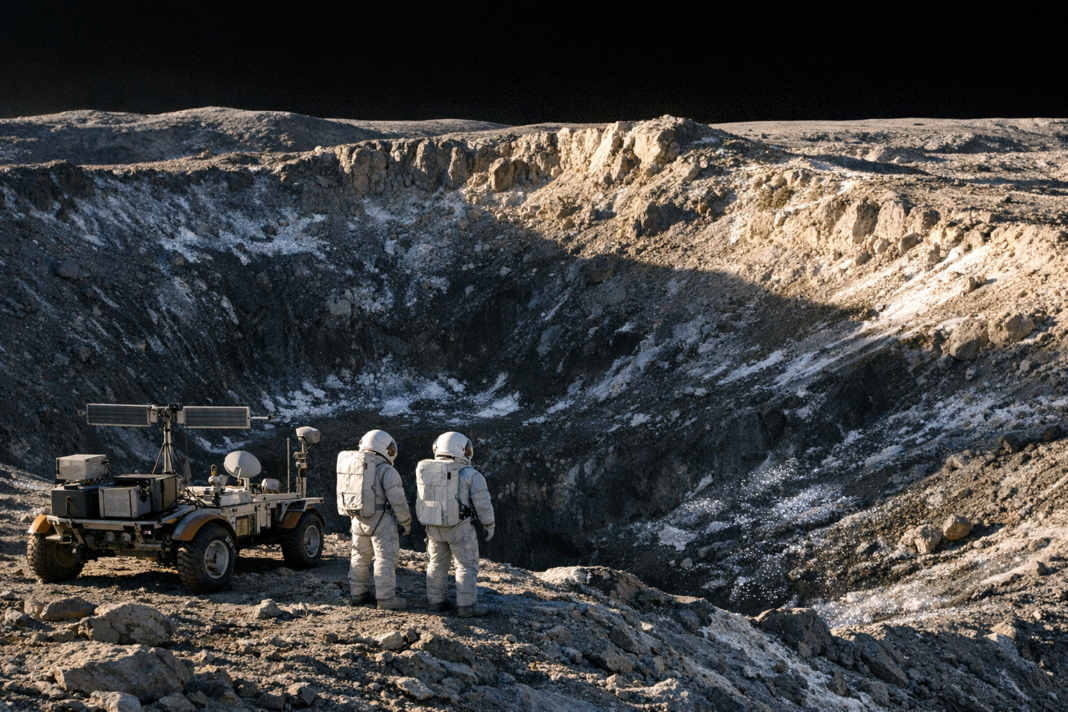
Moon water shortage has tempered recent enthusiasm for large-scale settlements at the poles after detections of ice in permanently shadowed craters. The initial optimism—that polar cold traps might sustain bases, villages or even industrial hubs—now faces a reality check as researchers highlight the small, scattered and technically difficult nature of those deposits. The discovery that water exists in lunar polar regions remains important, but its scale and accessibility are central to planning decisions for any permanent human presence.
Water at the poles appears primarily as thin layers, trapped in cold, shadowed recesses or mixed with surface material, rather than as abundant, easy-to-extract reservoirs. Extraction would demand complex operations in extreme cold, substantial energy inputs and robust infrastructure to process and store what is recovered. These conditions complicate the logistical case for urban-scale developments and increase reliance on advanced recycling and support systems.
The mismatch between public expectations and resource realities carries implications for governments and private firms pursuing a so-called “moon rush.” Ambitions for heavy industry or large civilian populations will likely need to be scaled to reflect resource limitations, shifting focus toward scientific outposts, technology demonstration sites and constrained logistical hubs. International and commercial efforts will have to weigh the economics of transporting supplies from Earth, developing in-situ extraction technologies or identifying alternative resources elsewhere in cislunar space.
Future work will concentrate on more detailed mapping of polar deposits, improved remote-sensing and targeted missions to verify accessibility. Advances in extraction methods, energy supply and closed-loop life-support could alter the calculus, but current evidence suggests that large cities on the lunar surface are not supported by the known water inventory. The polar deposits continue to offer valuable scientific insights and potential support for modest human activity, and agencies such as NASA remain central to efforts to refine resource estimates and develop practical pathways for sustainable operations on the Moon.
