



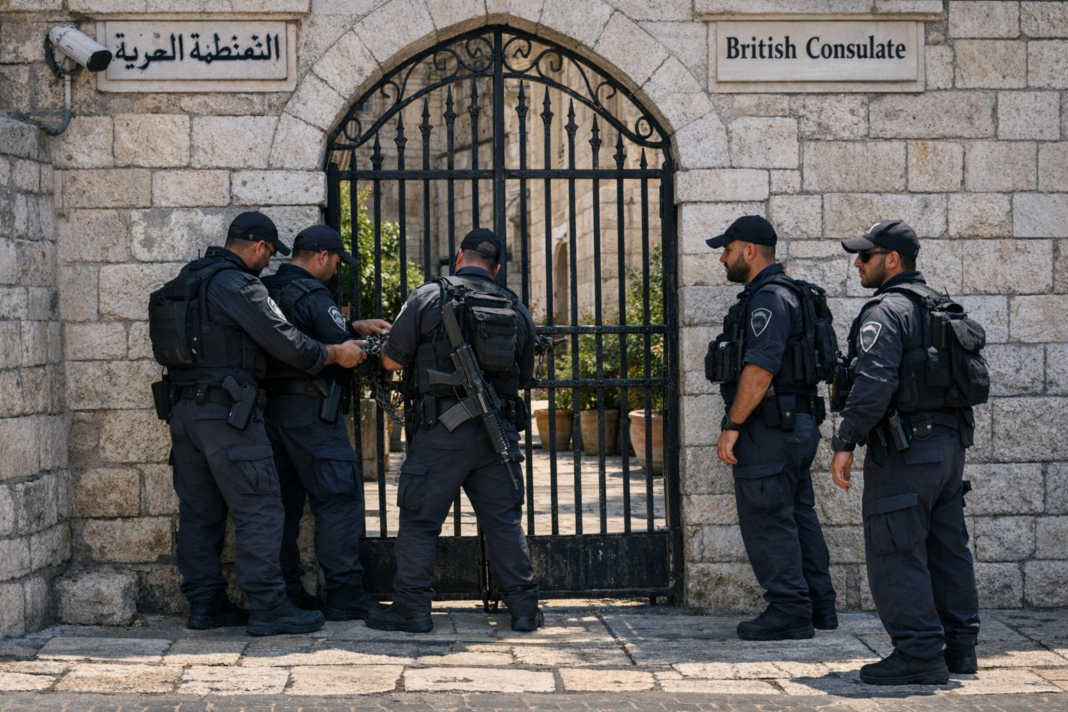
UK announces sanctions on settlements in the West Bank, a move that has prompted a rapid and stern response from Israel. The British decision was accompanied by a public denunciation from the Britain’s foreign secretary, who used the term “ethnic cleansing” to describe actions by settlers. In reaction, the Israeli government ordered the closure of the UK consulate in East Jerusalem, significantly reducing Britain’s diplomatic presence in the city. The diplomatic measures have been highlighted on official channels, including statements from the UK government and the Israeli Foreign Ministry.
The announced sanctions are explicitly directed at activity connected to settlements in the occupied territories; details released by British authorities frame the move as a response to developments on the ground. The language used by the Britain’s foreign secretary marked a forceful rhetorical escalation, while the decision by Israeli authorities to close the consulate in East Jerusalem represents an uncommon step in bilateral relations. The closure affects a mission that has historically served as a point of contact in the city for diplomatic and consular matters.
The exchange has immediate diplomatic consequences: ties between the United Kingdom and Israel are now strained, and the measures reduce direct channels for engagement in East Jerusalem. Observers note that the withdrawal of a consular mission constrains routine diplomatic work and assistance to nationals, while the imposition of sanctions signals a willingness by London to use targeted economic and political tools in response to settlement activity. International actors and regional stakeholders will likely monitor how both governments manage the ensuing tensions.
Settlements in the West Bank remain a central issue in the wider Israeli–Palestinian conflict, and the latest developments add a new episode to a long-standing diplomatic contest. The decisions by both capitals underscore the sensitivity of policies linked to occupation and sovereignty, and they set the scene for further exchanges over diplomatic presence, legal approaches and international engagement in the territory. Pressure from domestic constituencies and international partners may shape the next steps taken by the involved governments.