



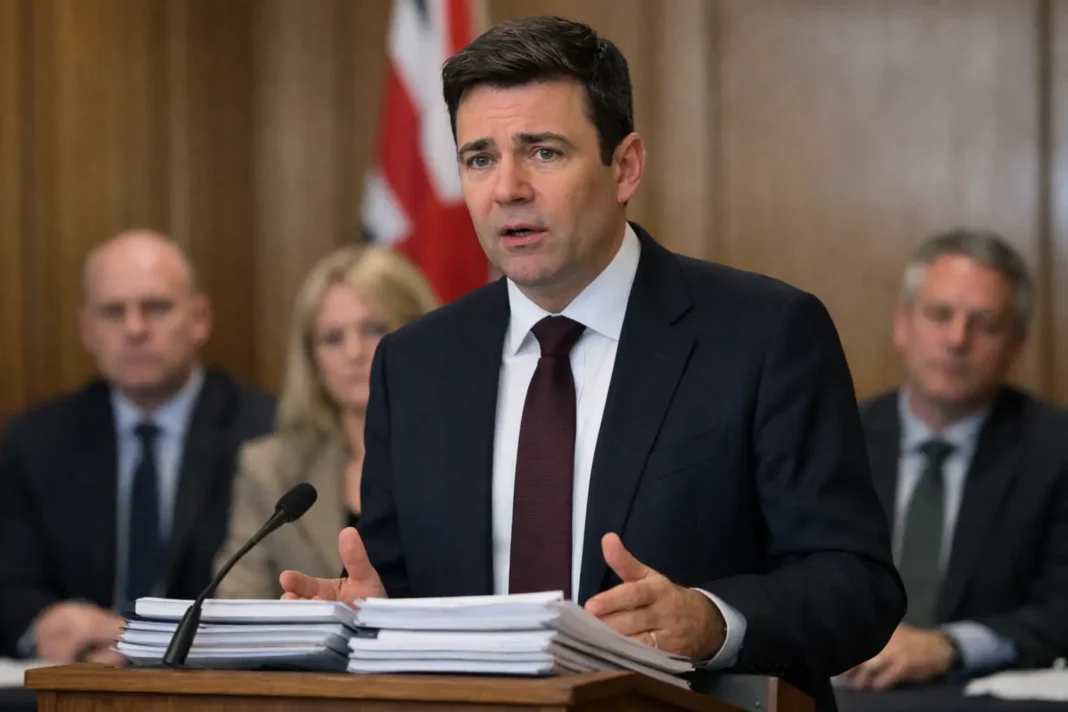
Andy Burnham has said he wants the welfare bill cut "as soon as we possibly can", intensifying scrutiny of the government’s approach after a Budget that left key questions on reform unanswered. His remarks add political weight to a debate that sits at the centre of public spending, employment policy and support for households dependent on state assistance in the United Kingdom.
The latest exchange comes as opponents challenge the absence of a clear timetable for reductions. The prime minister has not set out when any fall in welfare spending should be achieved, leaving the government’s objectives open to further examination. Without dates, implementation stages or detailed criteria, the discussion remains focused less on specific measures than on the credibility and pace of the overall strategy.
For HM Treasury, which oversees the Budget process through the HM Treasury, welfare spending is one of the areas most closely watched when ministers seek to balance fiscal discipline with social protection. Responsibility for benefits policy also rests with the Department for Work and Pensions, making any reform dependent on both financial planning and administrative delivery. Changes to the welfare system can affect people who are out of work, on low incomes or receiving support linked to disability and health conditions.
The political sensitivity is heightened by the distinction between reducing expenditure and explaining how that reduction will be secured. A lower bill may result from more people moving into work, changes in eligibility, administrative reforms or wider economic conditions, but the Budget did not provide the detailed pathway opponents say is needed. That gap has made the timetable a central issue, as Parliament, local leaders and affected groups look for clarity on what would change and when.
The Prime Minister’s Office, formally represented by 10 Downing Street, now faces pressure to turn broad commitments into a defined programme. Burnham’s call for faster action does not resolve the policy detail, but it reinforces the demand for a clearer account of how welfare reform will be delivered while maintaining support for those who rely on the system.

