



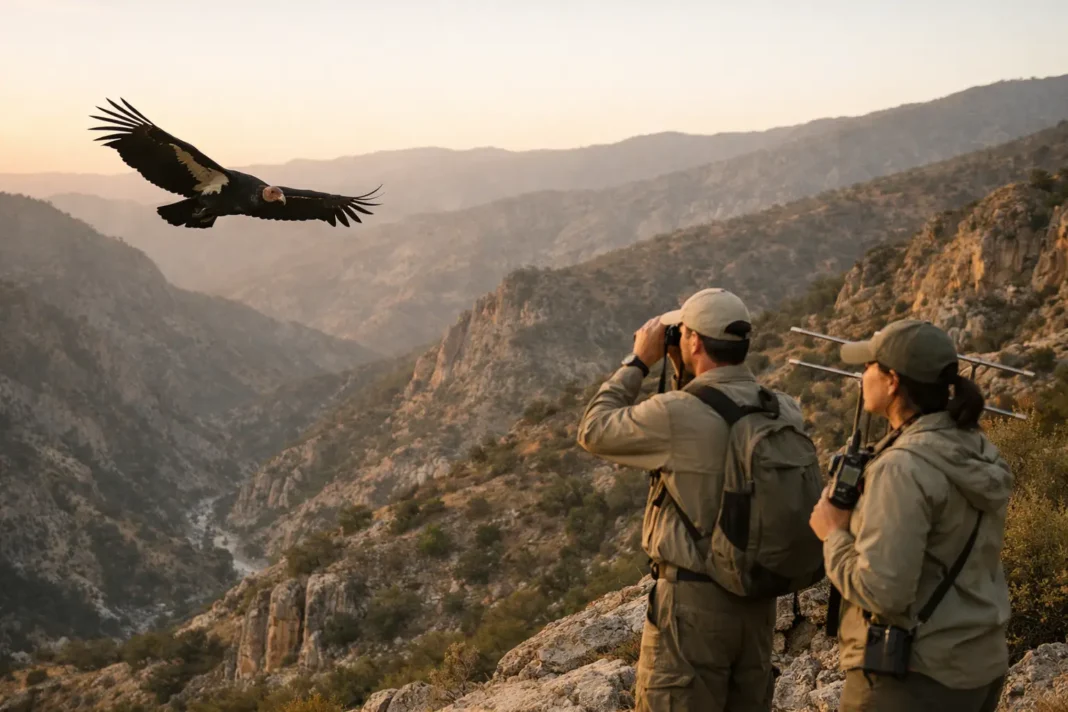
The California condor has become one of the clearest examples of what intensive conservation can achieve—and of the difficult choices behind deciding which species receive that level of support. In 1987, biologists captured the last free-flying condor and moved it into captivity. At that point, the largest flying bird species in North America was officially considered extinct in the wild. Decades later, more than 300 condors have been returned to their natural environment through coordinated captive breeding and reintroduction programs.
The story matters beyond one bird. It shows that preventing extinction can require long timelines, specialist expertise and substantial funding. The recovery effort has taken decades and cost millions of dollars, underscoring that species rescue is not simply a scientific decision. It also depends on public institutions, conservation groups, local acceptance and political willingness to sustain work long after the initial emergency has passed. For biodiversity policy, the condor illustrates that success often comes from persistence rather than a single intervention.
Its recovery also raises a central question for conservation: who should have a voice when priorities are set? A highly visible species can attract attention and resources, while less familiar plants, insects or marine life may struggle to gain comparable support. The condor’s case does not resolve that tension, but it makes it harder to ignore. When money, land access and conservation capacity are limited, decisions about which species to save carry ecological, cultural and ethical consequences.
That debate is increasingly relevant to international efforts to protect nature. Any global biodiversity treaty, including work connected to the Convention on Biological Diversity, must translate broad commitments into practical decisions on the ground. The condor example suggests that treaties cannot rely only on targets and declarations. They also need credible systems for long-term funding, accountability and participation by the communities affected by conservation actions.
The return of more than 300 California condors to the wild is therefore both a conservation achievement and a policy lesson. It demonstrates that extinction in the wild need not always be the final chapter, but it also shows the scale of commitment required. As governments and conservation bodies weigh future priorities, the condor’s recovery stands as evidence that saving species is possible—provided society is prepared to decide, openly and consistently, what it is willing to support.