



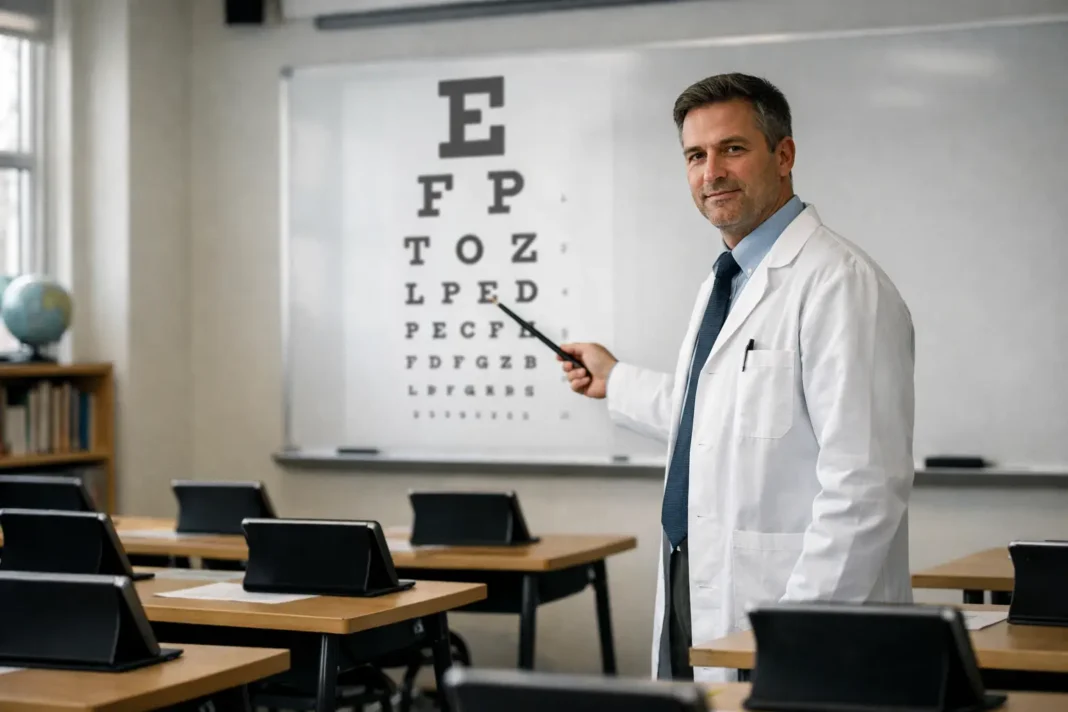
Clinicians warn technology being used increasingly in English schools is contributing to a rise in short‑sightedness and other eye‑related complaints among children, public health professionals say. The medical practitioners highlight an upward trend in myopia diagnoses and note that prolonged near‑screen tasks in classrooms may be a factor alongside reduced outdoor activity.
The group identified symptoms such as eye strain and headaches that teachers and parents are reporting more frequently. They point to established links between sustained close‑vision work and the development of myopia, while stressing that time spent outdoors is a recognised protective element. Health experts call for attention to these patterns as digital devices become a routine part of daily lessons across the education system.
In response, clinicians are urging schools and policymakers to review how screens are used in lessons and to introduce practical measures: scheduled visual breaks, limitations on continuous near‑screen tasks, and opportunities for outdoor learning. For general health information and advice on vision, they refer families to official resources such as NHS. The warning does not reject digital teaching outright but seeks a balance that safeguards pupils’ long‑term eye health while maintaining educational benefits.
Medical professionals also emphasise the need for monitoring and further research to better quantify the relationship between classroom screen exposure and visual impairment rates. Schools are encouraged to work with health services and families to track symptoms, adapt classroom practices where necessary, and prioritise outdoor time as a preventive step. Observers say these measures could mitigate potential long‑term consequences for children’s vision without undermining the role of technology in modern learning.