



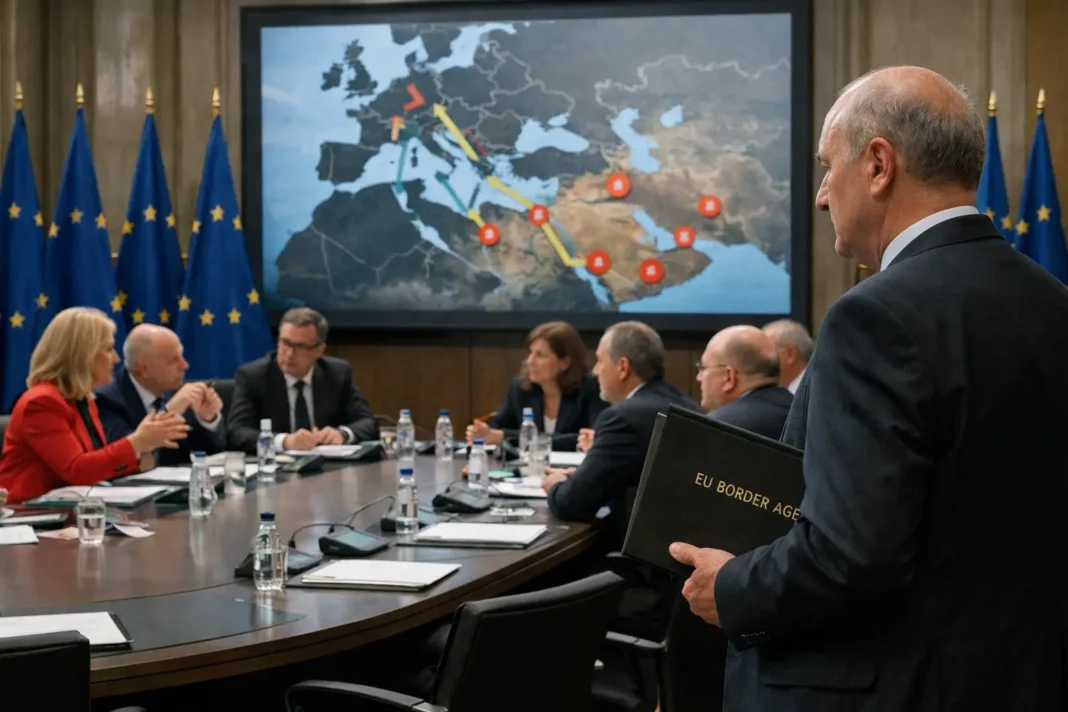
EU ministers consider a package of measures aimed at reducing irregular migration, focusing on faster returns and reinforced border controls. Proposals under discussion include creating so-called return hubs located outside the EU and increasing the capacity of the Union’s border agency. irregular migration management is at the centre of talks as member states explore tools to handle sustained arrival flows while coordinating at an EU level.
The idea of establishing return hubs outside EU territory is presented as a way to process migrants who are due to be returned from the bloc more swiftly. Such facilities would require formal arrangements with third countries for reception, processing and eventual return, and would involve logistical, legal and diplomatic steps by national governments and EU institutions. The proposal aims to separate return procedures from on‑territory asylum processes, with the stated intent of accelerating removals where returns are possible.
Alongside the hubs, ministers are discussing measures to strengthen Frontex, the European Border and Coast Guard Agency, by enlarging its operational capacities and remit at external borders. Any changes to the agency’s mandate or budget would need agreement among member states and follow the EU legislative process. Supporters argue that bolstered border management could assist national authorities in registration, surveillance and return operations across frontline states.
Greece has put forward a proposal to allow the temporary suspension of new asylum applications in declared emergency situations. Such a measure would mark a significant procedural shift and would raise legal and procedural questions under both EU asylum legislation and international protection obligations. The package under debate will be subject to further negotiation among capitals and EU bodies, with decisions likely to shape the Union’s approach to migration management in the coming months.
