



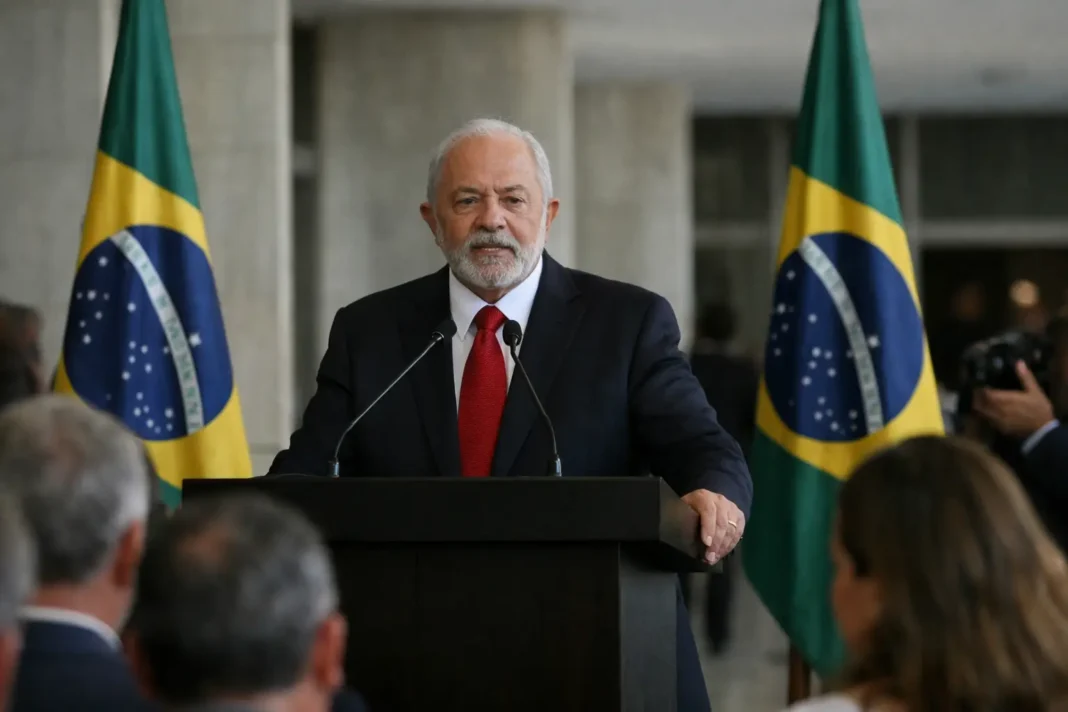
Brazil’s latest presidential vote has returned Luiz Inácio Lula da Silva to power after a contest that placed two sharply different political projects before voters. The runoff against Flávio Bolsonaro, senator and son of former president Jair Bolsonaro, was widely framed through the language of polarization. Yet the result points to a more precise political contrast: a known centre-left president, governing with vice-president Geraldo Alckmin, against a candidate aligned with the international radical right. The election in Brazil therefore became a test not only of party loyalties, but of institutional confidence.
Flávio Bolsonaro entered the race under the banner of Brazil’s Liberal Party and presented a programme built around security, geopolitical alignment and fiscal retrenchment. At his launch event in São Paulo, he promoted the so-called Project Darkness, a crime plan inspired by Nayib Bukele in El Salvador; support for the Shield of the Americas, associated with U.S. President Donald Trump; and a broad reduction in public spending modelled on the austerity language of Argentine President Javier Milei. The lack of detail around the proposed cuts added political weight to concerns among Brazilians dependent on social programmes.
The campaign also revived the unresolved legacy of Bolsonarism. Jair Bolsonaro is in prison after his conviction linked to an attempted coup, while Eduardo Bolsonaro, a former congressman, lives in the United States and remains a point of contact between the family’s movement and far-right figures abroad. Flávio sought to distance himself from his father’s image by presenting a more moderate profile, but he referred during the final television debate to the previous Bolsonaro administration as “our government”. That continuity mattered in a country still marked by the attacks of Jan. 8, 2023, when government buildings housing the executive, legislative and judicial branches were vandalised in Brasília.
Lula’s advantage rested in part on political familiarity. He has already governed Brazil across multiple terms, giving voters a clear sense of his style, alliances and economic priorities. Flávio Bolsonaro, by contrast, offered a platform tied to confrontational security policy, hard-right international networks and a promise of deep spending cuts whose scope remained undefined. In that context, the result strengthened the role of democracy and institutional continuity as central issues in Brazilian politics. The country’s electoral framework, overseen by the Superior Electoral Court, again stood at the centre of the post-election moment.
After the runoff, Flávio Bolsonaro refused to concede and pledged to challenge the outcome, extending the political confrontation beyond election day. For Lula, the vote delivers a mandate shaped less by ideological enthusiasm than by the demand for predictability after years of democratic strain. For Brazil, it confirms that the battle over institutions, public security and the country’s place in a changing Latin America remains the defining fault line of national politics.