



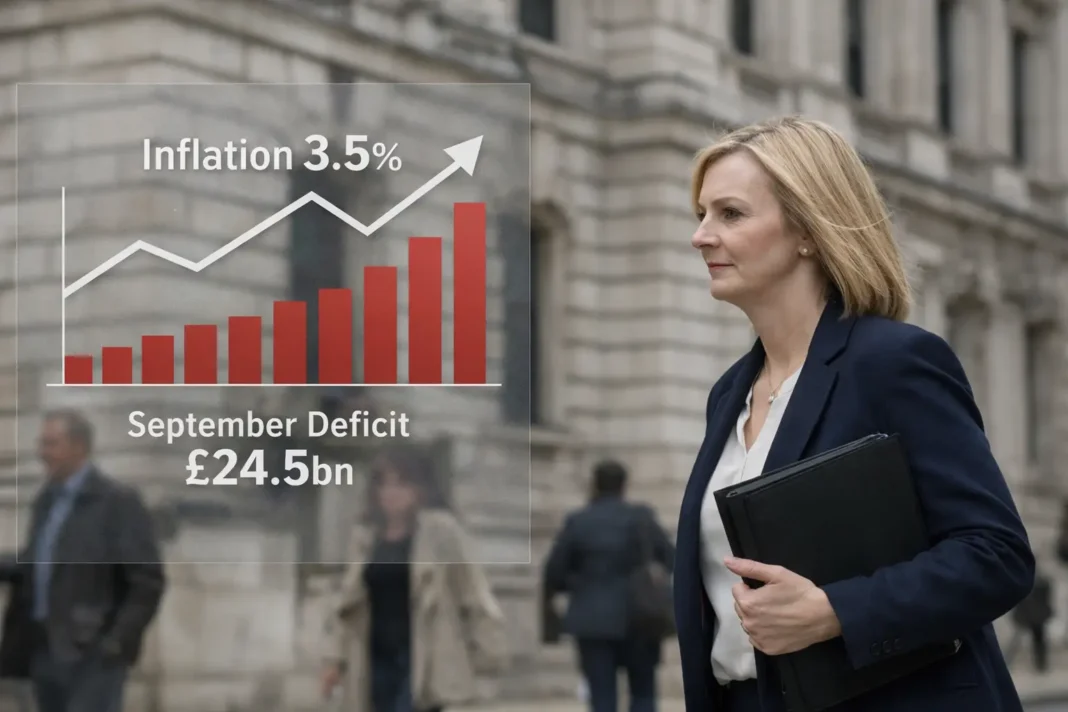
Inflation climbed to 3.5% in September, the latest consumer price index figures show, exceeding City expectations and rising from 3.1% in August. The Office for National Statistics attributed much of the upward surprise to higher petrol and diesel costs, while market forecasts had anticipated a smaller rise to 3.4%. The data renews attention on underlying price pressures and brings inflation back to the top of the economic agenda.
The same month produced unwelcome fiscal news: the government recorded a deficit of £24.5bn for September, a figure larger than forecasters had anticipated. Officials also disclosed that debt interest payments surged to a record high for the month, reflecting the interaction of larger borrowing needs and elevated rates. Together, the inflation outturn and the monthly shortfall increase the fiscal constraints facing John Healey as he prepares next week’s budget.
Analysts say the twin readings reduce the immediate margin for manoeuvre in public finances. Higher consumer prices erode real incomes and can prompt calls for additional fiscal support, while rising interest costs absorb a growing share of borrowing. The combination complicates decisions about taxation and spending choices that will be laid out in the upcoming fiscal statement. The Bank of England will continue to monitor price developments closely as it assesses the balance between containing inflation and supporting growth.
Fuel-driven inflationary pressure underscores the sensitivity of headline CPI to global commodity moves, and leaves households confronting higher everyday costs. Markets and commentators will be watching subsequent data releases and the chancellor’s budget plans for signs of how the government intends to address both the cost-of-living squeeze and the rising burden of interest payments. The ONS figures provide the latest objective snapshot that will shape that debate.
With a budget scheduled for next week, policymakers face the task of reconciling short-term pressures with medium-term fiscal sustainability. The new figures place questions about spending priorities and borrowing more sharply in focus, and ensure that the September readings will be central to discussions in Westminster and in financial markets in the days ahead. Budget choices will be judged against this updated economic backdrop.