



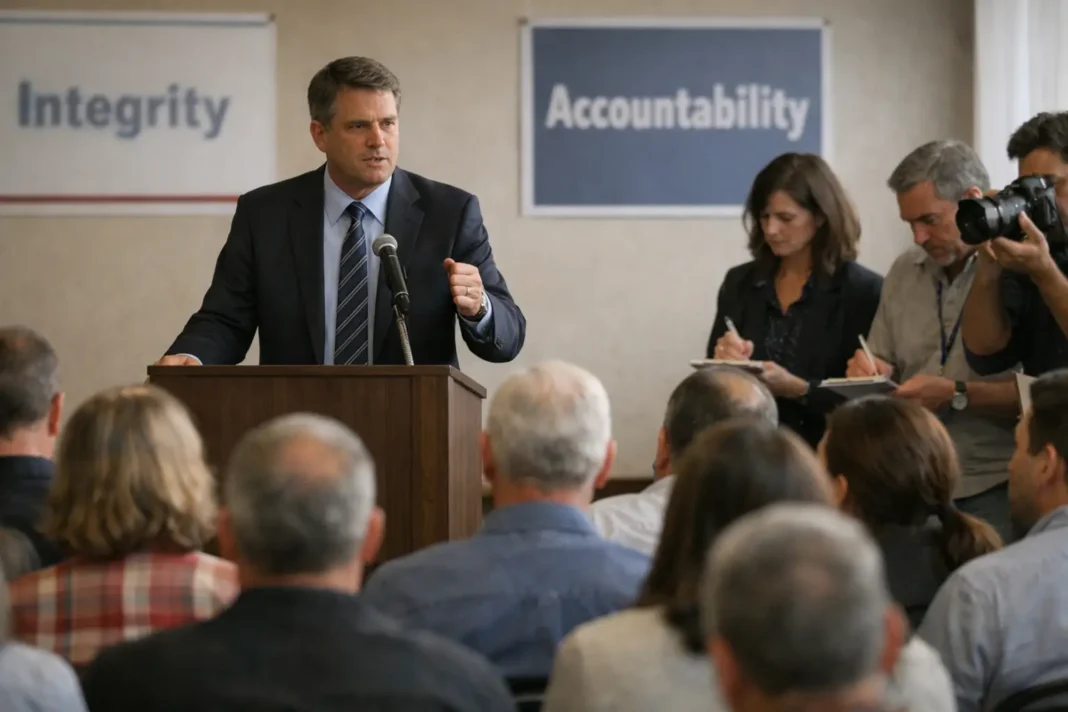
Corruption has become one of the few issues capable of crossing partisan lines in the United States before the midterm elections. A recent Gallup survey found that 89% of Americans believe corruption in government is widespread, up from 73% in 2024. The figure is striking not only for its size but for its breadth: Republicans, Democrats and independents all registered high concern, ranging from 83% to 91%.
The concern also competes directly with economic pressure, the theme that has shaped much of the campaign. A Fox News poll placed concern over government corruption at 88%, ahead of inflation at 85% and gas prices at 83%. A CNBC survey also identified government corruption as the most important issue facing the country. Political advertising reflects that shift: AdImpact estimates that out of US$11.6 billion in campaign advertising this cycle, more than US$275 million has gone to corruption-themed ads, with Democrats spending about US$173 million and Republicans about US$93 million.
Blame is not confined to one party or administration. A Brennan Center for Justice survey of 2,000 Americans found negative judgments across major institutions and figures: Congress at 85%, Donald Trump at 68%, Joe Biden at 63% and the Supreme Court at 62%. About two-thirds of respondents described the problem as deeply embedded in government institutions rather than mainly the result of individual misconduct, while only 7% said they were not concerned about corruption influencing elected officials.
Yet the distrust is uneven. Gallup’s longer-term data show confidence in politicians, parties, news media and federal institutions declining since the 1970s, with several measures at record lows in recent years. Trust in Americans themselves has fallen from 86% in 1976 to roughly half today. Public perception of corruption in government, at 89%, also stands well above concern about corruption in business, at 71%. Local government remains a relative exception: about two-thirds of Americans trust it, slightly higher than the 63% recorded in 1972.
For candidates, the political lesson is clear: anti-corruption messages now connect institutional anger with household costs. Democrats such as James Talarico in Texas and Jon Ossoff in Georgia have linked corruption to affordability and the everyday functioning of government. Republicans have emphasized waste, fraud and abuse, including attacks tied to a Minnesota welfare-fraud scandal involving Democratic Governor Tim Walz. Recent polling giving Democrats a 10-point advantage as the party preferred to fight corruption helps explain their heavier spending on the issue. If they win control of Congress, the campaign message will quickly become a governing test.