



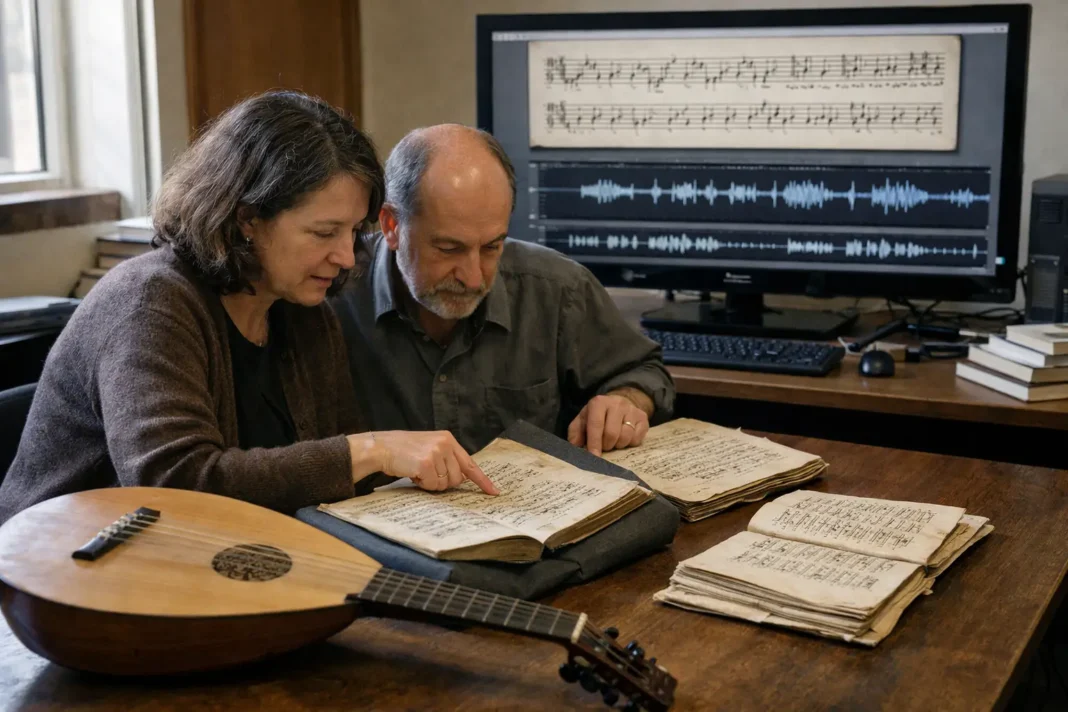
A centuries-old musical notation system is being brought back into practical use through digital scholarship. Researchers at the University of Bayreuth, working within an interdisciplinary team, are developing a digital scholarly edition platform designed to make German lute tablature both readable and audible for modern users.
German lute tablature can appear cryptic to readers accustomed to contemporary staff notation. Yet the system was created for a clear purpose: to record music for the Renaissance lute. Its signs preserve a repertory of dances, songs and other works that circulated widely roughly 500 years ago, offering a direct link to the sound world of the Renaissance and to the musical practices of early modern Europe.
The Bayreuth project addresses one of the central challenges in the study of early music: sources may survive, but their notation can remain inaccessible without specialist knowledge. By placing these materials within a digital edition environment, the researchers are creating a bridge between historical documents and present-day interpretation. The aim is not only to display the sources, but also to support their reading and to reconnect the written signs with sound.
This kind of work sits at the intersection of musicology, historical research and digital humanities. Digital scholarly editions can make complex source traditions easier to navigate while preserving the precision required for academic study. For musical repertories transmitted in unfamiliar notations, the added possibility of hearing what the notation represents is especially significant, because it helps restore the relationship between the page, the instrument and performance.
The initiative highlights how digital tools are reshaping access to cultural heritage without replacing the expertise needed to understand it. German lute tablature remains a specialized field, but the Bayreuth team’s platform is intended to lower the barrier to engagement with sources that have long required advanced training. In doing so, it gives renewed visibility to a body of music that once formed part of everyday artistic life and now depends on scholarship for its recovery.
