



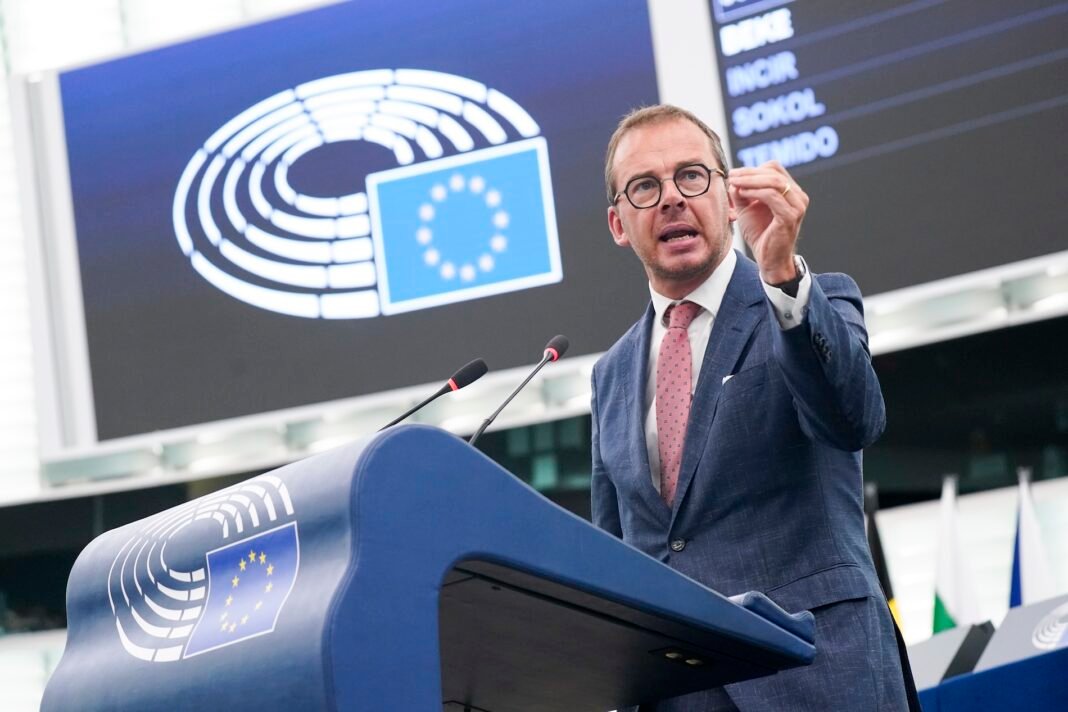
Speeding up clinical trials must be a central test of the EU’s proposed Biotech Act, as Europe risks forfeiting the economic returns on its own scientific breakthroughs, Belgian MEP Wouter Beke has warned.
Speaking to Euractiv, Beke – co-rapporteur for the legislation in the European Parliament’s industry committee – said Europe’s much-vaunted “triple helix” linking research, healthcare systems and industry remained a strength, with Belgium a leading example. But he argued that slow trial approvals and delayed patient access were blunting its impact.
He cautioned that the new framework must translate into tangible change rather than add to regulatory complexity, warning against allowing the Biotech Act to become “a paper monster”.
NV: Where do you see Europe losing ground in biotech today?
WB: We often talk about making Europe more competitive, but the real question is “How?” Europe has a strong model linking research, healthcare and industry. That model works.
But we are losing ground globally, particularly compared to China and the US. That becomes clear when you look at the numbers. Clinical trials are a key issue. Europe’s share has dropped from 22% to 12%.
Timelines are also too long. Approval takes on average 133 days, compared to a target of 30 days in China. And once approved, it takes around 600 days before patients can access treatments. That is very frustrating for patients who know a treatment exists but cannot access it due to delays in procedures and reimbursement.
We also see many innovations starting in European universities and clinical trials, but at the end of the journey, they are commercialised elsewhere. If 66 out of 67 market introductions happen outside the EU, that is a loss of intellectual value. This is why the Biotech Act matters. The sector represents around €40 billion and 900,000 jobs in Europe, with €5 to €6 billion in Belgium alone.
NV: What are your key priorities to address this?
WB: First, we need to tackle clinical trials. We need to shorten the period and simplify it. This is taking too long today. Second, we need more harmonisation. The fragmented regulations across 27 different systems have not been sufficiently aligned.
Third, we need to strengthen access to capital. There is now a link with the European Investment Bank, and this connects to other major files, such as the Capital Markets Union, particularly when it comes to scaling companies. So, we need to make the system more future-proof, more competitive, and ensure that patients in Europe get better and faster care.
NV: How do you see the legislative process unfolding?
WB: It will take time, but we have the ambition to reach an agreement by the end of this year. We are working on a tight timetable.
There will be negotiations in Parliament and discussions with stakeholders, patient organisations, pharmaceutical companies, research institutions. Then there will be an important phase of negotiations with the Council and Member States.
NV: What challenges and risks do you see in the negotiations?
There is a great diversity, to put it mildly. You have strong players like Belgium, but also countries where biotech is less developed, and very different systems.
For example, in some countries, once a medicine is approved, it becomes available quickly. In others, this is not the case. Reimbursement systems also differ from country to country. Countries may not say it explicitly, but if a medicine becomes available, there is pressure to reimburse it from patients and patient organisations.
While it is easy to say at the European level that we need to accelerate and shorten processes, Member States will also look at it from their own perspective, particularly in terms of reimbursement and procedures. So, I expect stress and tension in the negotiations. The main fear is that the horse does not become a camel in the negotiations with the Member States.
We need to strengthen the European approach, including potentially the role of the European Medicines Agency.
NV: What elements should not be diluted?
WB: Two elements are key. First, we have to accelerate clinical trials, and that has to be effective. Second, we need a stronger European approach. Without that, we will not solve fragmentation.
NV: There is ongoing debate around extending supplementary protection certificates (SPCs), which aim to incentivise innovation by extending market exclusivity. What is your position?
I understand that we need to expand this, especially as it was shortened in the previous period and to support innovation. The question is whether the current conditions should remain. Some argue for more flexibility than the 12 months, and I see that point.
But we have to look at the full process. Development takes around ten years, and many projects fail. That uncertainty comes at a cost. So, we need to find the right balance: enough incentives to support innovation, while ensuring patient access is not hindered.
NV: There are also discussions about whether certain technologies, such as radioligand therapies, are included. What is your view?
WB: Nuclear medicine is not necessarily considered part of biotech under a narrow definition, but we need to have that discussion.
We should take a more open and future-oriented approach. The current definition is based on an older framework, around ten to fifteen years old, and does not fully reflect new technologies.
Today, we see developments that were not even imagined at that time, including hybrid approaches combining biological and radiological elements. So, we need to ensure that the definition is flexible enough to include these developments, which is also important for countries like Belgium that are strong in these areas.
NV: How are you working with stakeholders?
WB: Even more than before. We have spoken with the European Commission and with stakeholders. The Belgian biotech ecosystem has provided clear input on how to improve things, and that has been taken into account. We will continue working with companies, research institutions and patient organisations. They have the expertise.
We can make legislation, but if stakeholders on the ground do not agree, it becomes a paper monster that no one has anything to do with. And I am not interested in paper monsters.
[VA, BM]
Source:
www.euractiv.com