



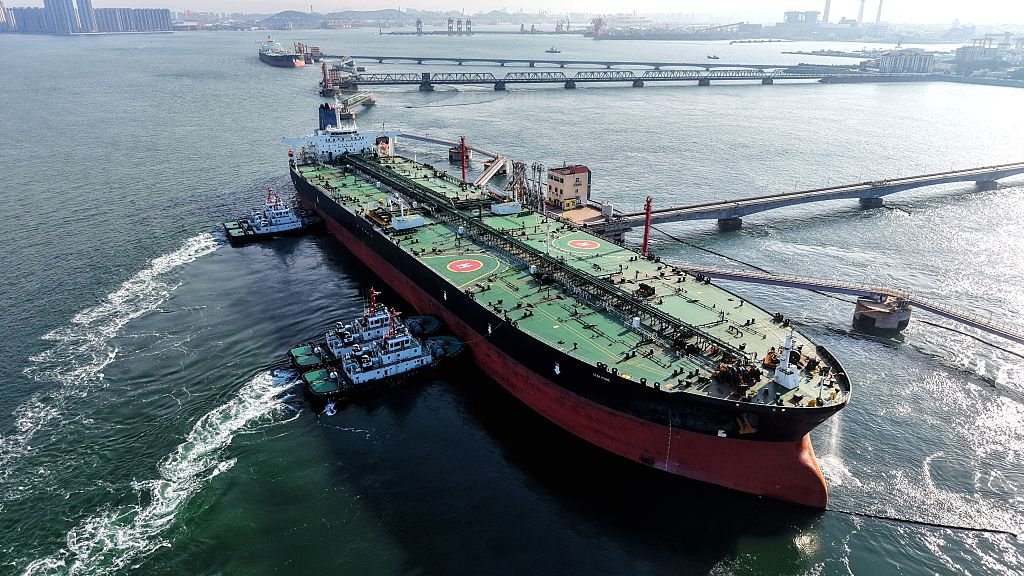
Washington likely assumed it could choke off cheap Iranian oil to Beijing the same way it managed with Venezuela – sanctions, shipping pressure, and financial arm-twisting that reduced Caracas’s discounted crude to a trickle. The logic seemed replicable, but it was also fundamentally flawed.
Iran is not Venezuela. The Islamic Republic has spent decades building one of the most sophisticated sanctions-evasion networks in the world – hundreds of shadow tankers, fake shipping signals, front companies across dozens of countries, and open-sea transfers that make interdiction vastly harder than in the Caribbean.
More importantly, China was not caught off guard. Beijing had been watching the US-Iran standoff with the calm focus of a chess player who has already seen the next several moves. By the time the oil shock hit, China was not scrambling for supply. It was ready.
China’s resilience to the Iran shock – and potential gain – comes from several strategic fronts. The first is the massive buildup of crude oil inventories, which has been happening for years but even more so in the first two months of the year as Russian oil imports rose roughly 400,000 barrels per day above their usual pace. This added around 24 million barrels to Chinese storage – no coincidence but rather a well-timed action.
In doing so, China bought itself time by taking advantage of very cheap oil, with even lower prices on Russian oil, which was still fully sanctioned. China’s strategic petroleum reserve is one of the largest in the world, estimated at over 500 million barrels.
Secondly, China has built so much refining capacity over the past two decades that it now produces more refined fuel than it uses at home. That surplus – gasoline, diesel, jet fuel, fertilisers, and other products – normally flows to export markets for commercial reasons. In a crisis, it becomes a political tool which China has shown it is willing to wield.
When it cut jet fuel exports to Australia, aviation supply chains were strained almost immediately – because Australia had quietly become almost entirely dependent on Asian imports for its aviation fuel after shutting down its own refineries. The message was clear: countries that depend on Chinese refined products are exposed.
The fertiliser restrictions are even more pointed. China is one of the world’s biggest producers of nitrogen-based fertilisers, with farmers around the world – particularly in Asia, Africa, and parts of Europe – dependent on Chinese exports. When these are restricted, crop yields fall and food prices rise. This is leverage that cuts deep and requires no military action whatsoever. This is what modern economic statecraft looks like: building industrial capacity so large that it generates not just profit but power.
The third argument for China’s relative strength is the most counterintuitive: for most countries, an oil shock is simply bad news – energy costs go up, production gets more expensive, prices rise, purchasing power falls, and growth slows. For a country already dealing with inflation – like the United States – that is a serious problem. The Federal Reserve, which has been battling inflation that never quite fell back to its 2% target, now faces an impossible choice: keep rates high to fight rising prices and risk pushing a slowing economy into recession, or cut rates to support growth and risk letting inflation run again.
But China’s problem going into this shock was the opposite: deflation. Prices have been falling, not rising – especially at the factory level. This matters because deflation is a trap. When prices fall, consumers wait to buy, expecting lower prices tomorrow. Businesses cut prices to win customers, which confirms the expectation of further falls. Investment dries up. Japan fell into this trap in the 1990s and spent three decades trying to get out.
An oil shock, strange as it sounds, helps China here. A moderate rise in energy prices is a reflationary push that nudges prices upward toward healthier territory without triggering a full inflation problem. China can absorb this better than its rivals for several reasons: it has large domestic oil production priced separately from global markets; it buys Russian oil under long-term contracts at a steep discount; it has strategic reserves to cushion spot price spikes; and its integrated refining sector captures value locally that offsets some of the cost of pricier crude.
The result is that China’s factory prices rise less than those of US or European rivals. Chinese goods stay competitive. Market share in global trade drifts quietly in Beijing’s direction.
Iran is a huge headache for China, but bodes ill for Taiwan
The geopolitical implications of the US-Israeli military campaign against Iran dwarf those of the US…
5 minutes
None of this means China has won outright. There is one scenario that would flip this picture entirely: a deep global recession. China’s economy looks strong on the surface but is structurally fragile. Decades of promises to shift toward domestic consumption have not delivered. Chinese factories still produce mainly for export – electric vehicles, solar panels, electronics, and machinery. Chinese consumers, squeezed by a property crisis that has destroyed household wealth, cannot absorb that output on their own.
If the oil shock tips the global economy into a severe downturn, export orders collapse. Chinese factories slow. Jobs are lost. The property sector, already in crisis, gets worse. Local governments, already stretched, face even less revenue. China’s domestic cushion is thin – social safety nets are weak and household balance sheets are damaged. A global recession would hurt China as much as anyone, and possibly more in some areas.
This is why Beijing, despite its advantages, has been careful not to escalate. It is seeking strategic gains from the current situation without pushing things to the point where global demand collapses. That balance – opportunistic but cautious – is the hardest act in geopolitics to sustain.
Iran reveals something important about how power works in the 21st century. The US has relied heavily on economic sanctions and financial pressure as tools of geopolitical leverage. They have worked before. But every time they work, the targeted countries invest more in building defences against them. China’s preparation for exactly this moment is the direct result of watching the US use these tools against others. The threat was visible for years; Beijing planned accordingly.
China’s current position is the payoff from decades of patient investment: building refinery capacity, stocking reserves, locking in discounted Russian supply, and developing alternative payment systems that reduce dependence on the dollar-based financial system that the US can weaponise.
The real lesson applies beyond China or oil. In an era of great-power competition, the side that thinks several moves ahead, invests in industrial and strategic depth, and does not assume yesterday’s tools will always work tomorrow will be better placed when crises come.
Beijing has been playing the long game. Right now, it is winning – quietly, carefully, and with a patience that should give pause to those who thought this gambit was already decided in Washington’s favour. And yet not even this is sure as a global recession stemming from Iran’s shock would hit China the most.
Source:
www.euractiv.com