



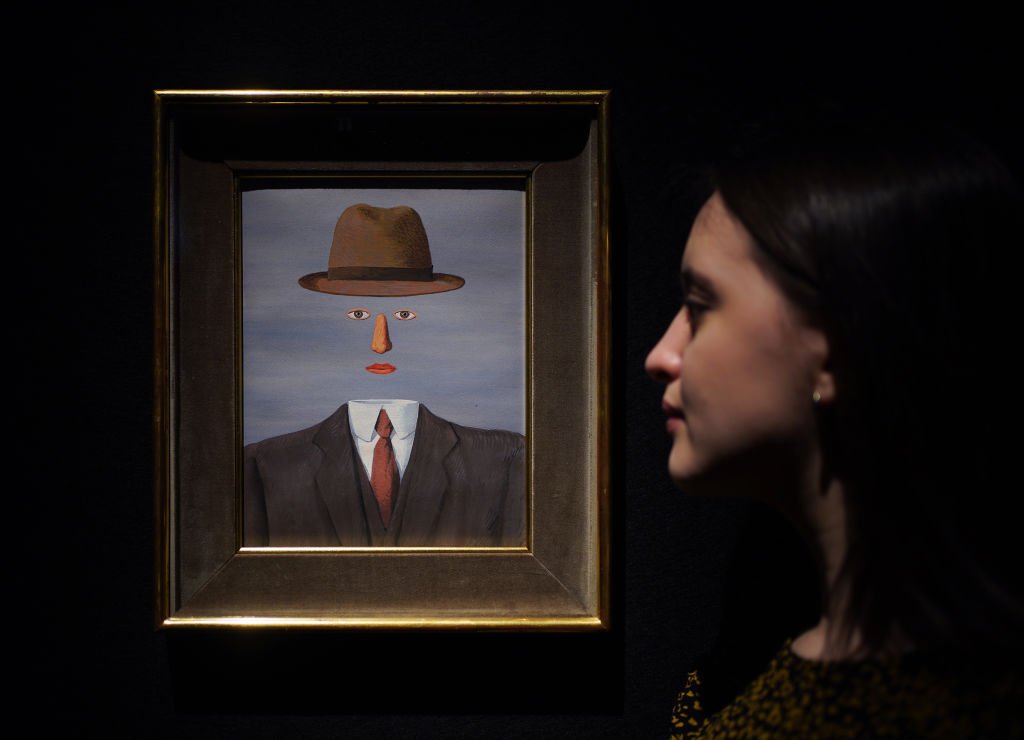
It is worth reflecting on the fact that Belgium, the home of surrealism, is the perfect location for the EU’s headquarters.
Consider this: the union that prides itself on being values based and the primary defender of international law, especially in light of the US-Israeli strikes on Iran, is being held ransom by one of its own members over a life-saving loan to Ukraine that the member had already agreed to in the previous summit in December.
The EU’s €90 billion loan to Ukraine is vital to keeping the country afloat and in the fight. Yet Hungary’s Viktor Orbán is blocking it over claims Kyiv damaged a pipeline supplying cheap Russian fuel – allegations Ukraine denies.
In any case, Budapest’s continued reliance on Russian gas sits uneasily with the EU’s push to cut ties after Moscow’s invasion. Domestic politics may play a role, but Hungary has long held the bloc hostage – with limited consequences. So the EU is a law upholding union, except when it isn’t.
Or consider this: with two wars on its doorstep, EU leaders met in March without defence formally on the agenda. Ukraine and Iran were discussed by default, but Europe’s slow attempts at reorganizing its defence capabilities was not.
Four years after Russia’s full-scale invasion – and 12 after Crimea – the EU still struggles to translate funding into capability. Political divisions between and within states continue to outweigh strategic urgency or unfolding reality.
Or finally, consider this: in reaction to the spreading war in the Gulf and Middle East, EU foreign policy chief Kaja Kallas noted that “the EU’s priority remains the protection of our citizens. We have evacuated more than 30,000 from the region.” That’s it? Evacuation is the best protection the EU can afford its citizens?
Drones have already struck Cyprus, while Russian incursions into EU airspace are increasingly frequent, leading to airport closures. It is useful to know that EU protection will mean evacuation of citizens if things get worse. But given they are already in the EU, where will they be evacuated to?
Maybe to the US, that longstanding ally of Europe?
Except the US is now led by a president seen as sympathetic to Russia and behind the Gulf war. Kaja Kallas stressed that while “Europe’s interests are directly at stake”, this is not Europe’s war – a message that did not resonate in Washington, where Trump expected the allies he never consulted before starting the war to immediately provide all assistance in opening the straits of Hormuz.
Europe’s refusal brought forth yet another threat to NATO’s stability from Trump. Nonetheless, European leaders are celebrating: after a year of being buffeted by him, they have finally united to push back. However, it is a show of strength reminiscent of the Marx Brothers A Night at the Opera – where the bully is felled by someone else, only for Groucho to plant his foot on him and say “Get fresh with me, huh?”
But as in the movies, the bully gets back up. Words – and what remains of values – are not enough. EU citizens need credible protection in an increasingly dangerous world, as well as clarity on the Union’s capabilities and intent.
Europe may like to see itself as a haven of safety, but it increasingly resembles a cluster of states hoping reality stays at bay. As René Magritte, the founder of Surrealism put it: “One should not fear the sunlight – it has almost always served only to illuminate a miserable world.”
(cs)
Source:
www.euractiv.com