



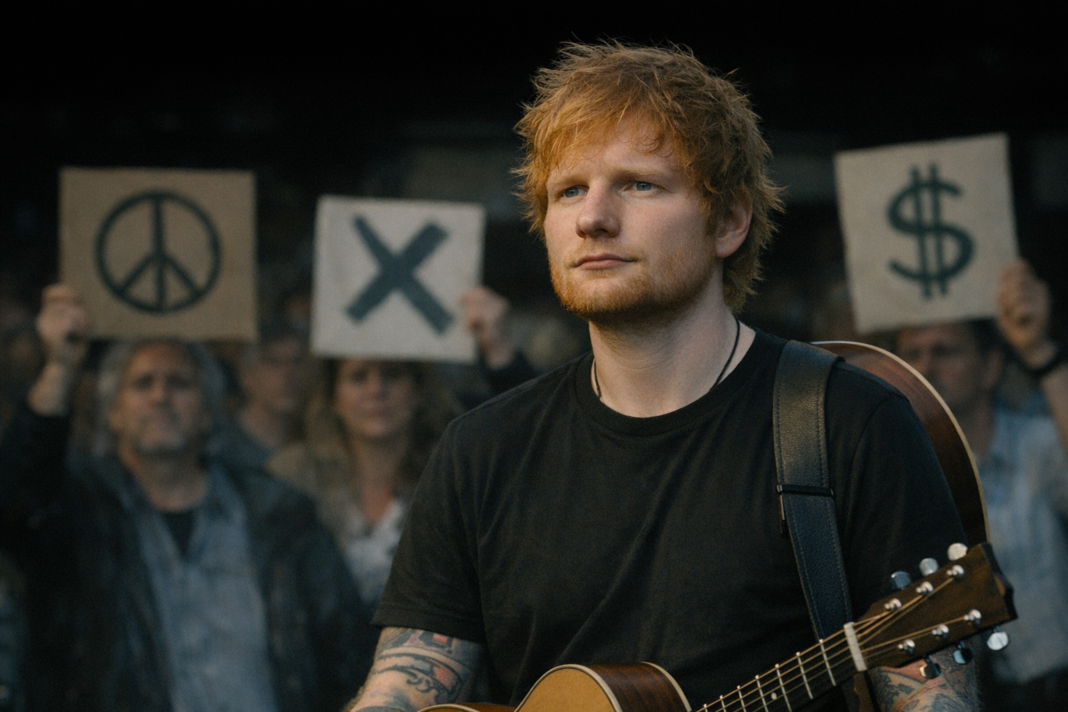
Ed Sheeran’s neutral stance has become a focal point in recent coverage as critics link his avoidance of political and controversial topics to what many observers describe as the most serious crisis of his career. The singer’s long-held preference to remain apolitical in public statements and interviews is now receiving renewed scrutiny, and commentators say that stance has complicated how the public and the media assess his actions and omissions.
Ed Sheeran has traditionally positioned himself as focused on his craft rather than on public debates, a posture that has been part of his public identity since he rose to prominence. That approach has allowed him to reach a broad audience across different viewpoints, but it has also left gaps in communication at moments when audiences and commentators expected clearer responses from public figures. The tension between artistic privacy and public expectations is now central to discussions about his career trajectory.
Criticism of his neutrality has stirred broader conversations about the responsibilities and risks faced by contemporary artists. Debates have emerged across platforms about whether neutrality constitutes a valid stance or an avoidance of accountability, and how such choices affect trust with fans, peers and industry stakeholders. Those exchanges intersect with ongoing debates about the relationship between music, cultural influence and public life, as well as wider discussions around politics and celebrity engagement.
The episode has practical implications for how performers manage public perception and crisis communication. Media attention on the subject may prompt reassessments of how artists address contentious issues, and it highlights the fragility of reputations in a landscape of instant scrutiny. Observers say the situation underscores a larger conversation about the balance between artistic focus and public responsibility for high-profile figures in the entertainment industry.