



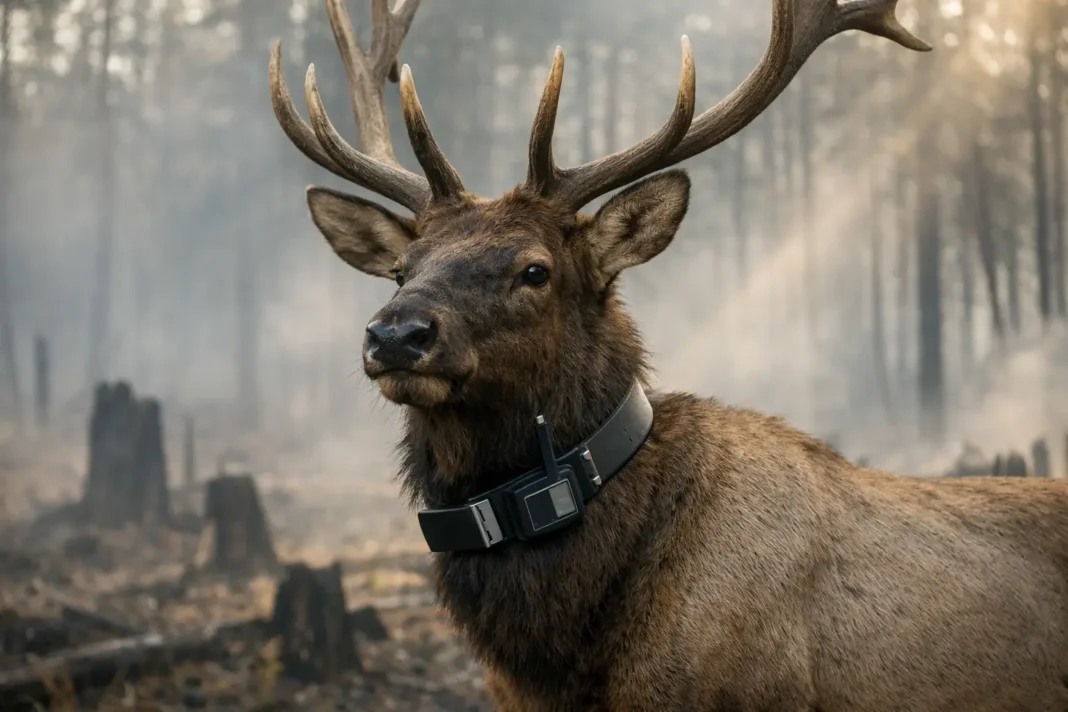
New collar sensor has been announced as a tool to monitor how wild animals are affected when smoke from fires fills the air. Unlike people, wildlife cannot seek shelter indoors, and researchers say existing data on animals’ exposure to smoke and its physiological consequences are scarce. The device is intended to collect environmental and biological information from free-ranging animals in remote locations to help close that knowledge gap.
The sensor is integrated into a wearable collar and combines measurements that can be recorded while animals continue their natural movements. By operating in the field over extended periods, the collars aim to capture both short-term exposures during smoke events and longer-term patterns of contact with poor air quality. Such continuous monitoring would provide a richer picture than occasional observations or laboratory studies, which may not reflect conditions experienced by animals in the wild.
Information gathered by the collars could have practical applications for conservation and wildlife health management. Better data on exposure and physiological responses may inform rehabilitation efforts for affected animals, guide decisions about temporary refuge areas during smoke episodes and improve assessments of population-level impacts. The development also creates opportunities to link animal health records with environmental data on wildfire smoke, landscape use and habitat conditions to identify species and life stages most at risk.
Moving from prototype to routine use will require field validation, collaboration across ecology, veterinary medicine and land management, and strategies for deploying the devices where they can deliver the most value. Researchers plan to evaluate the collars under a range of conditions to determine reliability and to refine protocols for attaching, recovering and analyzing the data. If successful, the technology may fill a long-standing monitoring gap and support evidence-based responses to smoke exposure in wildlife populations.
