



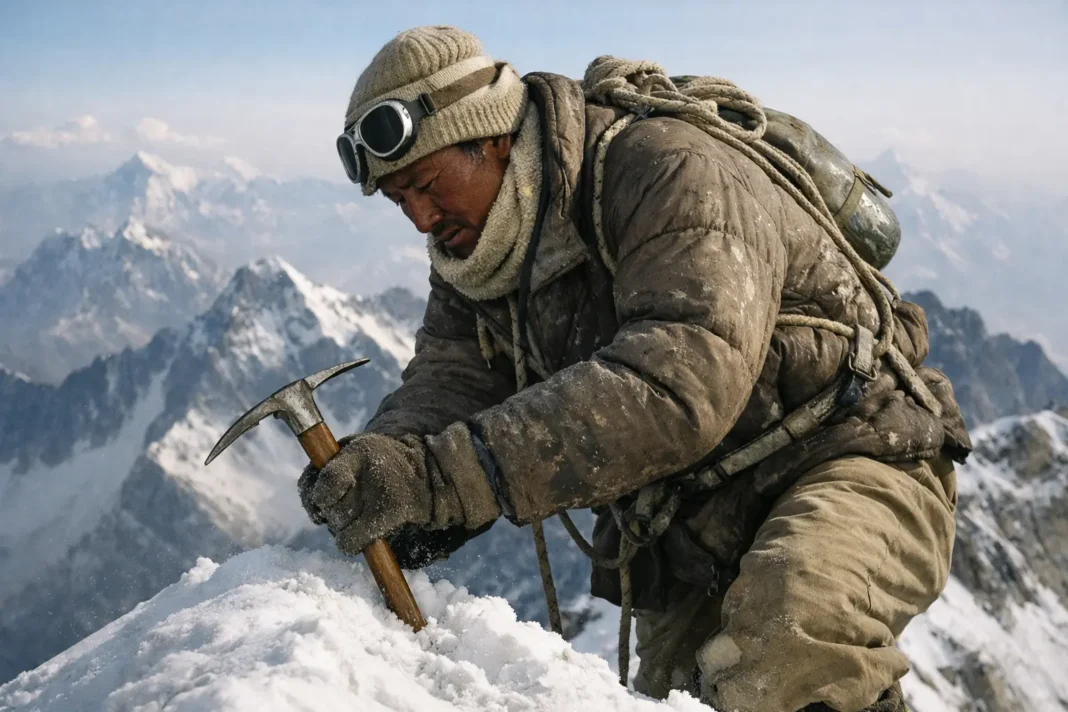
Seventy-three years ago, Tenzing Norgay reached the summit of Everest, known in Tibetan as Chomolungma, a name often translated as the “Goddess Mother of the World.” That moment entered the global imagination and has since been recalled in books, exhibitions and public discussions about the history of high-altitude exploration. The ascent is routinely cited as a turning point that brought sustained attention to the highest peaks and to the people who live in their shadow.
The climb changed how the mountain was perceived both internationally and locally. For many communities across the Himalayas, the summit has ceremonial and cultural importance; for the wider public, it became a symbol of human endurance and technical achievement. Over the decades the name of Tenzing Norgay has often stood as shorthand for those complex intersections between local knowledge, climbing skill and the global spotlight focused on extreme altitudes.
In recent years, anniversaries and cultural portrayals have prompted renewed reflection on that legacy. Filmmakers, authors and curators revisit the story not only to recount the ascent but to explore broader themes: who tells these stories, which voices are foregrounded, and how recognition is distributed between climbers and the communities that supported them. Such reinterpretations invite audiences to consider historical context as well as the ways narratives evolve with time.
Alongside cultural reassessment, there is growing attention to practical consequences for the mountain itself. Changes in climbing practices, increased visitor numbers and environmental shifts have prompted questions about stewardship, safety and sustainable access. Stakeholders — from local communities to international mountaineering bodies — are facing complex trade-offs between preserving cultural heritage and managing contemporary use of a fragile alpine environment.
As public interest endures, the story of that summit continues to resonate beyond a single event. It serves as a focal point for discussions about memory, representation and responsibility toward high-altitude landscapes. Observances of the ascent occasion not only celebration but a sober reassessment of how to honour historic achievements while addressing the present-day challenges facing the Himalaya.