



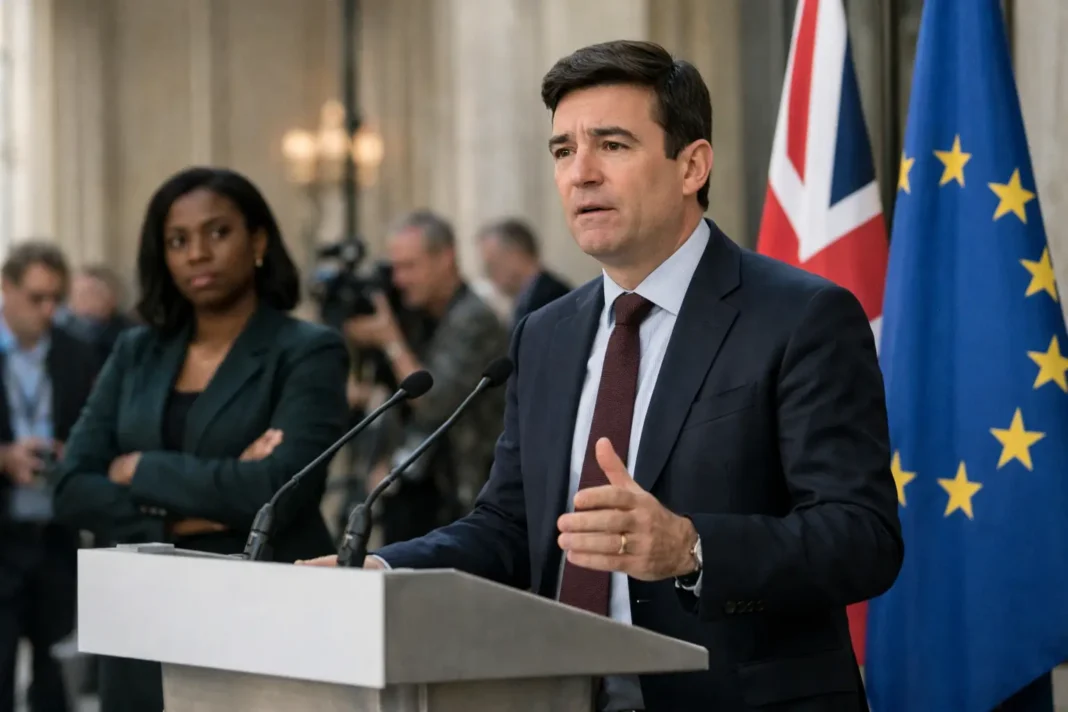
Burnham to push for new post-Brexit arrangements at the EU summit, signalling a push by UK political figures to reopen discussions on trade and cross-border cooperation established after 2020. The move places domestic debates about the implementation of Brexit onto the international stage and raises questions about how the UK will seek to rebuild practical ties with European partners.
The call for fresh deals focuses on pragmatic fixes rather than ideological shifts: measures that observers say could address frictions affecting businesses, public services and local authorities that operate across the UK–EU interface. Participants at the summit will face the challenge of balancing legal commitments from the original withdrawal process with immediate pressures from economic and civic actors asking for smoother rules and clearer operational arrangements.
On the domestic front, Kemi Badenoch criticised the government’s direction, saying the prime minister was “unpicking” the deal the UK signed with the EU. That intervention highlights strains within the UK political landscape over how to handle post-Brexit realities—tensions that may complicate any attempt to present a single negotiating stance at the summit. The exchange underscores how internal party debates and regional priorities can influence national strategy in international talks.
For businesses, public bodies and regional leaders, the summit could be an opportunity to secure adjustments that reduce trade costs, simplify regulatory checks or clarify protocols for cross-border services. At the same time, any push for new arrangements will depend on political will on both sides and the ability to reconcile existing treaty obligations with proposals for targeted changes. The outcome will matter for firms and communities already adapting to the post-Brexit landscape.
With expectations high that the summit will set the tone for future engagement, stakeholders from government, industry and local government will be watching how negotiators respond to calls for practical solutions. Whether Burnham’s intervention shifts momentum toward fresh agreements or simply adds to the domestic debate, the event will be a key moment in the ongoing process of defining UK–EU relations after Brexit.
