



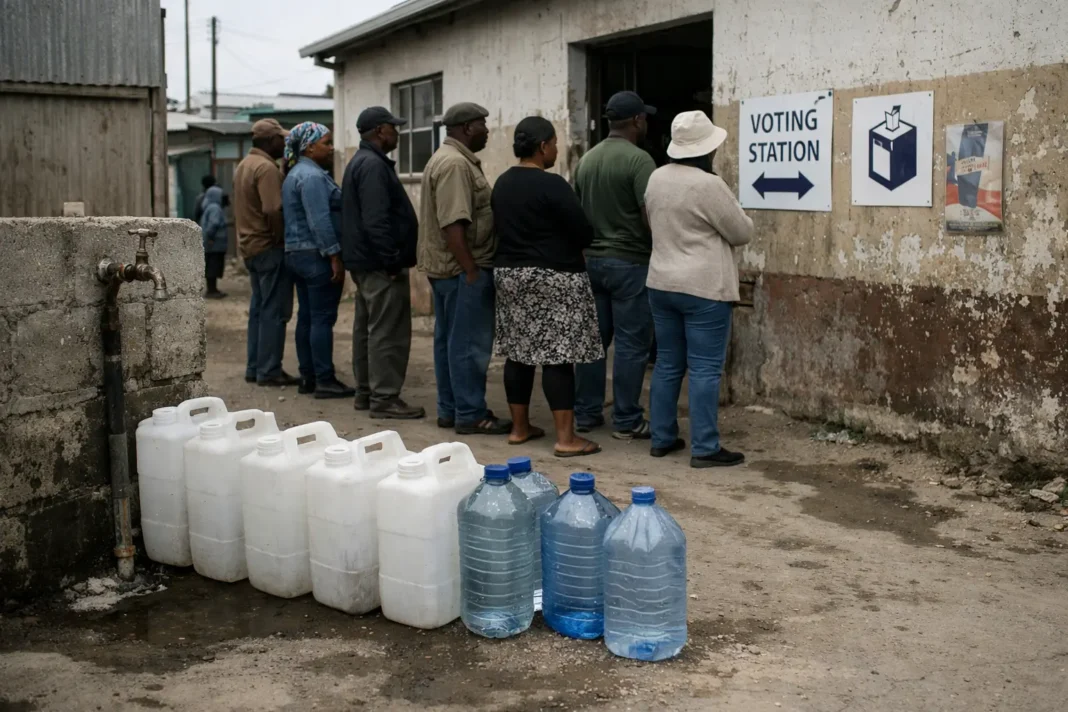
South Africans vote Wednesday in local elections that carry weight beyond municipal boundaries, as shortages of water and anger over basic services place local government performance at the centre of national politics. The ballot will determine councils responsible for day-to-day services that directly affect households, from water supply and sanitation to roads, waste collection and local planning.
For many voters in South Africa, the election is less about ideological platforms than about whether municipalities can deliver reliably. Water interruptions have become a defining concern in several communities, adding to wider dissatisfaction over the state of public services. These issues give the vote a strongly practical character: residents are choosing the officials closest to the services they use every day.
The election is also a significant measure of support for the African National Congress, whose dominance has been under growing pressure in recent electoral cycles. A weaker performance would reinforce questions about the party’s ability to retain confidence at local level, where administrative failures are often felt most immediately. The official process is overseen by the Electoral Commission of South Africa, the institution responsible for managing elections in the country.
Municipal elections can reshape power even when they do not change national government. In councils where no party secures clear control, coalition arrangements may influence who becomes mayor and how services are managed. That makes the outcome important for major urban centres as well as smaller municipalities, where limited resources and public frustration can quickly turn local disputes into broader political tests.
The vote therefore comes at a sensitive moment for both citizens and parties. Service delivery remains one of the most visible measures of government effectiveness, while the trajectory of ANC support will be closely watched as an indicator of the political mood. Whatever the final results, the election underscores how access to water and dependable municipal administration have become central issues in South Africa’s democratic debate.