



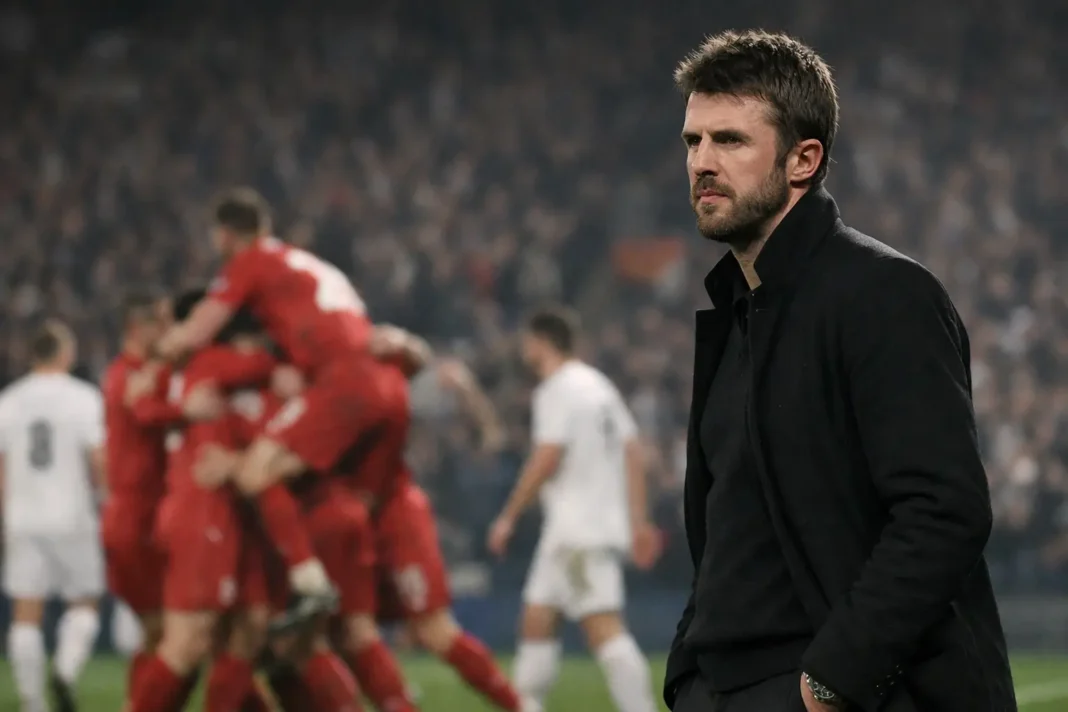
Manchester United’s comeback against Roma offered Michael Carrick something more valuable than three points: time. With his side 2-0 down at the interval, the pressure around the head coach had reached a level that made his position appear deeply vulnerable. By the final whistle, the narrative had shifted. The win did not remove every question about direction, consistency or authority, but it prevented an immediate crisis from hardening into something far more difficult to contain.
The match will be remembered for two defining elements: Carrick’s half-time intervention and a penalty that had to be taken again. Neither episode can be separated from the broader story of a team forced to recover under pressure. For Manchester United, a club operating under constant scrutiny, the capacity to respond after a damaging first half carries significance beyond the scoreboard. For Roma, the defeat was shaped by a reversal that turned a position of control into a missed opportunity.
In modern football, a coach’s authority is often tested most clearly in the moments when a game appears to be moving away from his team. Carrick’s position had looked increasingly fragile while United trailed by two goals, not simply because of the deficit but because of what it represented: a side unable, at that stage, to impose itself. The second-half response changed the public reading of the evening. It gave the players a result to stand behind and gave the club a reason to pause before drawing conclusions.
The retaken penalty added a decisive layer to an already charged contest. Such moments can alter the rhythm of a game, but they also place a spotlight on composure, discipline and concentration. United benefited from the episode, yet the significance of the victory rests less on one incident than on the collective recovery that followed the interval. The comeback gave Manchester United a result with immediate practical value and allowed Carrick to emerge from a potentially damaging night with renewed credibility.
Whether the win becomes a turning point depends on what follows. A single result cannot settle wider concerns, and United’s standards require repetition rather than relief. Still, the outcome against Roma has altered the short-term picture. Carrick was under serious pressure when his team walked in at half-time. By the end, he had secured the kind of victory that can keep a coach in place, restore some confidence inside a dressing room and delay the harsher judgments that often follow when results fail to arrive.