



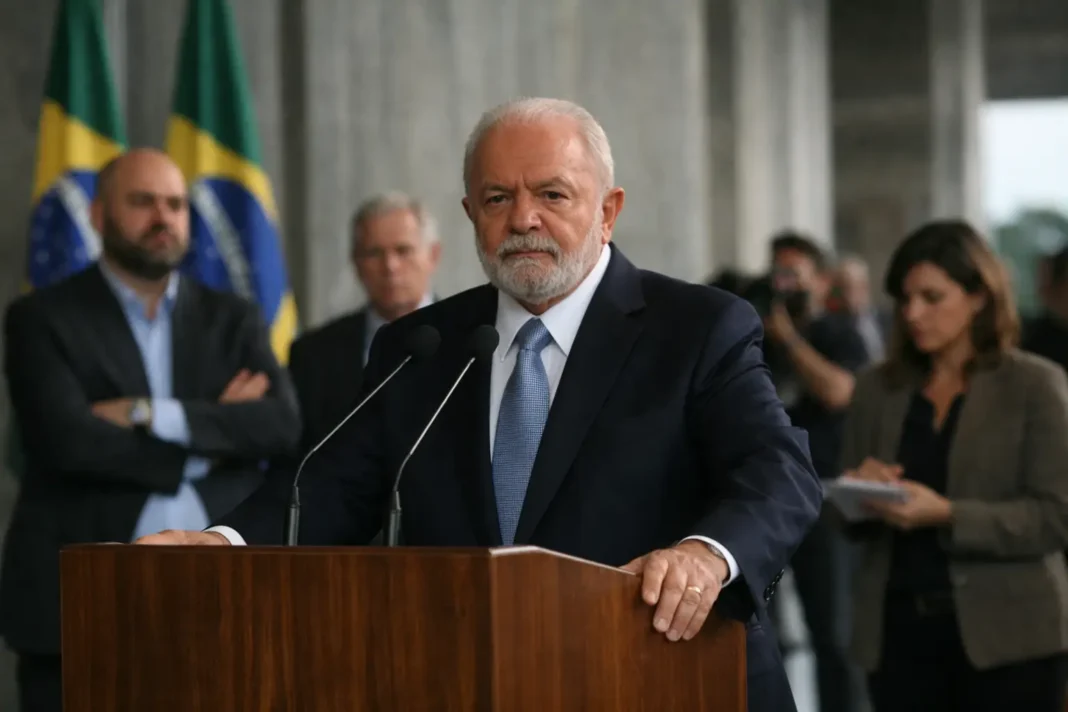
Lula’s fourth victory in Brazil was decided by a margin narrow enough to reshape the political reading of the country’s 2026 election. On 25 October, Luiz Inácio Lula da Silva won the runoff with 51.79% of valid votes against 48.21% for far-right candidate Flávio Bolsonaro, in results announced by the Superior Electoral Court. The result gave Lula another term, but it did not deliver a simple story of political dominance. Three weeks earlier, Flávio Bolsonaro had led the first round with 47.03% against Lula’s 45.16%, placing the incumbent under immediate pressure.
The reversal highlighted the continuing force of democratic mobilization, but also the depth of the far right’s social base. Flávio Bolsonaro benefited from a name closely tied to former president Jair Bolsonaro, while presenting himself as a younger and more disciplined alternative to the incumbent. His campaign linked concerns over crime, debt, food prices and public order into a broader critique of everyday insecurity. That message found support despite Jair Bolsonaro’s imprisonment for a coup attempt after his 2022 defeat, showing that Bolsonarismo remains an organized political identity rather than only a personal following.
Economic pressure formed one of the election’s central fault lines. Lula’s record in social policy and poverty reduction remained politically important, yet many households were still facing high borrowing costs, weakened purchasing power and heavy indebtedness. A July 2026 survey by Brazil’s National Confederation of Commerce found that 82% of families had debts, while 29.8% had overdue bills. For lower-income families earning up to three times the minimum wage, indebtedness reached 84.9%. These figures help explain why the defense of past achievements was not enough on its own to reassure voters asking what a new Lula term would change.
The runoff campaign was transformed by activity beyond formal party structures. Students, trade unions, artists, neighborhood groups and first-time activists joined street actions, cultural events and local organizing. Digital networks amplified that effort through coordinated messaging on social media and WhatsApp, while demonstrations gave online campaigning greater visibility and momentum. Lula also drew support from figures outside the traditional left, including voters and public personalities who had opposed previous Workers’ Party governments but viewed the election as a test for institutional democracy.
The victory leaves Lula with a demanding agenda. The Central Bank of Brazil had set the benchmark interest rate at 13.75% after its September 2026 decision, keeping pressure on credit and public finances. The government must now balance social commitments with fiscal constraints, while confronting a far right still rooted in parts of the interior, agribusiness regions and security-focused constituencies. Lula’s comeback showed that electoral mobilization can overturn a bleak first-round picture. It also showed that Brazil’s political conflict did not end on election night.
