



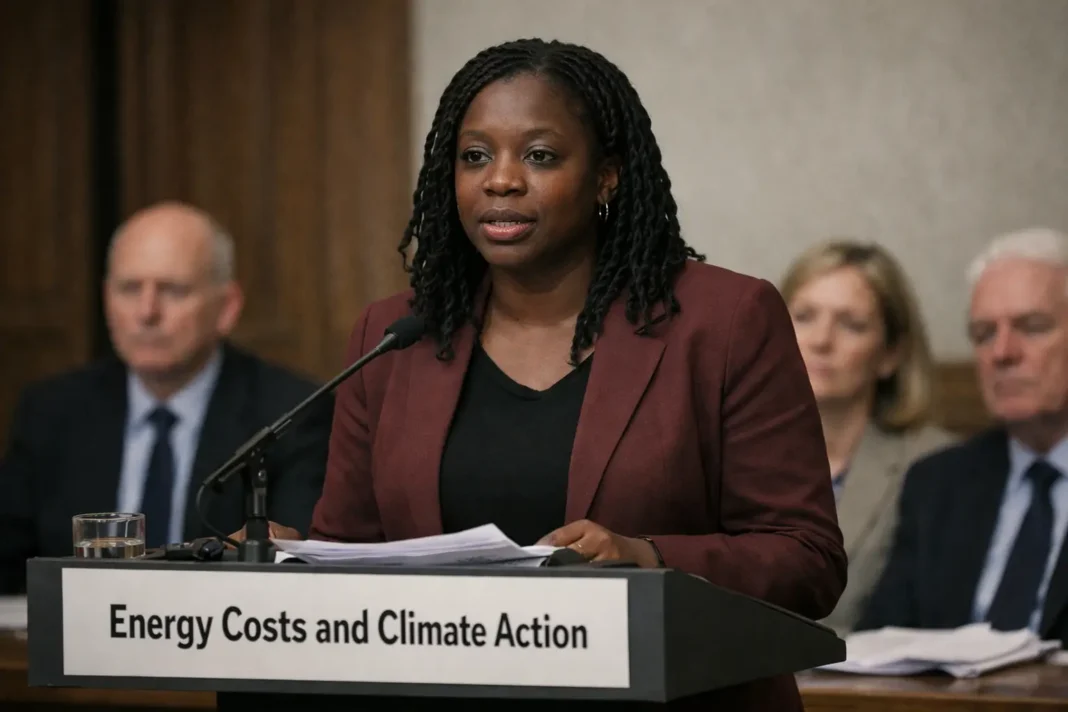
Lower energy costs have become the central test for climate policy, with Fahnbulleh making clear that action on household bills is her overriding aim. The energy secretary has linked the affordability of power and heating directly to public consent for the transition to cleaner energy, placing consumer pressure at the heart of the government’s environmental agenda.
The emphasis reflects a political reality facing governments pursuing emissions reductions: climate measures are more durable when families can see a practical benefit in their own budgets. In the United Kingdom, energy prices remain a sensitive issue after a period in which global gas market disruption pushed household costs higher and fuel affordability became a major concern. Against that backdrop, the case for climate policy is increasingly tied to whether it can deliver security and lower exposure to volatile fossil fuel prices.
Fahnbulleh’s position also underlines the role of the Department for Energy Security and Net Zero, which must balance long-term decarbonisation with immediate pressure from consumers. The argument is not only environmental but economic: if cleaner energy is presented as a route to more stable bills, governments may find it easier to sustain support for investment in grids, renewables, home efficiency and changes to heating systems.
Public backing is a crucial factor because the shift to net zero depends on decisions made across homes, businesses and infrastructure. Measures that appear to raise costs can quickly become politically vulnerable, while policies that ease energy bills can strengthen confidence in the wider transition. That makes affordability a practical condition for climate delivery rather than a separate debate.
The message from Fahnbulleh points to a narrower benchmark for judging energy policy: whether it protects households while advancing cleaner supply. Maintaining that balance will be essential as ministers seek to show that climate action can improve living standards, not compete with them. For consumers, the credibility of the transition will depend less on targets than on whether the monthly cost of energy becomes easier to manage.

