



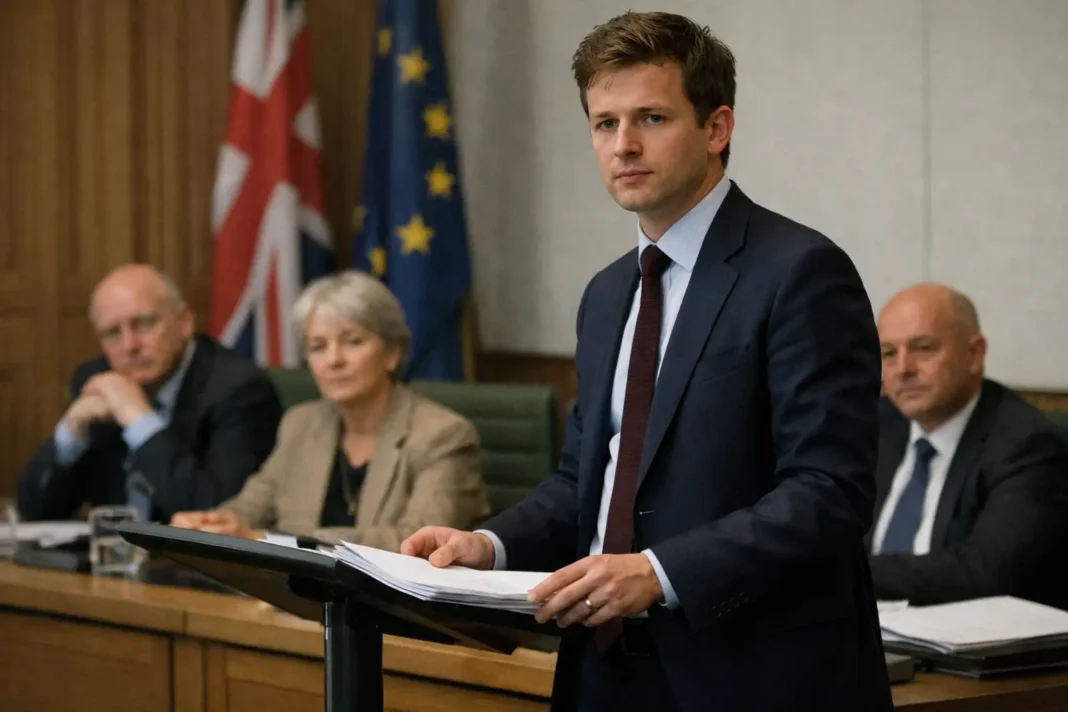
Britain would gain a voice but not a vote over European Union food rules under a proposed post-Brexit reset, Hamish Falconer has said. The UK’s EU minister has argued that a new arrangement with Brussels would allow London to exert some influence on policy affecting food and agricultural standards, while stopping well short of the decision-making powers it held before leaving the bloc.
The distinction is central to the political and practical debate around closer cooperation with the European Union. Since Brexit, the United Kingdom has not had a formal role in voting on EU legislation. Any agreement tying the UK more closely to EU food rules would therefore have to operate within that reality: Britain could be consulted, raise concerns and engage with the process, but it would not hold a seat in the bloc’s legislative machinery.
Food standards occupy a sensitive place in the wider relationship because they shape the movement of goods across borders. Alignment or structured cooperation can reduce friction for businesses dealing with animal products, plants and other regulated food items. At the same time, accepting rules made by another jurisdiction remains one of the most contentious consequences of seeking smoother trade with the EU after Brexit. Falconer’s position frames the proposed reset as a way to secure practical input without reopening the question of membership or formal voting rights.
The issue also highlights the limits of influence available to a country outside the EU’s institutions. Member states participate in the rules from inside the system; third countries can negotiate mechanisms for dialogue, consultation or technical cooperation. For the UK, that means any gain would be measured less by legal authority and more by access to discussions before rules take effect. The government’s challenge is to show that such access would be meaningful for farmers, food producers, retailers and border operations.
The emerging debate reflects a broader attempt to stabilise relations after years of post-Brexit tension. A food-rules agreement would not amount to a return to EU membership, nor would it restore Britain’s former vote. It would instead test whether London and Brussels can build a narrower form of cooperation in which influence, transparency and predictability are considered valuable even without formal power over the final decision.
