



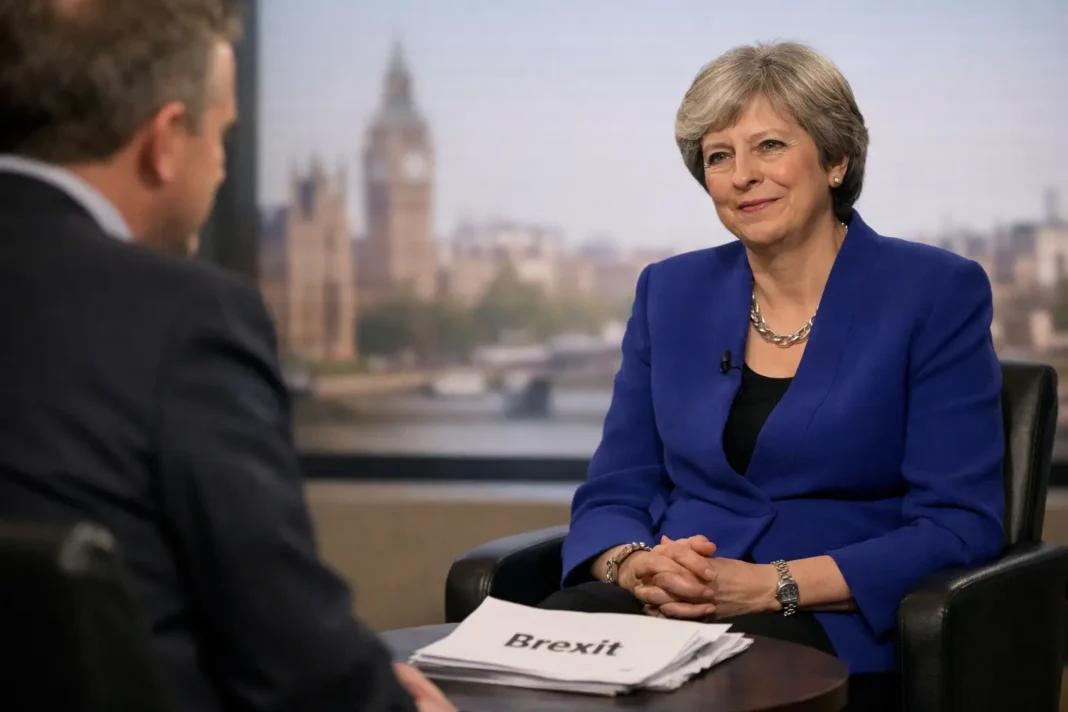
Theresa May has sharply rejected moves to reopen Britain’s relationship with the European Union, saying the country should treat Brexit as settled. The former prime minister, who led the United Kingdom through some of the most difficult stages of the withdrawal process, said she was “aghast” at Andy Burnham’s approach to future EU ties and argued that political energy should now be directed elsewhere.
Speaking to BBC presenter Laura Kuenssberg, May delivered a blunt message to those seeking to revisit the terms of Britain’s post-EU position: “Just accept Brexit and move on.” She also stated that “Brexit is done,” a phrase intended to close down renewed debate over whether the UK should pursue a markedly different settlement with Brussels. Her comments place her firmly against any political strategy that could be seen as reopening the core argument settled by the 2016 referendum and the subsequent withdrawal.
Burnham, the mayor of Greater Manchester and a prominent Labour figure, has been associated with proposals for changing the UK’s engagement with the European Union. May’s intervention matters because it comes from the Conservative leader who attempted to deliver Brexit through Parliament before leaving Downing Street in 2019. Her government negotiated a withdrawal agreement but struggled to secure parliamentary approval, a period that exposed deep divisions across parties and across the country.
The exchange highlights how British politics continues to absorb the consequences of leaving the EU. For some politicians, improving practical arrangements with Europe remains part of the post-Brexit debate. For May, however, the priority is political finality: the UK has left, the decision has been implemented, and the argument should no longer dominate public life. That position remains influential among Conservatives who view further alignment with Brussels as a step back from the mandate delivered by voters.
The renewed attention on May’s remarks also shows the sensitivity surrounding any discussion of Britain’s future links with Europe. Even limited proposals can quickly be judged through the larger question of whether they respect or dilute Brexit. May’s response does not introduce a new policy programme, but it reinforces a dividing line that continues to shape national debate: whether the UK should simply manage the consequences of leaving, or actively search for a closer relationship with its former partners.
