



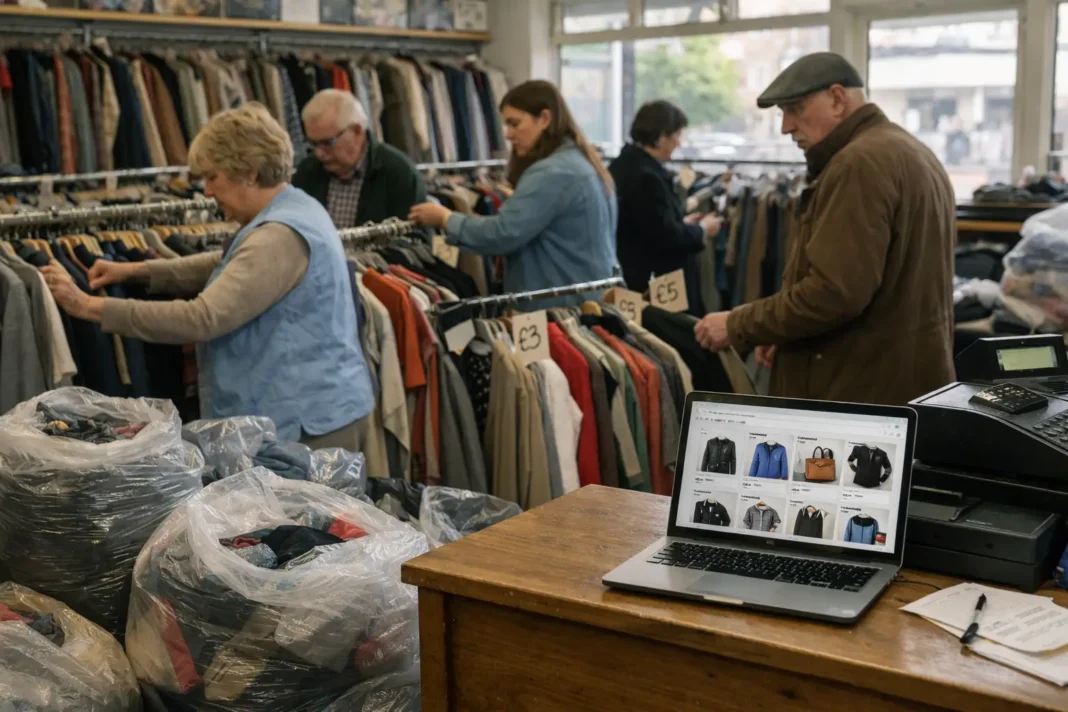
Britain’s charity retailers are facing a sharper test of their long-standing fundraising model as the market for used clothing shifts further online. Oxfam’s retail profit fell by 23% to £4.9 million in its most recent financial year, down from £6.4 million the year before, based on unpublished accounts reviewed by the Financial Times. The decline has drawn attention to growing pressure on charity shops, which have traditionally converted donated goods into funding for humanitarian, health and community work.
The fall comes as platforms such as Vinted have made it easier for households to sell clothes directly rather than donate them. That change affects both sides of the charity retail model: shops compete for customers looking for secondhand fashion, while also depending on a steady supply of good-quality donations. For organisations with large store networks, even modest changes in stock quality, footfall or pricing power can weigh on margins.
British Heart Foundation, one of the most visible names on UK high streets, has described trading conditions as “exceptionally challenging”. Its assessment underscores a wider concern across the sector: charity retail remains important not only as a source of income, but also as a public-facing presence in town centres. Shops provide accessible secondhand goods, volunteering opportunities and a route for reuse at a time when consumers and policymakers are paying closer attention to waste and circular consumption.
The pressure is not limited to digital competition. Charity shops operate in the same difficult retail environment as other high-street businesses, with costs, consumer confidence and changing shopping habits shaping performance. Unlike purely commercial retailers, however, their financial results have a direct bearing on the causes they support. A weaker surplus from stores can restrict the funds available for programmes, campaigns and services unless offset by other income streams.
Oxfam and other charities continue to benefit from brand recognition and nationwide store networks, but the latest figures show that scale alone does not insulate the sector from structural change. The rise of secondhand fashion platforms has expanded the resale economy, yet it has also intensified competition for the items and shoppers that charity retailers rely on. For the sector, the challenge is to protect a funding channel built over decades while adapting to a faster, more digital secondhand market.