



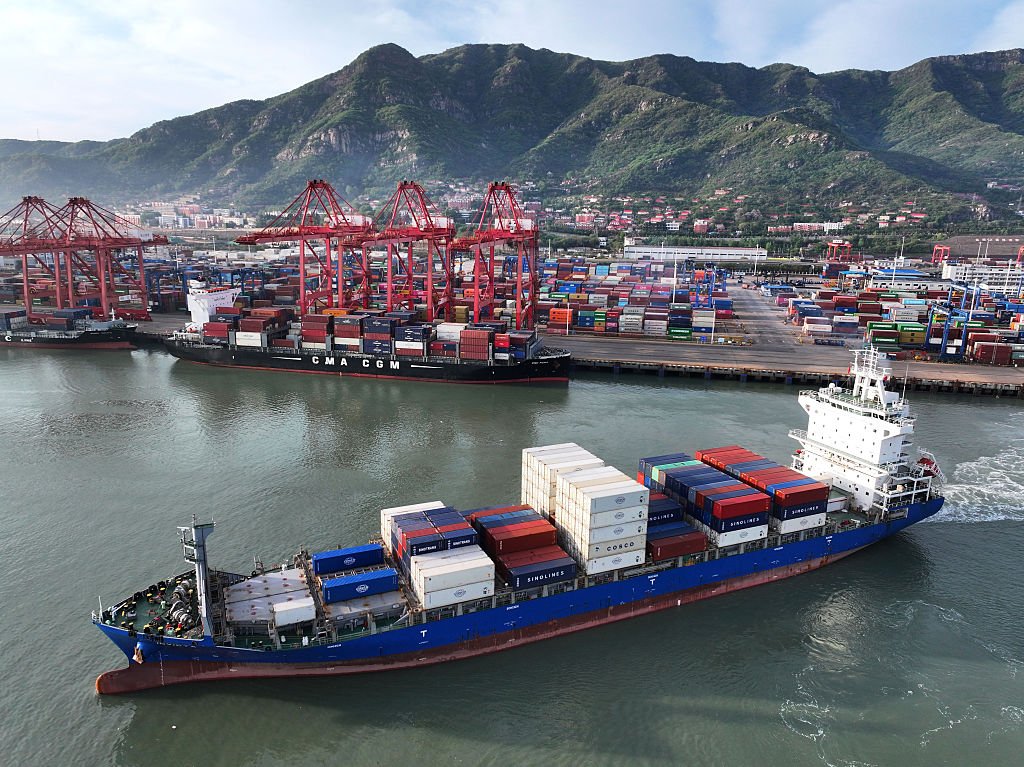

The European Union is moving slowly but deliberately towards one of its most consequential industrial policy moments in decades: the Industrial Accelerator Act (IAA), designed to fast-track the reshoring of strategic manufacturing and reduce the bloc’s dependence on single-source suppliers.
Yet as European policymakers congratulate themselves on the ambition of the legislation and some member states raise eyebrows, Beijing has been doing something rather more practical – building legal and regulatory walls around its own supply chains that will make the IAA far harder to implement than its architects imagine.
The signal came on April 7 when China’s State Council published the Regulations on Industrial and Supply Chain Security, with immediate effect, enacting a sweeping supply chain resilience framework — a set of regulations that, on the surface, looks like standard industrial policy housekeeping.
But on closer inspection, the new rules establish mandatory supply chain security assessments for companies operating in designated strategic sectors, create a legal basis for Beijing to restrict the export of inputs, intermediary goods, and production data deemed essential to national economic security. Crucially, the rules impose significant penalties on foreign entities that attempt to interfere with, audit, or otherwise disrupt Chinese supply chain arrangements.
In plain terms: Beijing has legislated a legal shield against exactly the kind of supply chain diversification that the IAA is trying to engineer. Foreign governments hoping to coax, cajole, or compel companies to exit Chinese supply relationships now face a China that can say, with legal force, that such interference violates Chinese law. For multinationals operating in both jurisdictions, this creates an impossible compliance bind — and Europe should not pretend otherwise.
The IAA, in its current form, assumes a relatively permissive operating environment. It relies on carrots – accelerated permitting, public co-financing, demand aggregation mechanisms – and some sticks, including supply chain transparency requirements and potential procurement preferences for European-made goods. What it does not adequately account for is a world in which a key supplier jurisdiction actively fights back.
China’s swift action will make member states that already have concerns about the IAA even more worried. This is particularly the case for Germany, given its complex web of industrial dependencies on Chinese inputs – particularly in chemicals, advanced materials, and electronics. Hungary, deeply integrated into Chinese-anchored manufacturing networks, could also consider China’s potential reaction as too punitive economically.
China’s quiet win in the Iran crisis
Washington likely assumed it could choke off cheap Iranian oil to Beijing the same way…
6 minutes
This is the uncomfortable reality that proponents of the IAA must confront. The legislation’s passage is far from assured, and even if it passes in its current form, its implementation will be tested immediately by China’s potential action with its new legislation. More specifically, China’s new resilience framework raises the cost of exit for European companies embedded in Chinese supply chains. It also raises the diplomatic stakes for member states that might otherwise have quietly supported the IAA’s goals.
The litmus test will come in the provisions most directly targeted at critical raw materials and advanced manufacturing components – precisely the sectors where European dependence on China is deepest and where Beijing’s new legal architecture bites hardest. If European companies cannot, in practice, provide Brussels with the supply chain data and diversification timelines the IAA demands – because doing so would trigger liability under Chinese law — the legislation risks becoming a paper exercise, aspirational in language but hollow in effect.
None of this means the IAA is wrong in its diagnosis. Europe is genuinely over-exposed in too many strategic sectors, and the case for industrial sovereignty has only strengthened in the aftermath of pandemic-era shortages and the energy shock that followed Russia’s invasion of Ukraine. But good diagnosis is not the same as effective treatment, and the IAA’s architects are working from a model of the world that Beijing is actively rewriting.
What would a more robust approach look like? First, the EU should take China’s supply chain resilience law seriously as a legal instrument, not merely a political posture, and commission a proper impact assessment of its effect on IAA implementation. Second, the European Commission should develop explicit guidance for companies caught in cross-jurisdictional compliance conflicts – guidance that actually reflects the legal risk, rather than assuming it away. Third – and the hardest politically – the IAA’s champions in Brussels need to do more work in national capitals, building the political coalitions that can withstand Chinese pressure rather than assuming a legislative text alone will do the job.
China has made its move. It has decided that supply chain sovereignty is worth protecting with hard law, not just industrial subsidies. The question for Europe is whether it has the strategic coherence and political will to respond in kind, or whether the IAA will become yet another example of ambitious European legislation that falls apart on contact with a world that does not share its assumptions.
The clock is ticking, and Beijing knows it.
China, not Russia, is reshaping Serbia’s path to the EU
The Serbian government recently began construction of what could be the first metro system in the…
6 minutes

Source:
www.euractiv.com