



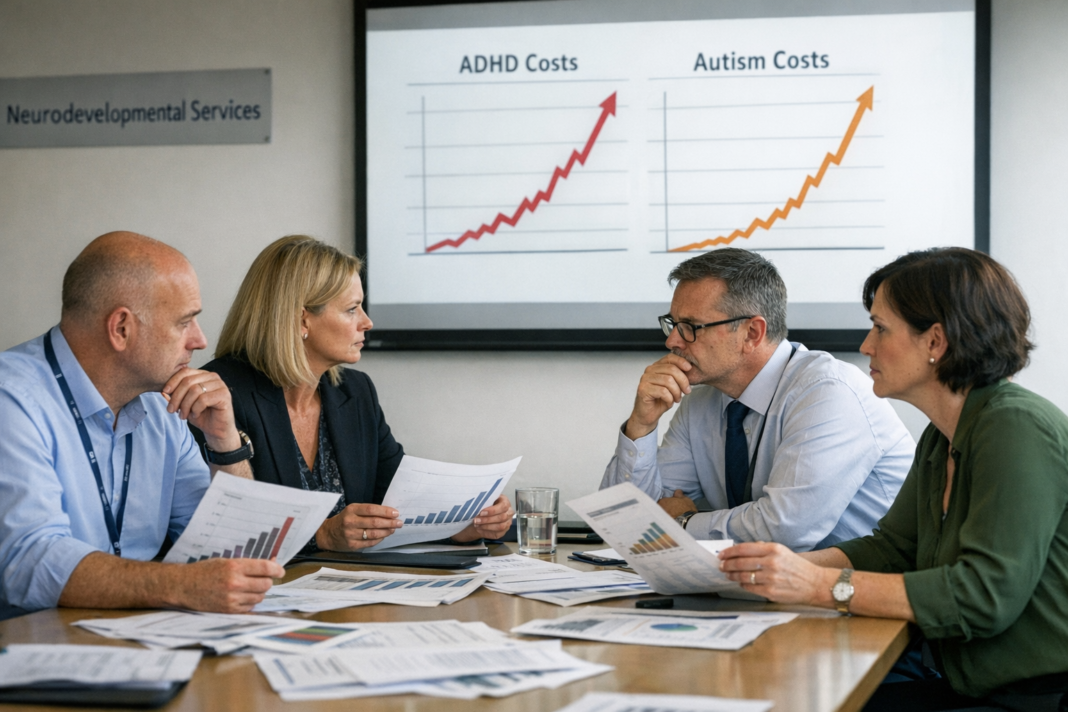
Senior NHS managers have sounded an alarm over mounting pressures in care for people with ADHD and autism, citing rapidly rising costs and a patchwork of private provision that they say is outpacing effective oversight. Health service leaders warn the combination of growing demand and constrained budgets is straining existing assessment and treatment pathways, with commissioners struggling to reconcile cost and quality across regions. NHS managers describe a market in which some private suppliers are expanding rapidly without standardised accountability.
Those working inside services point to several drivers behind the pressure. Referral rates for neurodevelopmental assessment have increased in recent years, while workforce shortages across child and adult services limit capacity for timely diagnosis and intervention. At the same time, local health commissioners are increasingly commissioning private packages to clear waiting lists, a practice that managers say can be more expensive and deliver uneven standards of care when not governed by consistent contracts and quality frameworks.
The practical consequences are becoming evident for families and professionals: longer waits for initial assessment, fragmented care plans and a heavier administrative burden for overstretched teams. School staff, carers and clinicians report navigating a more complex landscape when seeking support, and the variable approach to commissioning means outcomes can differ markedly by area. Managers emphasise that rising expenditure driven by off-framework private spending diverts funds from mainstream services that deliver long-term continuity of care.
Health leaders are urging systemic remedies to bring the market under firmer control and to protect service users. Proposed responses include strengthened regulatory oversight of providers, clearer commissioning standards and targeted investment to rebuild in-house capacity and workforce development. Observers say coordinated national action will be necessary to stabilise services for children and adults with neurodevelopmental needs and to ensure public funds are used effectively while maintaining consistent standards of care.