



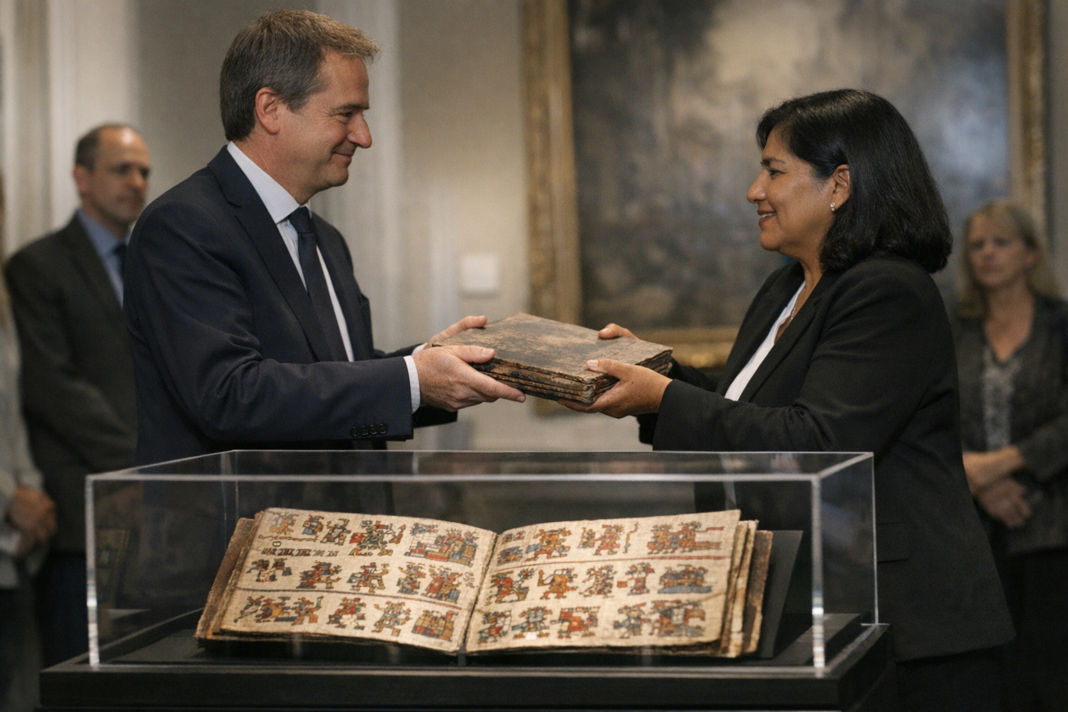
After two centuries, an Aztec manuscript long held abroad has arrived in Mexico from France, but not as a permanent transfer. The artifact’s return under a temporary loan arrangement follows years of formal requests from Mexican authorities seeking the manuscript’s repatriation. While the work is now physically back on Mexican soil, the loan status leaves unresolved questions about permanent ownership and the wider movement for restitution of cultural property.
The manuscript, produced in the pre-Hispanic period and associated with the Aztec cultural sphere, is regarded as a significant item of national and historical importance. Its removal to Europe occurred in the distant past and the piece subsequently entered collections outside Mexico. The recent transfer marks a rare instance in which an object with such a long history abroad has been brought back in response to sustained appeals from the source country, underscoring the continuing sensitivity around cultural patrimony displaced during earlier centuries.
The decision to accept a loan rather than secure a definitive return reflects the complex legal and diplomatic terrain that surrounds contested cultural objects. Loan arrangements are commonly used as interim measures: they allow source-country audiences access to key pieces while formal negotiations, provenance research and conservation planning continue. For museums and cultural authorities, temporary transfers can involve agreed conditions on display, care and study, though specifics vary with each case and are typically negotiated by the institutions involved.
Beyond the immediate circumstances of this manuscript, the move is likely to resonate in ongoing international conversations about artifacts removed during colonial and imperial periods. It may influence future claims and cooperative agreements between institutions in different countries, and it highlights the practical and ethical considerations that underpin contemporary cultural heritage policy. For Mexico, the manuscript’s presence offers opportunities for public viewing and scholarly study; for the broader field, it reiterates the persistent challenge of reconciling historical dispossession with modern demands for access, transparency and restitution.
