



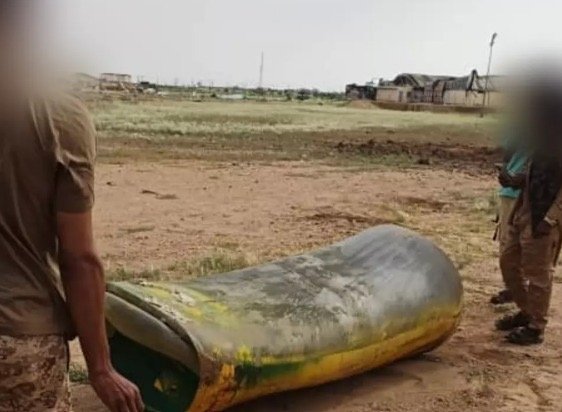
The United States has formally determined that the Sudanese government used chemical weapons in 2024. This is no longer merely a passing allegation: it is an official finding that requires an independent investigation into the conduct and command structures of the Sudanese Armed Forces.
The chemical-weapons allegations against Sudan cannot be treated as diplomatic speculation or allowed to disappear from the international agenda.
In May 2025, the United States Department of State formally announced that Washington had determined that the Government of Sudan used chemical weapons during 2024, in violation of international law. That determination was subsequently placed on the official US legal record. A notice published in the Federal Register on June 27, 2025 states that the Government of Sudan used chemical weapons in violation of international law.
This was not an informal accusation by an activist organisation or an unverified claim circulated on social media. It was a formal determination by the US government, made under American legislation governing responses to the use of chemical and biological weapons. As a result, the United States imposed restrictions on certain exports to Sudan and on the country’s access to US government credit assistance.
Responsibility under Al-Burhan’s leadership
Sudan’s internationally recognised authorities and the Sudanese Armed Forces operate under the leadership of General Abdel Fattah Al-Burhan.
The publicly available American documents do not state that Al-Burhan personally ordered a chemical attack. They do, however, attribute the use of chemical weapons to the Government of Sudan during a war conducted by armed forces under his command. This places an undeniable political and command responsibility on Al-Burhan’s government to explain what happened, disclose relevant military records, identify the units involved and cooperate with an independent international investigation.
A government cannot demand international recognition while refusing accountability for the conduct of the forces acting under its authority. The burden is now on Al-Burhan’s administration to provide credible answers.
Washington says its conclusion followed careful study
The United States later reinforced its position in an official statement delivered to the Executive Council of the Organisation for the Prohibition of Chemical Weapons.
In that statement, Washington said its conclusion had been reached following “careful study.” It described the sanctions as an initial step towards holding the Sudanese government accountable and called on Sudan to address any violations and work with the OPCW.
The significance of this statement should not be minimised. The United States formally presented its determination before the international organisation responsible for implementing the Chemical Weapons Convention. Sudan is a State Party to that Convention and is therefore bound by its prohibition on developing, producing, acquiring, stockpiling or using chemical weapons.
What the public evidence does — and does not — establish
The public record establishes that the United States officially determined that the Sudanese government used chemical weapons in 2024 and imposed measures in response.
The publicly available US documents do not identify the chemical agent, disclose the locations and dates of the alleged attacks, or publish the intelligence and technical evidence underlying Washington’s conclusion. Reports have suggested that chlorine gas may have been used by the Sudanese Armed Forces against the Rapid Support Forces in areas where civilians were also present. However, because the official American documents do not publicly identify the substance, the chlorine allegation should remain clearly attributed to external reporting unless and until it is confirmed by an independent technical investigation.
This distinction does not weaken the case for accountability. On the contrary, it demonstrates why the underlying evidence must be preserved, examined and, wherever possible, made public.
The Sudanese authorities have rejected the US determination and asked for the evidence to be disclosed. Their denial must be reported, but it does not erase the existence or seriousness of the formal American finding.
A broader record of abuses
The chemical-weapons determination did not emerge in isolation.
On January 16, 2025, the US Department of the Treasury imposed sanctions on Abdel Fattah Al-Burhan, identifying him as the leader of the Sudanese Armed Forces.
The Treasury accused forces under his leadership of carrying out lethal attacks against civilians, including airstrikes on schools, markets, hospitals and other protected infrastructure. It also accused the SAF of intentionally obstructing humanitarian assistance and using food deprivation as a method of warfare.
Those January sanctions were distinct from the chemical-weapons-related measures announced in May 2025. Taken together, however, they reveal a wider pattern of serious accusations concerning the conduct of forces operating under Al-Burhan’s command. The chemical-weapons file must therefore be examined as part of the broader question of command responsibility and accountability within the Sudanese Armed Forces.
Sanctions are not enough
The measures adopted by Washington created an official record, but sanctions alone cannot establish the complete truth.
A credible international investigation must determine:
- Which chemical substances were used;
- Where and when they were deployed;
- Which military units possessed and delivered them;
- Who authorised, supervised or knew about their use;
- Whether civilians were exposed, injured or killed;
- Whether military or government officials attempted to conceal or destroy evidence;
- How far responsibility extends through the military and political chain of command.
Medical records, environmental samples, military documents, photographs, videos and witness testimony must be collected and preserved according to recognised evidentiary standards. Witnesses, victims and medical professionals must also be protected against intimidation or retaliation.
The OPCW must be allowed to act
The Organisation for the Prohibition of Chemical Weapons is the international body with the expertise and legal mandate necessary to examine allegations of chemical-weapons use.
Al-Burhan’s government should provide the OPCW and any other authorised independent mechanism with access to relevant locations, witnesses, medical information, military records and physical evidence. If the Sudanese authorities believe the American determination is incorrect, full and transparent cooperation with an independent investigation is the most credible way to challenge it.
Refusing access, delaying cooperation or withholding evidence would only deepen international concern.
Civilians cannot be treated as collateral evidence
The war that began in April 2023 between the Sudanese Armed Forces and the Rapid Support Forces has already produced one of the world’s worst humanitarian crises.
Millions have been displaced. Health services have collapsed in many areas. Communities face acute hunger and the threat of famine. Both sides have been accused of grave violations against civilians.
None of those crimes can justify the conduct of the opposing side. Accountability must apply to the SAF, the RSF and their respective allies without selectivity.
The possible exposure of civilians to chemical agents makes an independent investigation especially urgent. The consequences of toxic substances may continue long after an attack, affecting survivors, medical workers, surrounding communities and the environment.
Al-Burhan’s government must answer
The central fact is now clear: the United States formally determined that the Sudanese government used chemical weapons in 2024.
The remaining questions concern the substance used, the locations, the victims, the operational units involved and the officials responsible for authorising or tolerating such conduct.
Al-Burhan’s government cannot credibly claim sovereign authority while avoiding scrutiny over actions attributed to forces under its command. International recognition carries international obligations. Those obligations include protecting civilians, respecting the Chemical Weapons Convention, preserving evidence and cooperating with legitimate investigations.
Accountability is not an obstacle to peace. It is necessary to prevent chemical warfare and other prohibited methods from becoming normal instruments of the Sudanese conflict.
The chemical-weapons file must remain open until the facts have been independently established and those responsible have been identified.
Official sources and supporting documents
- US Department of State — Imposing Measures on Sudan for its Use of Chemical Weapons, May 22, 2025
- US Federal Register — Determination Regarding the Use of Chemical Weapons by Sudan, June 27, 2025
- US Department of the Treasury — Sanctions against SAF leader Abdel Fattah Al-Burhan, January 16, 2025
- Official United States statement to the OPCW Executive Council concerning chemical-weapons use in Sudan