



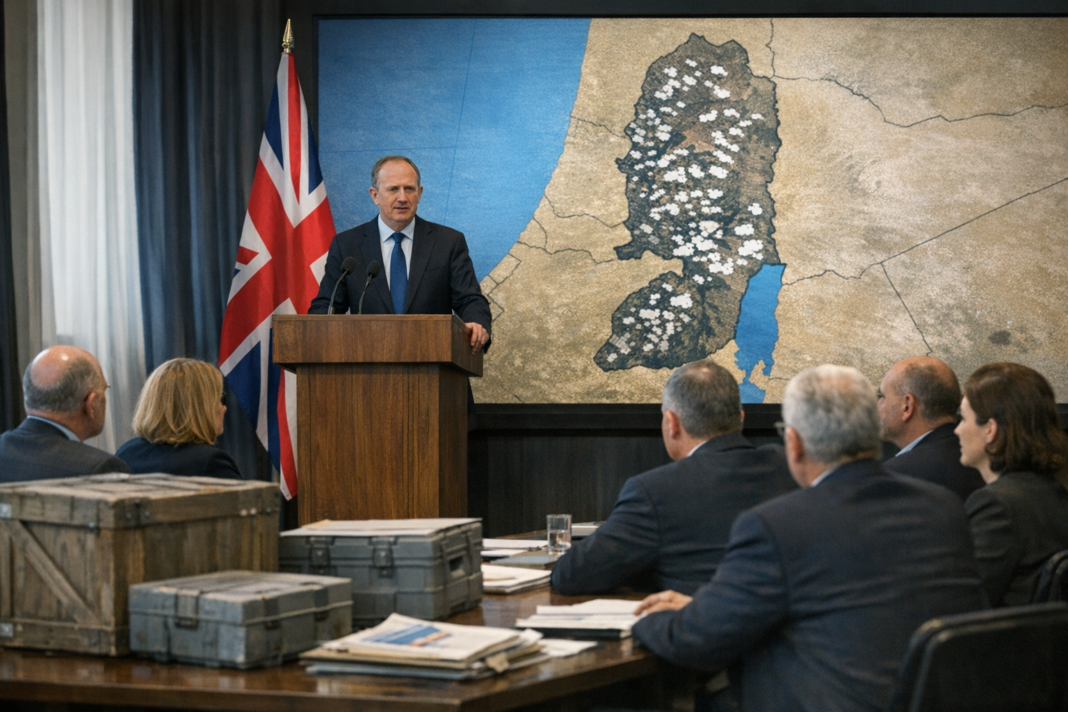
UK government expected to unveil measures restricting commercial links with the West Bank today, as Foreign Secretary Ed Miliband sets out proposals the executive says are aimed at limiting economic activity associated with settlements. The announcement marks a notable shift in the administration’s approach to trade and human-rights concerns connected to the occupied territories.
The planned measures are described in brief as targeting economic exchanges tied to the settlements, without yet specifying the full legal or procedural framework. Observers expect the package to include steps that make it harder for goods and services originating in settlements to enter public procurement streams or to be marketed as originating from within internationally recognised Israeli territory. The settlements themselves are central to long-standing disputes, and are widely regarded as illegal under international law by many international bodies and governments.
The initiative is likely to have diplomatic consequences. Officials in Israel have previously indicated that restrictions focused on settlement-linked commerce could provoke countermeasures, and commentators say the move may sharpen bilateral tensions. UK exporters, multinationals with operations in the West Bank and advocacy groups on both sides of the debate are expected to scrutinise the details once they are published, in order to assess legal exposure and commercial impact.
The timing comes amid broader discussions in London about how trade policy intersects with human-rights commitments and international obligations. The government has framed the step as an instrument to promote a negotiated two-state outcome by reducing incentives that sustain settlement expansion, while critics will press for clarity on enforcement and the potential effects on Palestinian livelihoods. Full text of the proposals and the government’s implementation timetable are awaited and will determine how swiftly any changes affect day-to-day commerce and diplomatic relations.