



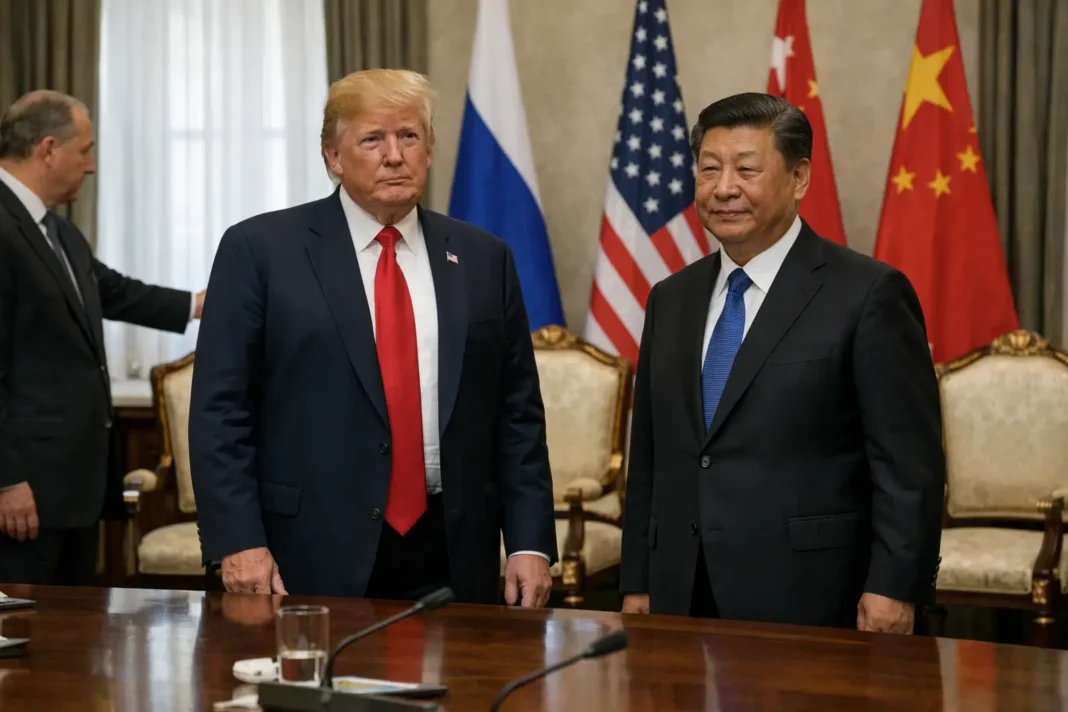
Russia proposes summit involving Russia, China and the United States, as a path to address the war in Ukraine without direct participation from Kyiv or the EU. The initiative, championed by Vladimir Putin, reportedly envisions high-level talks that would place Donald Trump and Xi Jinping at the center of any negotiated settlement. The format departs from established diplomatic practice by excluding the government whose territory and sovereignty are at stake.
From Moscow’s perspective, convening such a meeting could achieve several strategic objectives without requiring new military action. A summit that features major powers but omits Ukraine would allow Russia to seek external validation of its negotiating terms, to reframe the conflict as a matter among great powers, and to attempt to weaken the unified stance that Western allies have maintained. By elevating bilateral conversations with influential leaders, Moscow could aim to recalibrate diplomatic momentum on terms more favorable to its position.
China’s potential willingness to participate reflects its growing diplomatic role and interest in stability that safeguards economic ties. Beijing has emphasised the value of negotiations and de-escalation, and a trilateral forum could offer Xi Jinping an opportunity to present China as a broker of order. Participation would allow China to pursue pragmatic objectives — protecting trade routes, expanding political influence, and shaping post-conflict arrangements — while avoiding overt alignment with actions that would bring sanctions or direct confrontation.
For the United States, attendance by a former or current leader would carry significant geopolitical weight and raise questions about the legitimacy of agreements reached without Ukrainian consent. Excluding Kyiv and European partners risks undermining the international legal and political framework for resolving territorial disputes and could complicate coordination on sanctions, reconstruction and security guarantees that currently involve multiple actors.
Any summit structured along these lines would reshape the diplomatic landscape, testing alliances and the norms of conflict resolution. Observers note that outcomes will depend on whether participating powers seek a mutually enforceable settlement or a public display that advances short-term strategic narratives, and on how excluded parties respond to being left out of talks that determine their future.