



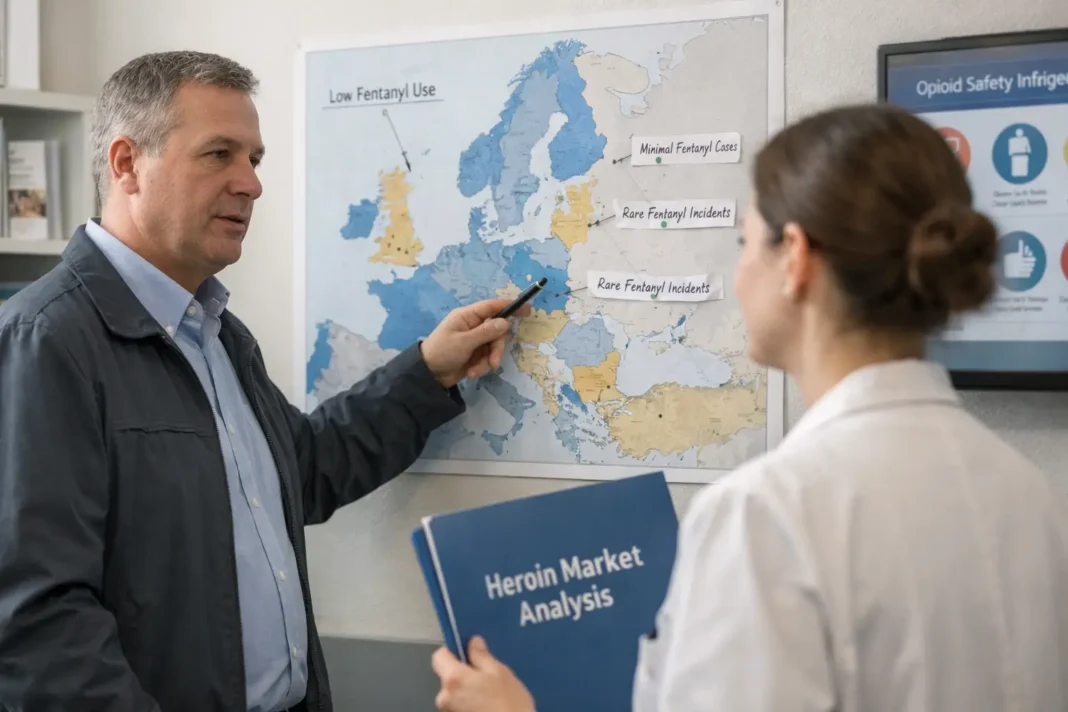
Low demand, not mafias best explains why fentanyl-related fatalities are dramatically higher in the United States than in Europe. Data from Centers for Disease Control and Prevention show fentanyl and other synthetic opioids featured in roughly 38,000 of about 70,000 US overdose deaths in 2025. By contrast, figures compiled by the EU Drugs Agency recorded around 210 fentanyl-linked deaths across 16 European countries in 2024, a rise largely attributable to medicinal products rather than illicitly manufactured fentanyl.
The divergence reflects different market histories. The US crisis grew out of widespread prescribing of potent opioid painkillers from the late 1990s, which left many people dependent and open to illicit substitutes when supplies tightened. Europe did not experience the same prescription surge: opioid medicines are prescribed more cautiously, and long-established heroin markets have continued to satisfy demand. Heroin, much of it originating from Afghanistan and routed through the Balkans, remains the most commonly used illicit opioid in many countries.
The idea that Italian crime groups have imposed a nationwide ban to keep fentanyl out is attractive but inconsistent with how organised crime and drug markets operate. Groups such as the ‘Ndrangheta comprise dispersed clans and entrepreneurs who act on commercial opportunity rather than issuing blanket prohibitions. Recent law-enforcement discoveries in Calabria — large concealed cannabis plantations and a clandestine cocaine processing facility linked to transnational networks — illustrate that independent operators can cultivate, process and distribute products to meet European demand. Italian mafias are already deeply involved in cocaine flows, undermining the notion of a unified, protective cartel policing drug choices.
The policy implication is practical: Europe’s comparatively low burden from illicit fentanyl is a function of current consumer patterns and market structure, not the restraint of criminal organisations. Keeping synthetic-opioid harm limited will rely on stronger monitoring and early-warning systems, expanded drug-checking services and broad access to naloxone, alongside prevention and treatment. Framing the issue as one of public health and market dynamics points to concrete measures that can preserve the current gap in fentanyl mortality between Europe and the United States.