



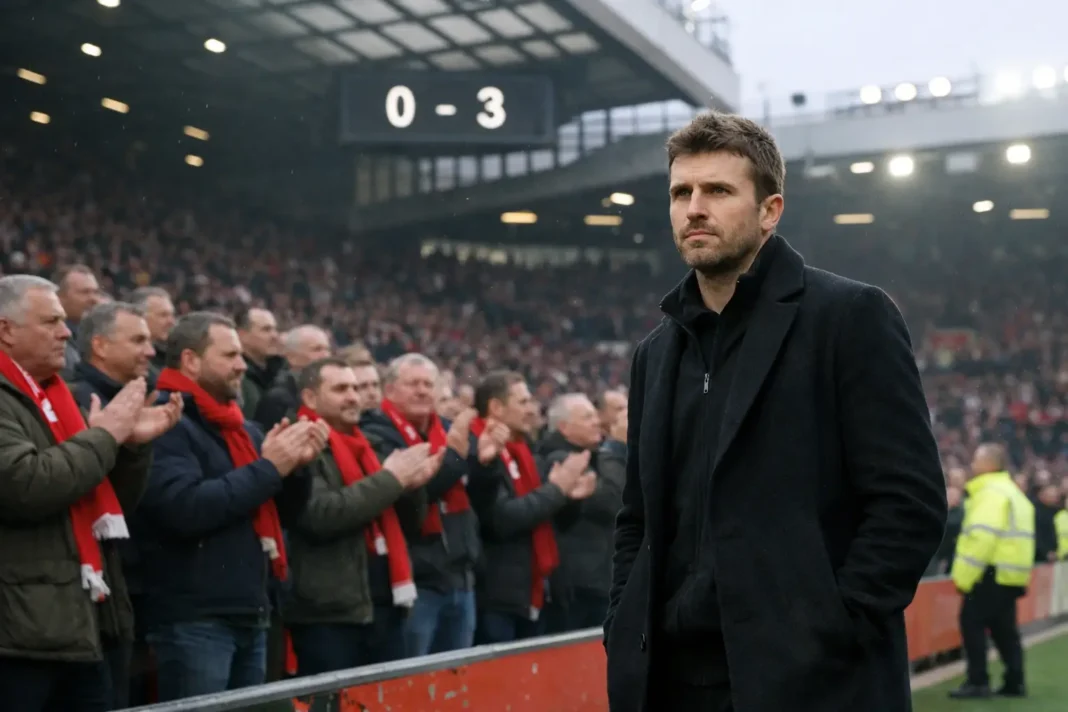
Manchester United’s home defeat by Bournemouth produced a result that was clear on the scoreboard and equally revealing in the stands. During the 3-0 loss, supporters sang in support of Michael Carrick, while making plain their opposition to almost everything else around the team. The reaction separated affection for a familiar club figure from a broader frustration surrounding Manchester United and its current direction.
The backing for Carrick carried particular weight because of his long association with the club as a former midfielder and coach. In a stadium marked by disappointment, his name was not treated as part of the general discontent. That distinction matters in football, where chants during heavy home defeats often reveal how supporters allocate responsibility. At Old Trafford, the crowd’s message was not limited to the performance unfolding on the pitch.
For AFC Bournemouth, the 3-0 win away from home stood on its own as a significant result. Victory at Old Trafford, by that margin, amplified the contrast between a visiting side able to impose itself and a home club dealing with a visibly strained atmosphere. The result added another difficult episode to Manchester United’s season narrative, with the crowd response underlining that dissatisfaction has moved beyond routine disappointment after a bad day.
The scene also showed how supporter sentiment can be layered rather than simple. United fans did not offer blanket approval, nor did they direct rejection at every individual connected with the matchday environment. Instead, their support for Michael Carrick sat alongside an unmistakable protest mood. That combination sharpened the focus on the club’s internal pressures, because it suggested that the stands still recognise personal credibility even while judging the wider situation harshly.
The immediate fact remains a 3-0 home defeat to Bournemouth, but the lasting image was the contrast between one name being supported and a club atmosphere marked by resistance. For Manchester United, that matters because results and public mood now appear intertwined. The reaction from the crowd did not change the scoreline, but it made clear where sympathy remained — and where patience had thinned.