



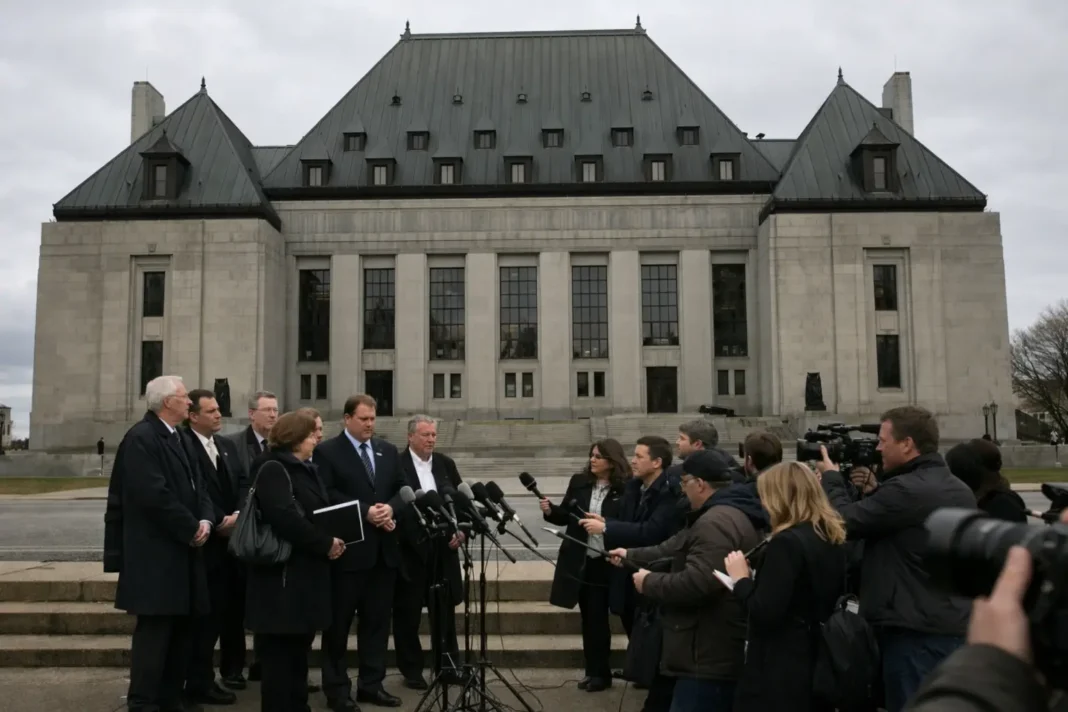
Canada’s Supreme Court has largely upheld Quebec’s secularism law, preserving the central provisions of a measure that bars religious symbols for public servants covered by the legislation. The ruling leaves Bill 21 in force as one of the most closely watched tests of the balance between state neutrality and individual rights in Canada.
The law was adopted by the Government of Quebec as part of its commitment to a secular public sphere. Provincial authorities have defended the ban as necessary to protect Quebec’s model of secularism, under which the state presents itself as neutral in matters of religion. The legislation applies to public servants within its scope and prevents them from wearing visible religious symbols while carrying out their duties.
The decision by the Supreme Court of Canada does not end the political debate surrounding the measure. Opponents have maintained that the law undermines legal safeguards for fundamental rights, particularly for people whose faith is expressed through visible clothing or symbols. Civil liberties concerns have centred on the practical effect of forcing individuals to choose between certain public-sector roles and religious expression.
Supporters of Bill 21 view the outcome as validation of Quebec’s authority to define the rules governing its institutions. The case has carried significance beyond the province because it touches on recurring questions in Canadian public life: how far governments may go in regulating the appearance of state employees, and how courts assess laws framed as protecting neutrality while affecting religious minorities.
The ruling gives Quebec’s secularism framework continued legal force, while leaving intact a broader national discussion over religious freedom, equality and the role of public institutions. For public servants subject to the law, its immediate consequence is clear: the restrictions on religious symbols remain in place. For lawmakers and rights advocates, the judgment becomes a reference point in future disputes over the limits of secular policy in Canada.