



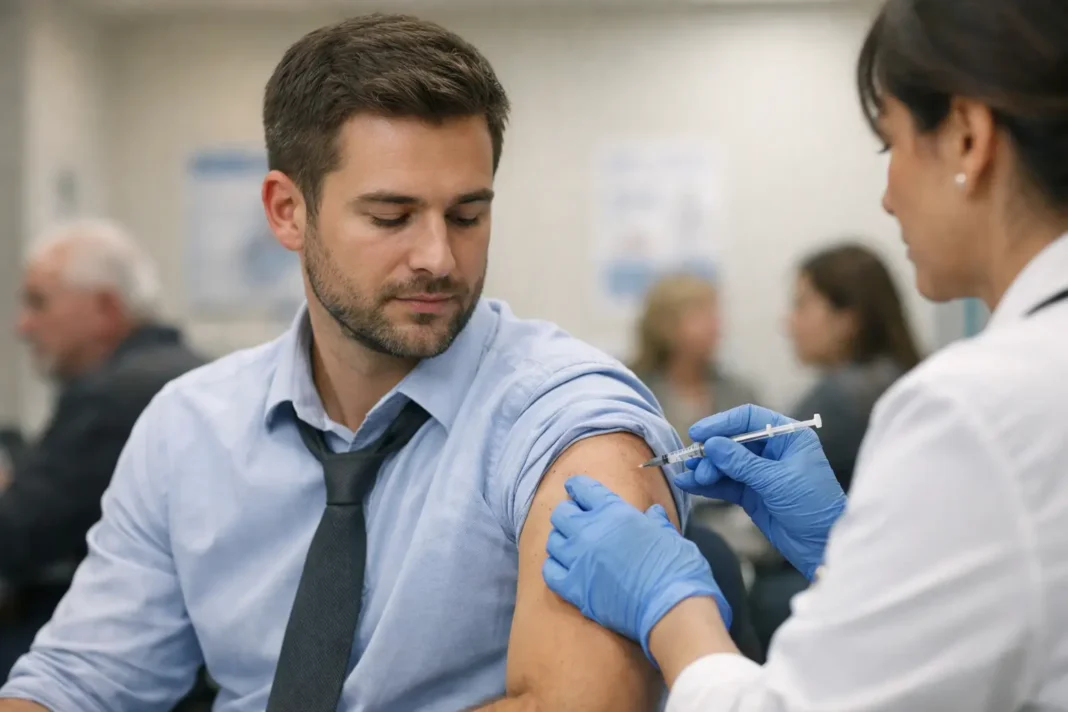
With influenza rising, health officials are renewing calls for people to get vaccinated, including those who do not consider themselves at high risk. For young and otherwise healthy adults, the decision is often framed as a personal calculation: whether a few days of fever, fatigue and disruption are worth preventing. But flu is not only a short-term inconvenience. It can lead to complications, missed work or study, and onward transmission to people more likely to become seriously ill.
The U.S. Centers for Disease Control and Prevention recommends seasonal flu vaccination for most people, with limited exceptions. The vaccine is updated because influenza viruses change over time, and protection can vary from one season to another. It does not guarantee that a vaccinated person will avoid infection, but it can reduce the risk of illness and help limit the severity of disease when infection occurs. That distinction is central when hospitals and clinics are dealing with heavier seasonal demand.
For younger adults, the most immediate benefit may be practical: vaccination lowers the likelihood of losing days to symptoms and reduces the chance of bringing the virus into workplaces, classrooms, public transport or households. This matters because influenza can spread before people fully recognize how ill they are. A healthy person may recover quickly, while an older relative, a pregnant person, an infant or someone with a chronic condition may face a much higher risk from the same exposure. In that sense, vaccination is both individual protection and a community measure.
Timing also matters. Immune protection is not immediate; it generally takes about two weeks after vaccination for the body to build a stronger response. That means waiting until flu is widespread can leave a gap during the period when protection is developing. People who have not yet been vaccinated can still benefit during an active season, particularly if influenza is continuing to circulate. Pharmacists, primary care clinicians and local health services can advise on eligibility, availability and any medical reasons to delay or avoid a vaccine.
The public health message is therefore broader than age or current fitness. A young adult may face a lower personal risk of severe flu than an elderly person, but vaccination can still reduce illness, disruption and transmission. As influenza activity increases, the choice to get a flu shot remains one of the simplest preventive steps available.