



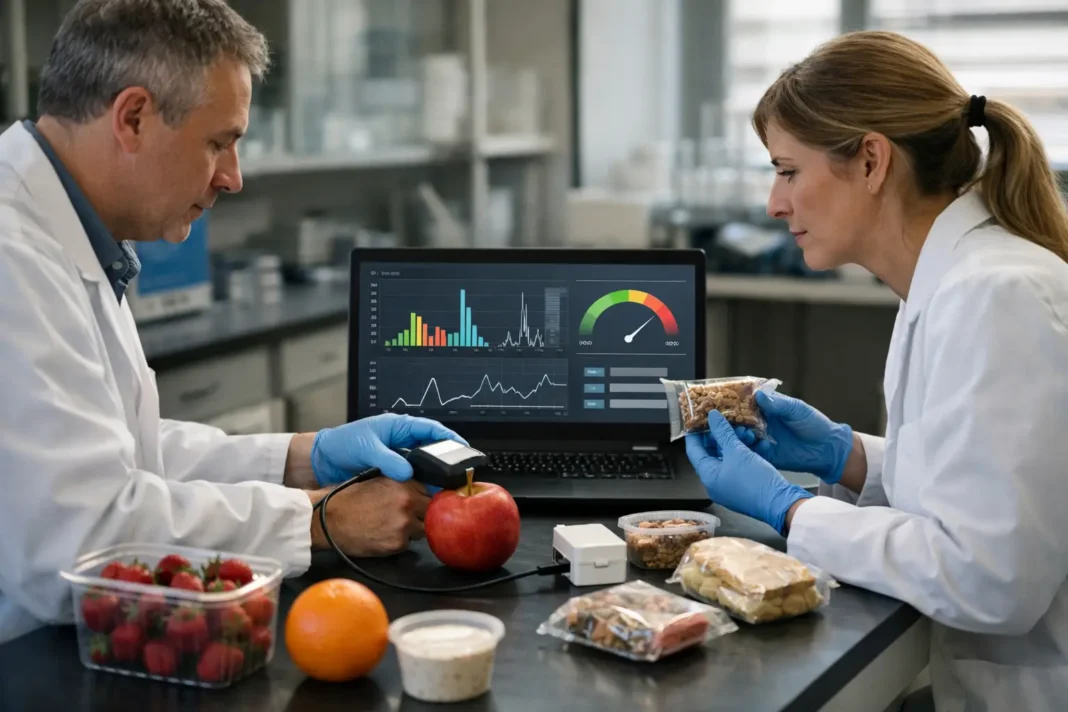
A new prototype developed under the smartJAN project is bringing artificial intelligence and smart sensing closer to routine food safety work. The initiative, led by the eVIDA research group at the University of Deusto in collaboration with Kernet and Fundación Miranda, has completed a functional device intended to detect lipid transfer proteins, known as LTPs.
LTPs are a family of plant proteins that includes allergens capable of provoking severe allergic reactions. Their importance is especially pronounced in the Mediterranean region, where plant-based foods associated with these proteins form part of everyday diets. Detecting their presence is therefore not only a laboratory concern but a practical issue for food producers, quality-control teams and consumers who live with allergy risks.
The smartJAN prototype combines sensor technology with AI-based analysis to address a persistent challenge in allergen monitoring: identifying relevant proteins in a way that can be faster and more affordable than conventional approaches. While the project has reached the stage of a working prototype, its relevance lies in the direction it signals for the sector. Food safety systems increasingly depend on tools that can process complex signals, reduce delays and support more accessible testing outside highly specialized environments.
For companies operating in food production and distribution, improved allergen detection can strengthen preventive controls and help reduce uncertainty across supply chains. For people affected by serious allergies, clearer and more reliable identification of potential hazards can contribute to safer choices. The progress of smartJAN also reflects a broader shift in artificial intelligence applied to health-related technologies: moving from data analysis alone toward integrated systems that interact directly with biological and chemical indicators.
The completion of the prototype does not by itself make the technology a commercial standard, but it establishes a concrete platform for further refinement and evaluation. In a field where speed, cost and accuracy influence whether testing can be widely adopted, the combination of AI and smart sensors offers a practical route for future food safety tools focused on allergens such as LTPs.