



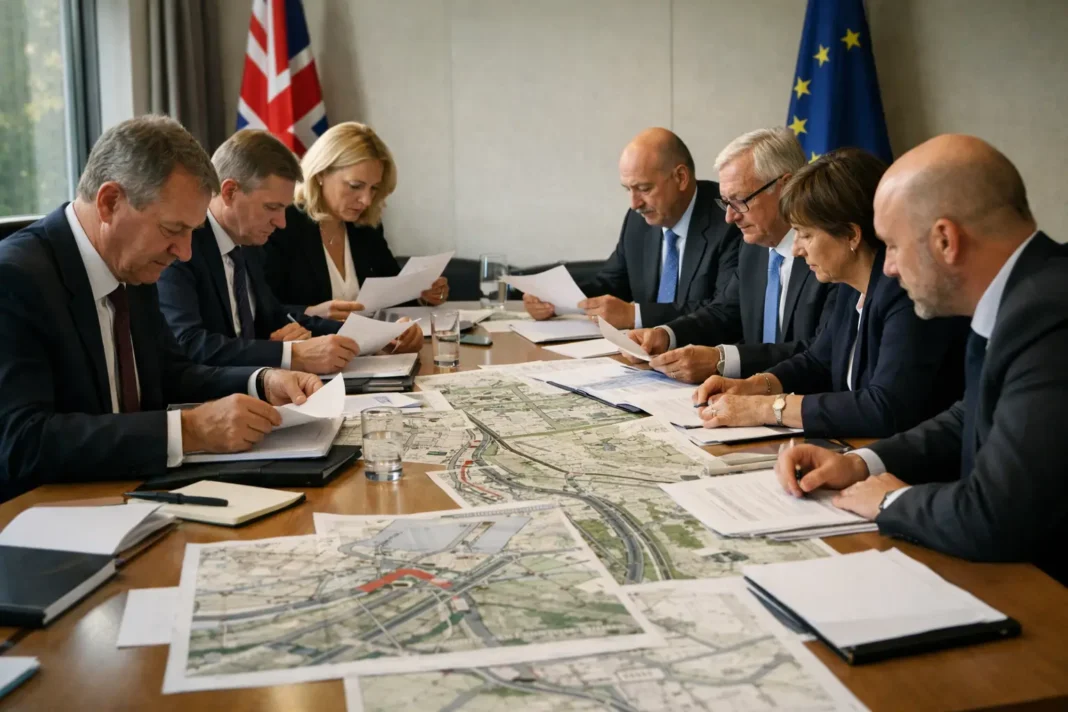
The United Kingdom’s government is preparing to publish new treaties agreed with the European Union, placing the practical costs of future border checks at the centre of the latest stage in UK-EU relations. The documents are understood to include a termination provision running for 10 years, designed to address the financial consequences if infrastructure for checks at the border has to be rebuilt.
The expected publication by the UK government will give legal form to arrangements reached with Brussels and provide a clearer view of how both sides intend to manage operational risks linked to trade and movement across borders. The 10-year clause is significant because border systems require long-term planning, public spending and coordination between authorities, ports and transport operators.
For the United Kingdom, the provision points to one of the most sensitive legacies of its changed relationship with the European Union: the need to balance political commitments with the administrative reality of managing crossings. Rebuilding or restoring border check infrastructure would carry costs beyond construction alone, potentially involving staffing, technology, inspection capacity and changes for businesses using cross-border supply chains.
The treaties’ publication is expected to be scrutinised closely by businesses, devolved administrations and parliamentary figures looking for certainty over implementation and exit terms. A termination clause tied to reimbursement suggests that the parties have sought to reduce the risk that one side bears the financial burden of reversing arrangements before public investment has been fully justified over time.
The details will matter because treaties do more than confirm political understandings: they set out obligations that shape how governments act when circumstances change. In this case, the presence of a decade-long cost safeguard underlines how border management remains a practical test of the UK-EU settlement, even when broader diplomatic relations are presented as more stable.
