



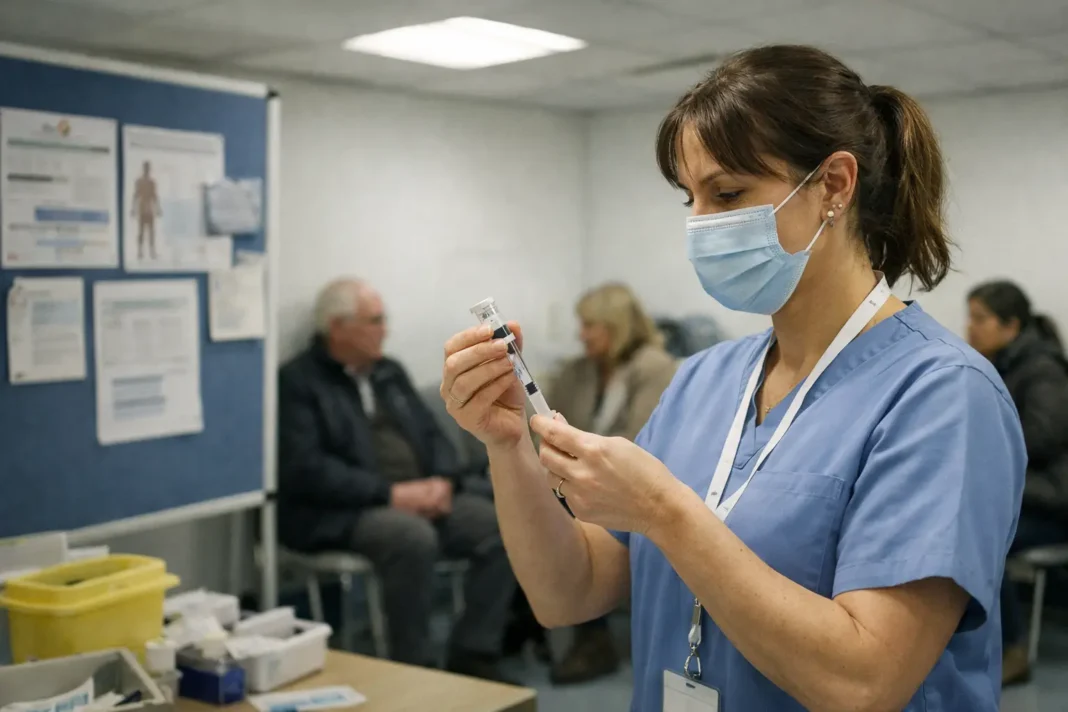
Health leaders are urging people at greater risk from flu to come forward for vaccination as hospitals deal with a sharp rise in admissions linked to the virus. An NHS senior figure has warned of a “horrible spike” in flu, underscoring concern across the health service as seasonal infections add to pressure on wards and emergency care. The message from health officials is direct: eligible people should not delay getting protected.
The appeal is focused on those most likely to become seriously ill if they catch influenza. The NHS advises flu vaccination for groups at increased risk, including older adults, pregnant women and people with certain long-term health conditions. Health and social care workers, carers and people with weakened immune systems are also among those commonly prioritised in seasonal vaccination programmes. The vaccine is intended to reduce the risk of severe illness, hospital treatment and complications.
Flu circulates every winter, but a rapid increase in hospital cases can create immediate strain for the health system. Admissions linked to respiratory infections can limit bed capacity, lengthen waits and place additional pressure on staff already managing routine care, urgent treatment and emergency demand. For patients with underlying conditions, flu is not simply a short illness: it can worsen existing diseases and increase the need for medical support. That is why public health teams continue to place emphasis on prevention before infections become more widespread.
Vaccination remains the central measure being promoted by officials, particularly because protection takes time to develop after the jab. People who are eligible can obtain information through their GP practice, local pharmacy services or official NHS channels. The current warning also reinforces familiar advice during periods of respiratory illness: people with symptoms should take care around those who are vulnerable, practise good hand hygiene and avoid unnecessary exposure where possible. These steps do not replace vaccination, but they can help reduce onward transmission.
The rise in flu admissions comes at a sensitive point for the healthcare system, where seasonal viruses can quickly affect hospital capacity. The latest appeal is therefore both a personal health message and a system-wide priority. For those in risk groups, accepting the vaccine promptly can reduce the chance of serious illness while helping the NHS manage winter demand more safely.