



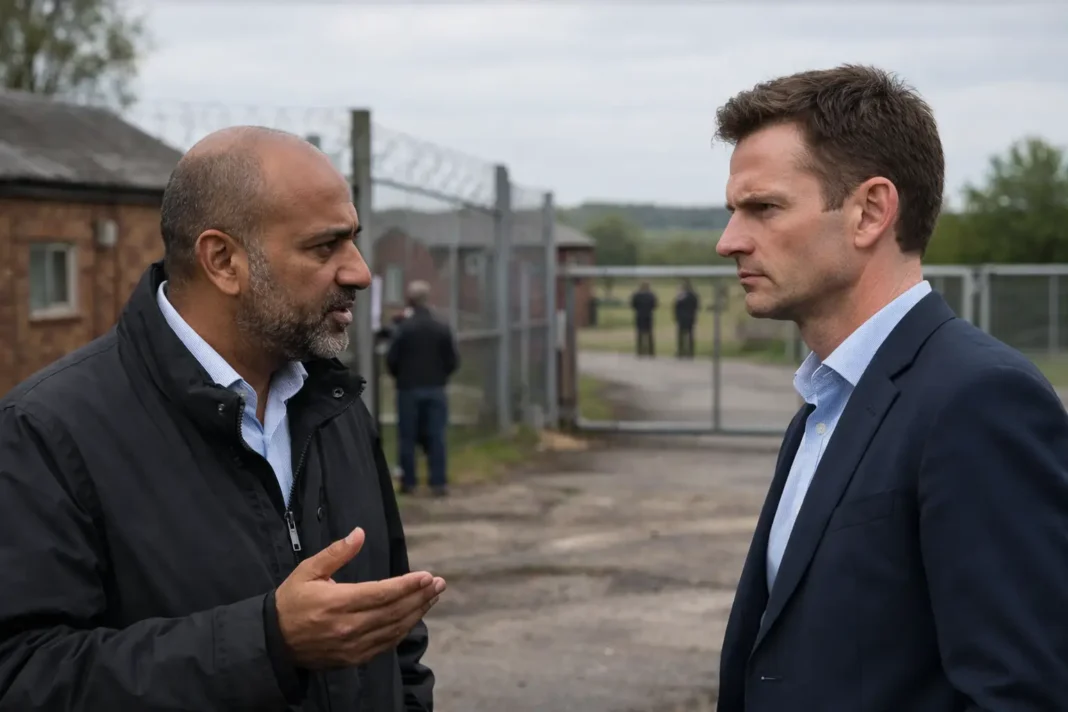
A public dispute over immigration policy erupted in Piddington as Zia Yusuf of Reform UK and Conservative politician Chris Philp both spoke against plans to convert a former military site into accommodation for asylum seekers. The encounter placed local concern over the proposed use of the site at the centre of a wider political argument about how the United Kingdom manages asylum housing.
The two figures were aligned in opposing the conversion of the Piddington site, but the exchange became confrontational as the discussion widened to immigration policy and political responsibility. The disagreement highlighted the pressure facing both Reform UK and the Conservative Party as they seek to define their positions on border control, asylum processing and the use of public or former defence land for temporary accommodation.
Plans to house asylum seekers in large-scale sites have become a recurring point of tension in British politics. Local communities often raise questions about services, security, consultation and the long-term future of such facilities, while central government faces the practical challenge of accommodating people whose asylum claims are awaiting decisions. The use of former military locations has proved especially contentious because it links national migration policy with local planning, public spending and the legacy of defence infrastructure.
For Piddington, the issue is not only the proposed change of use for a former military site but also the political attention now attached to it. Immigration remains one of the most sensitive dividing lines in United Kingdom politics, and disputes between parties competing for the same voters can sharpen even when they oppose the same local proposal. The clash between Yusuf and Philp underlined how asylum accommodation has moved beyond administrative decision-making to become a test of political credibility on migration.
The debate leaves residents and decision-makers facing a difficult balance: national obligations toward asylum seekers, the capacity of local areas to absorb new facilities, and the demand for transparent consultation. Whatever the outcome for the Piddington site, the confrontation showed how proposed asylum accommodation can quickly become a flashpoint where local planning, party competition and national immigration policy converge.

